



AD
N~1~-{(2S,3R)-3-Hydroxy-4-[(3S,4aS,8aS)-3-[(2-methyl-2-propanyl)carbamoyl]octahydro-2(1H)-isoquinolinyl]-1-phenyl-2-butanyl}-N~2~-(2-quinolinylcarbonyl)-L-aspartamide(CAS: 127779-20-8)
![N~1~-{(2S,3R)-3-Hydroxy-4-[(3S,4aS,8aS)-3-[(2-methyl-2-propanyl)carbamoyl]octahydro-2(1H)-isoquinolinyl]-1-phenyl-2-butanyl}-N~2~-(2-quinolinylcarbonyl)-L-aspartamide](https://static.chemtradehub.com/structs/127/127779-20-8-51d2.webp "N~1~-{(2S,3R)-3-Hydroxy-4-[(3S,4aS,8aS)-3-[(2-methyl-2-propanyl)carbamoyl]octahydro-2(1H)-isoquinolinyl]-1-phenyl-2-butanyl}-N~2~-(2-quinolinylcarbonyl)-L-aspartamide")
CAS Number
Related Products
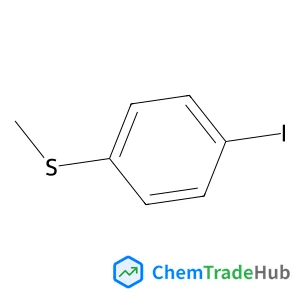
1-Iodo-4-(methylsulfanyl)benzene
CAS Number: 35371-03-0
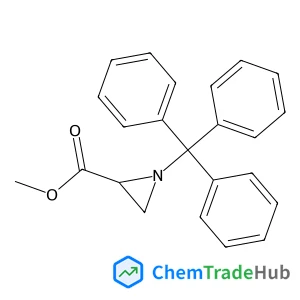
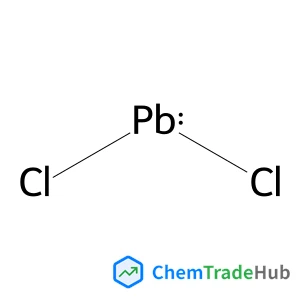
Dichloro-lambda~2~-plumbane
CAS Number: 7758-95-4
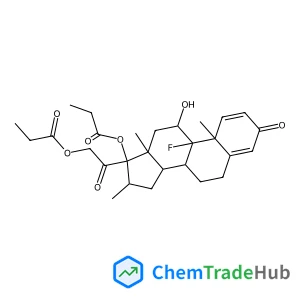
PUMICE STONE
CAS Number: 1332-09-8
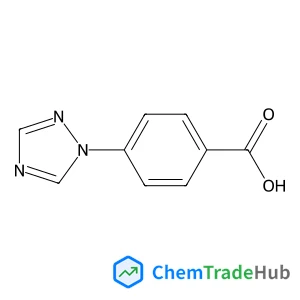
4-(1H-1,2,4-Triazol-1-yl)benzoic acid
CAS Number: 162848-16-0
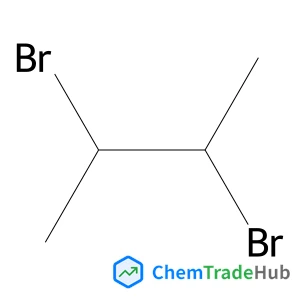
2,3-Dibromobutane
CAS Number: 5408-86-6
SOYBEAN MEAL
CAS Number: 68308-36-1
![2-Chloro-N-[2-(2,6-dioxo-3-piperidinyl)-1,3-dioxo-2,3-dihydro-1H-isoindol-4-yl]acetamide](https://static.chemtradehub.com/structs/444/444287-84-7-fa4b.webp)
Other Suppliers for N~1~-{(2S,3R)-3-Hydroxy-4-[(3S,4aS,8aS)-3-[(2-methyl-2-propanyl)carbamoyl]octahydro-2(1H)-isoquinolinyl]-1-phenyl-2-butanyl}-N~2~-(2-quinolinylcarbonyl)-L-aspartamide
![N~1~-{(2S,3R)-3-Hydroxy-4-[(3S,4aS,8aS)-3-[(2-methyl-2-propanyl)carbamoyl]octahydro-2(1H)-isoquinolinyl]-1-phenyl-2-butanyl}-N~2~-(2-quinolinylcarbonyl)-L-aspartamide — ShangHaiJiZhiShengHua Technology Co Ltd](https://static.chemtradehub.com/suppliers/67cecbee2b2de6e8e95a5b72/67cecbee2b2de6e8e95a5b72-logo.webp)
![N~1~-{(2S,3R)-3-Hydroxy-4-[(3S,4aS,8aS)-3-[(2-methyl-2-propanyl)carbamoyl]octahydro-2(1H)-isoquinolinyl]-1-phenyl-2-butanyl}-N~2~-(2-quinolinylcarbonyl)-L-aspartamide — HuBeiMoDe Chemical Co Ltd](https://static.chemtradehub.com/suppliers/67cecc352b2de6e8e95a5c3a/67cecc352b2de6e8e95a5c3a-logo.webp)
![N~1~-{(2S,3R)-3-Hydroxy-4-[(3S,4aS,8aS)-3-[(2-methyl-2-propanyl)carbamoyl]octahydro-2(1H)-isoquinolinyl]-1-phenyl-2-butanyl}-N~2~-(2-quinolinylcarbonyl)-L-aspartamide — ShangHaiYiJiShengWuKeJiYouXianGongSiXiaoShouBu](https://static.chemtradehub.com/suppliers/67cecfe92b2de6e8e95a656d/67cecfe92b2de6e8e95a656d-logo.webp)
![N~1~-{(2S,3R)-3-Hydroxy-4-[(3S,4aS,8aS)-3-[(2-methyl-2-propanyl)carbamoyl]octahydro-2(1H)-isoquinolinyl]-1-phenyl-2-butanyl}-N~2~-(2-quinolinylcarbonyl)-L-aspartamide — MedChemExpress LLC](https://static.chemtradehub.com/suppliers/67ced0fb2b2de6e8e95a67fd/67ced0fb2b2de6e8e95a67fd-logo.webp)
![N~1~-{(2S,3R)-3-Hydroxy-4-[(3S,4aS,8aS)-3-[(2-methyl-2-propanyl)carbamoyl]octahydro-2(1H)-isoquinolinyl]-1-phenyl-2-butanyl}-N~2~-(2-quinolinylcarbonyl)-L-aspartamide — HuBeiJiFeiYiYao Chemical Co Ltd](https://static.chemtradehub.com/suppliers/67cecc092b2de6e8e95a5bbb/67cecc092b2de6e8e95a5bbb-logo.webp)
![N~1~-{(2S,3R)-3-Hydroxy-4-[(3S,4aS,8aS)-3-[(2-methyl-2-propanyl)carbamoyl]octahydro-2(1H)-isoquinolinyl]-1-phenyl-2-butanyl}-N~2~-(2-quinolinylcarbonyl)-L-aspartamide — TianMenHengChang Chemical Co Ltd](https://static.chemtradehub.com/suppliers/67cecc092b2de6e8e95a5bbe/67cecc092b2de6e8e95a5bbe-logo.webp)
![N~1~-{(2S,3R)-3-Hydroxy-4-[(3S,4aS,8aS)-3-[(2-methyl-2-propanyl)carbamoyl]octahydro-2(1H)-isoquinolinyl]-1-phenyl-2-butanyl}-N~2~-(2-quinolinylcarbonyl)-L-aspartamide — Shanghai Yuyeh Biotechnology Co., Ltd.](https://static.chemtradehub.com/suppliers/67ce9f132b2de6e8e95a48fe/67ce9f132b2de6e8e95a48fe-logo.webp)
Basic Information
Molecular Formula
C38H50N6O5
Molecular Weight
670.86 g/mol
Physical Properties
Boiling Point
1015°C at 760 mmHg
Chemical Identifiers
SMILES
CC(C)(C)NC(=O)C1CC2CCCCC2CN1CC(C(CC3=CC=CC=C3)NC(=O)C(CC(=O)N)NC(=O)C4=NC5=CC=CC=C5C=C4)O
InChIKey
QWAXKHKRTORLEM-UGJKXSETSA-N
Database References
MDL Number
MFCD00866925
FAQ
This compound is a complex organic molecule with a molecular weight of approximately 566.5 g/mol. Its crystalline form is stable and it has low solubility in water but is soluble in organic solvents like DMSO and DMF. The compound exhibits moderate reactivity and is susceptible to hydrolysis under basic conditions. It is not flammable but may release toxic gases upon decomposition.
This compound is synthesized via a multistep process involving amidation and condensation reactions. The key steps include the formation of an intermediate amide through the coupling of a quinoline carboxylic acid and a phenyl-L-aspartamide, followed by the installation of the complex side chain via a Wittig reaction. The overall yield is moderate, and the reaction is typically carried out under anhydrous conditions using a suitable catalyst.
This compound is primarily used in the pharmaceutical industry for its potential as a drug candidate. It may also find applications in the development of biosensors and as a research tool in biochemistry and molecular biology. The compound's unique structure makes it suitable for exploring new therapeutic avenues and understanding complex biochemical pathways.
When handling this compound, appropriate personal protective equipment (PPE) such as gloves, goggles, and a lab coat should be worn. It is recommended to work in a well-ventilated area or a fume hood to avoid inhalation of any potentially toxic gases. Spills should be cleaned up with appropriate absorbent materials and disposed of according to local waste regulations. Always consult the Safety Data Sheet (SDS) for detailed handling and disposal instructions.
Safety Notice
Please verify product specifications and safety data before use. Contact the supplier for detailed safety information.
Always follow proper handling procedures
Contact Information
Contact Person
Ludu
order@canspecsci.com