AD
Methyl 2,5-dichloronicotinate(CAS: 67754-03-4)
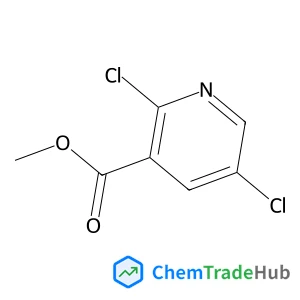
CAS Number
Related Products
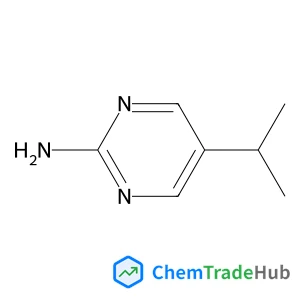
5-Isopropyl-2-pyrimidinamine
CAS Number: 98432-17-8
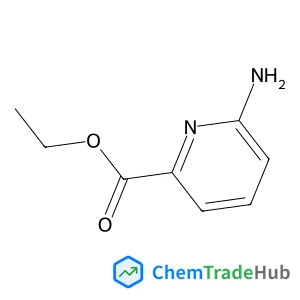
Ethyl 6-amino-2-pyridinecarboxylate
CAS Number: 69142-64-9
![4-Hydroxythieno[2,3-b]pyridin-6(7H)-one](https://static.chemtradehub.com/structs/994/99429-78-4-2198.webp)
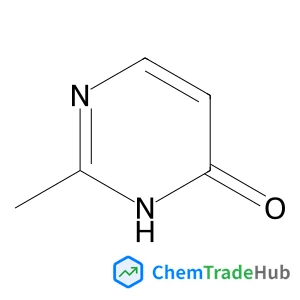
2-Methyl-4(3H)-pyrimidinone
CAS Number: 67383-35-1
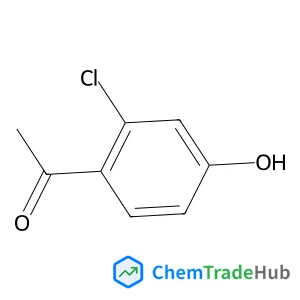
1-(2-Chloro-4-hydroxyphenyl)ethanone
CAS Number: 68301-59-7
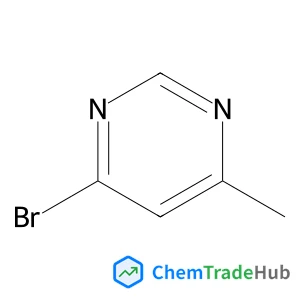
4-Bromo-6-methylpyrimidine
CAS Number: 69543-98-2
![1-([1,2,4]Triazolo[4,3-a]pyridin-3-yl)methanamine](https://static.chemtradehub.com/structs/919/91981-59-8-9d88.webp)
Other Suppliers for Methyl 2,5-dichloronicotinate




Basic Information
Molecular Formula
C7H5Cl2NO2
Molecular Weight
206.03 g/mol
Physical Properties
Melting Point
42.0 to 46.0 deg-C
Boiling Point
267 ºC
Density
1.426
Flash Point
115 ºC
Chemical Identifiers
SMILES
COC(=O)C1=C(N=CC(=C1)Cl)Cl
InChIKey
CNPFXYWTMBTSSI-UHFFFAOYSA-N
Database References
MDL Number
MFCD03844857
FAQ
Methyl 2,5-dichloronicotinate (CAS: 67754-03-4) is classified under GHS as a substance that may cause serious eye damage. According to REACH regulations, registration, evaluation, authorization, and restriction are required for this compound. The FDA and EPA have specific requirements for the handling and disposal of this compound. Companies must ensure compliance with these regulations to avoid penalties and ensure safety in the workplace.
Methyl 2,5-dichloronicotinate (CAS: 67754-03-4) can be synthesized using alternative reagents such as methyl 2-chloro-5-nitrobenzoate. Isomers like 2-chloro-5-methyl-3-nitrobenzoic acid may also be considered, but they differ in structure and properties. These alternatives can be explored based on specific experimental requirements and availability.
Methyl 2,5-dichloronicotinate (CAS: 67754-03-4) is currently gaining interest in the pharmaceutical and chemical research fields. Demand is driven by its application in drug discovery and synthesis of intermediates. Recent research trends focus on its use in developing new compounds with improved efficacy and reduced toxicity. The market is expected to grow due to increasing demand for novel pharmaceuticals.
Waste containing Methyl 2,5-dichloronicotinate (CAS: 67754-03-4) should be collected in a sealed container and disposed of according to local regulations. Safe incineration is recommended, and professional waste disposal services are available for handling. Environmental protection measures should include proper labeling, storage in a secure location, and following all safety guidelines to prevent contamination and exposure. Compliance with hazardous waste disposal regulations is essential to protect the environment and public health.
Safety Notice
Please verify product specifications and safety data before use. Contact the supplier for detailed safety information.
Always follow proper handling procedures