



AD
Glucose isomerase from streptomyces rubiginosus(CAS: 9055-00-9)
CAS Number
Related Products
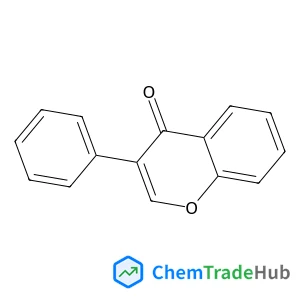
3-Phenyl-4H-chromen-4-one
CAS Number: 574-12-9

2,4,7-Trinitroxanthen-9-one
CAS Number: 20-21-5
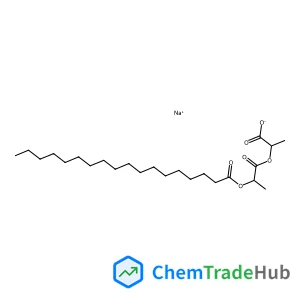
Sodium stearoyl lactylate
CAS Number: 25383-99-7
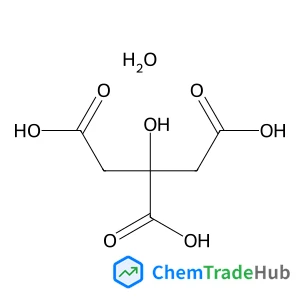
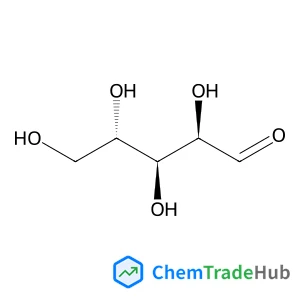
(2R,3S,4S)-2,3,4,5-tetrahydroxypentanal
CAS Number: 5328-37-0
Disodium stannous citrate
CAS Number: 2588-96-4
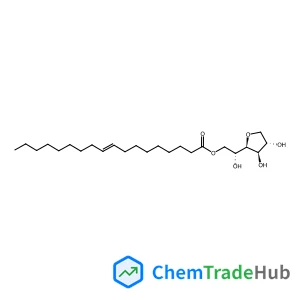
1,4-Anhydro-6-O-oleoyl-D-glucitol
CAS Number: 1338-43-8
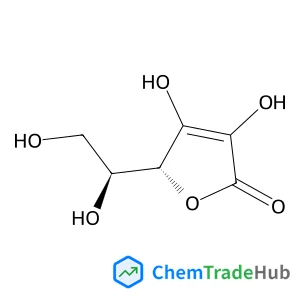
L-Ascorbic Acid
CAS Number: 50-81-7
Other Suppliers for Glucose isomerase from streptomyces rubiginosus




Basic Information
Molecular Formula
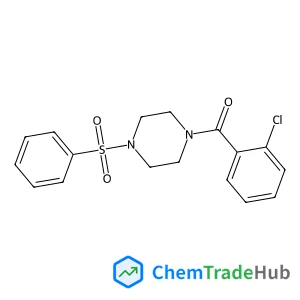
C17H17ClN2O3S
Molecular Weight
364.85 g/mol
Chemical Identifiers
SMILES
C1CN(CCN1C(=O)C2=CC=CC=C2Cl)S(=O)(=O)C3=CC=CC=C3
InChIKey
WNQJZQMIEZWFIN-UHFFFAOYSA-N
Database References
FAQ
Glucose isomerase from Streptomyces rubiginosus (CAS: 9055-00-9) is a crystalline protein with a molecular weight of approximately 210 kDa. It has a specific activity of about 300 U/mg. The enzyme is highly soluble in water and exhibits high reactivity towards glucose, catalyzing its isomerization to fructose. It is stable at neutral to slightly acidic pH (pH 5.5-6.5) and has optimal activity between 40-50°C.
Glucose isomerase from Streptomyces rubiginosus (CAS: 9055-00-9) is typically synthesized through fermentation using the bacterium Streptomyces rubiginosus. The process involves culturing the microorganism in a suitable medium, followed by extraction, purification, and crystallization steps. Commonly used media include glucose and peptone, and the fermentation is usually conducted at 30-35°C with a pH of 6.5-7.0.
Glucose isomerase from Streptomyces rubiginosus (CAS: 9055-00-9) is widely used in the food and beverage industry for the production of high-fructose corn syrup (HFCS). It is also utilized in the pharmaceutical industry for the synthesis of various sugar derivatives and in the production of sweeteners. Additionally, it has applications in the brewing and wine-making industries for producing specialty sugars.
When handling Glucose isomerase from Streptomyces rubiginosus (CAS: 9055-00-9), safety precautions should include the use of appropriate personal protective equipment (PPE) such as gloves, goggles, and a lab coat. Work should be conducted in a well-ventilated area or a fume hood. Spills should be cleaned up using absorbent materials, and the area should be properly decontaminated. Always refer to the Material Safety Data Sheet (MSDS) for specific handling and disposal instructions.
Safety Notice
Please verify product specifications and safety data before use. Contact the supplier for detailed safety information.
Always follow proper handling procedures