



AD
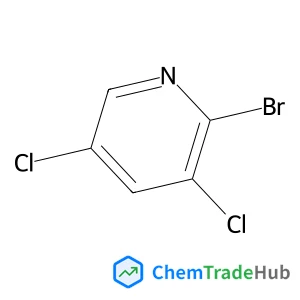
2-Bromo-3,5-dichloropyridine(CAS: 14482-51-0)
CAS Number
Related Products
![[4-(Propoxymethyl)phenyl]boronic acid](https://static.chemtradehub.com/structs/160/160061-48-3-d8f7.webp)
[4-(Propoxymethyl)phenyl]boronic acid
CAS Number: 160061-48-3
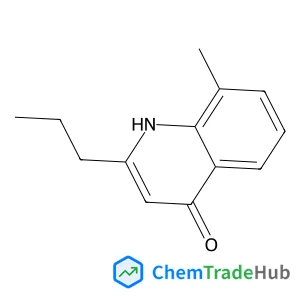
4-Hydroxy-8-methyl-2-propylquinoline
CAS Number: 1070879-87-6
Other Suppliers for 2-Bromo-3,5-dichloropyridine



Basic Information
Molecular Formula
C5H2BrCl2N
Molecular Weight
226.89 g/mol
Physical Properties
Melting Point
41.0 to 45.0 deg-C
Boiling Point
243.3°C at 760 mmHg
Density
1.848
Flash Point
101℃
Chemical Identifiers
SMILES
C1=C(C=NC(=C1Cl)Br)Cl
InChIKey
QCKPJWDIDCGQRB-UHFFFAOYSA-N
Database References
MDL Number
MFCD00233990
FAQ
2-Bromo-3,5-dichloropyridine is a crystalline solid with a molecular weight of approximately 257.01 g/mol. It is poorly soluble in water but soluble in organic solvents like ethanol and acetone. Chemically, it is relatively stable but can react with strong bases to form less stable derivatives. It exhibits high reactivity towards nucleophiles and can undergo substitution reactions. Its high reactivity and low solubility in water make it challenging to handle and manipulate in solution.
2-Bromo-3,5-dichloropyridine is typically synthesized via a two-step process. First, 3,5-dichloropyridine is brominated using bromine in the presence of a Lewis acid like aluminum trichloride to generate the brominated product. The second step involves the brominated compound undergoing another substitution reaction with a halogen or another electrophile under appropriate conditions to complete the synthesis. The process yields a product with high purity, though care must be taken to avoid unwanted side reactions.
2-Bromo-3,5-dichloropyridine is used primarily in the pharmaceutical industry for the synthesis of certain drugs. It is also utilized in the polymer industry for the modification of polymer properties. Additionally, it has applications in sensor technology and semiconductor manufacturing, where its unique chemical properties are leveraged for specific functional requirements.
When handling 2-Bromo-3,5-dichloropyridine, it is crucial to wear appropriate personal protective equipment (PPE) such as gloves, goggles, and a lab coat to protect against skin and eye contact. Work should be conducted in a well-ventilated area or fume hood to minimize inhalation risks. In case of a spill, immediately clean up using appropriate absorbent materials and dispose of the waste according to local regulations. Always consult the Safety Data Sheet (SDS) for detailed handling and emergency procedures.
Safety Notice
Please verify product specifications and safety data before use. Contact the supplier for detailed safety information.
Always follow proper handling procedures

Contact Information
Contact Person
Tang Silei
2881489226@qq.com
Mobile
15026964105
Telephone
15026964105
Fax
021-55068248
Visit Website
https://www.shyuanye.comAddress
No. 6 Building, 465 Changta Road, Songjiang District, Shanghai