



AD
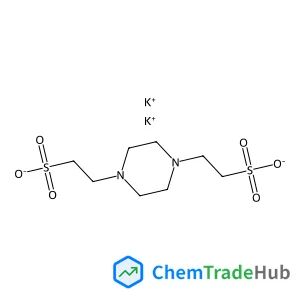
Dipotassium 2,2'-(1,4-piperazinediyl)diethanesulfonate(CAS: 108321-27-3)
CAS Number
Related Products
![3-Cyclopropyl-1-(2-fluoro-4-iodophenyl)-5-hydroxy-6,8-dimethylpyrido[2,3-d]pyrimidine-2,4,7(1H,3H,8H)-trione](https://static.chemtradehub.com/structs/871/871700-24-2-c5dd.webp)

5-Bromo-2,4(1H,3H)-pyrimidinedione
CAS Number: 51-20-7

![3-Iodo-1H-pyrrolo[2,3-b]pyridine-4-carbonitrile](https://static.chemtradehub.com/structs/956/956485-59-9-1f04.webp)
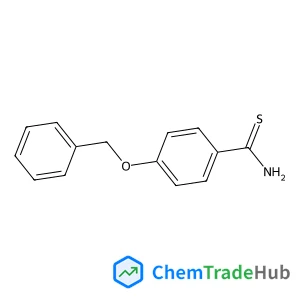
4-Benzyloxy-thiobenzamide
CAS Number: 161975-22-0

3-Chloro-N-cyclopentylbenzamide
CAS Number: 349128-33-2
Other Suppliers for Dipotassium 2,2'-(1,4-piperazinediyl)diethanesulfonate





Basic Information
Molecular Formula
C8H16K2N2O6S2
Molecular Weight
378.6 g/mol
Physical Properties
Boiling Point
°Cat760mmHg
Density
1.3700
Flash Point
°C
Chemical Identifiers
SMILES
C1CN(CCN1CCS(=O)(=O)[O-])CCS(=O)(=O)[O-].[K+].[K+]
InChIKey
BJQYFCAMUXGZFN-UHFFFAOYSA-L
Database References
MDL Number
MFCD00069751
FAQ
Dipotassium 2,2'-(1,4-piperazinediyl)diethanesulfonate (CAS: 108321-27-3) is subject to GHS classification, which categorizes it based on its physical and health hazards. It falls under REACH regulations, requiring registration if manufactured or imported in the EU. FDA and EPA also have specific requirements for its handling and disposal in the United States, focusing on safety and environmental protection.
Synthetic alternatives to Dipotassium 2,2'-(1,4-piperazinediyl)diethanesulfonate include other piperazine-based compounds and similar sulfonates. Common substitutes include N-(2-hydroxyethyl)piperazine-N'-2-ethanesulfonic acid (HEPES) and other aminosulfonic acids. These alternatives offer similar buffering and solubility properties but may have different regulatory and environmental impacts.
The market for Dipotassium 2,2'-(1,4-piperazinediyl)diethanesulfonate is driven by its use in pharmaceuticals, biotechnology, and industrial applications. Emerging research trends focus on its role as a buffer in biochemical assays and its potential in green chemistry processes. Recent studies highlight its environmental stability and safety, which are key factors influencing market demand.
Waste containing Dipotassium 2,2'-(1,4-piperazinediyl)diethanesulfonate should be collected in appropriate containers and disposed of through professional waste disposal services. Incineration is a common method, but environmental regulations should be followed to ensure compliance. Proper handling includes neutralizing the solution to a safe pH level and ensuring containment to prevent environmental contamination.
Safety Notice
Please verify product specifications and safety data before use. Contact the supplier for detailed safety information.
Always follow proper handling procedures
Contact Information
Contact Person
Fang Rui
wangkang@jskchem.com
Mobile
15221441005
Telephone
15221441005
Visit Website
https://www.jskchem.comAddress
No chemical compound information was provided to translate. Please provide the relevant chemical information for translation.