



AD
3-(4,4,5,5-Tetramethyl-1,3,2-dioxaborolan-2-yl)pyridine(CAS: 329214-79-1)
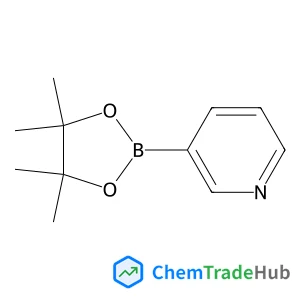
CAS Number
Related Products
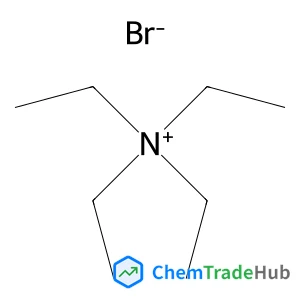
N,N,N-Triethylethanaminium bromide
CAS Number: 71-91-0
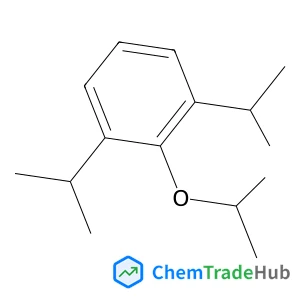
2-Isopropoxy-1,3-diisopropylbenzene
CAS Number: 141214-18-8
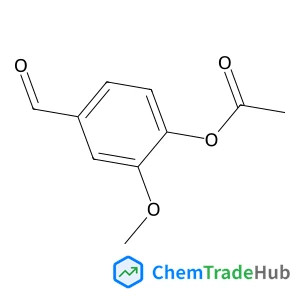
4-Formyl-2-methoxyphenyl acetate
CAS Number: 881-68-5
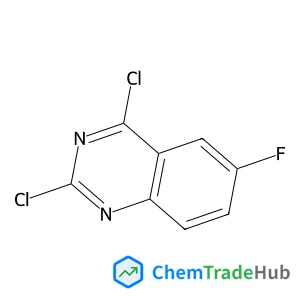
2,4-Dichloro-6-fluoroquinazoline
CAS Number: 134517-57-0
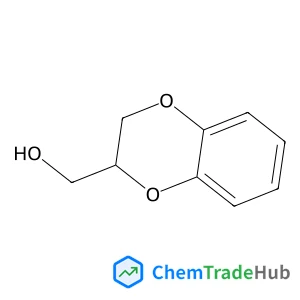
![4-Methyl-2-(1-(2-methylallyl)-1H-benzo[d][1,2,3]triazol-2(3H)-yl)phenol](https://static.chemtradehub.com/structs/988/98809-58-6-f40b.webp)
Other Suppliers for 3-(4,4,5,5-Tetramethyl-1,3,2-dioxaborolan-2-yl)pyridine






Basic Information
Molecular Formula
C11H16BNO2
Molecular Weight
205.07 g/mol
Physical Properties
Melting Point
102.0 to 106.0 deg-C
Boiling Point
300.9°C at 760 mmHg
Density
1.03
Flash Point
135.8℃
Chemical Identifiers
SMILES
B1(OC(C(O1)(C)C)(C)C)C2=CN=CC=C2
InChIKey
XEMDFESAXKSEGI-UHFFFAOYSA-N
Database References
MDL Number
MFCD03084758
Beilstein Registry Number
8762710
FAQ
3-(4,4,5,5-Tetramethyl-1,3,2-dioxaborolan-2-yl)pyridine (CAS: 329214-79-1) is subject to regulatory guidelines under the Globally Harmonized System of Classification and Labelling of Chemicals (GHS), including safety data sheets (SDS) and hazard communication labels. Additionally, it is regulated under the Registration, Evaluation, Authorisation and Restriction of Chemicals (REACH) in the European Union, and may require FDA/EPA registration and compliance with local environmental regulations for import and use.
While 3-(4,4,5,5-Tetramethyl-1,3,2-dioxaborolan-2-yl)pyridine (CAS: 329214-79-1) is a specific reagent, alternatives include other boronic acids and esters that can serve similar synthetic purposes. Common substitutes include 2-(4,4,5,5-tetramethyl-1,3,2-dioxaborolan-2-yl)anilines and other boron-containing compounds. These alternatives may offer different reactivity profiles and can be chosen based on the specific synthetic requirements.
The market and research trends for 3-(4,4,5,5-Tetramethyl-1,3,2-dioxaborolan-2-yl)pyridine (CAS: 329214-79-1) are focused on its use in organic synthesis, particularly in palladium-catalyzed coupling reactions. This compound is gaining popularity due to its effectiveness in forming C-C bonds. Research is also exploring its potential in other areas such as drug discovery and materials science. The increasing demand for efficient and selective synthetic reagents is driving this trend.
Waste containing 3-(4,4,5,5-Tetramethyl-1,3,2-dioxaborolan-2-yl)pyridine (CAS: 329214-79-1) should be collected in compatible, sealed containers and disposed of according to local and national regulations. For large quantities, professional waste disposal services are recommended. Environmental protection precautions include ensuring minimal spillage and proper labeling. Safe disposal methods include incineration or chemical treatment, followed by neutralization and landfilling, if applicable.
Safety Notice
Please verify product specifications and safety data before use. Contact the supplier for detailed safety information.
Always follow proper handling procedures