



AD
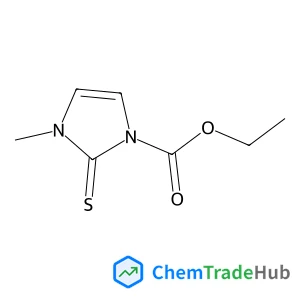
Ethyl 3-methyl-2-thioxo-2,3-dihydro-1H-imidazole-1-carboxylate(CAS: 22232-54-8)
CAS Number
Related Products

11-(Trimethoxysilyl)-1-undecanethiol
CAS Number: 877593-17-4

Tetrabenazine
CAS Number: 58-46-8

2-Butynoic acid
CAS Number: 590-93-2


Thymosin beta4
CAS Number: 77591-33-4
Other Suppliers for Ethyl 3-methyl-2-thioxo-2,3-dihydro-1H-imidazole-1-carboxylate



Basic Information
Molecular Formula
C7H10N2O2S
Molecular Weight
186.24 g/mol
Physical Properties
Melting Point
122.0 to 125.0 deg-C
Boiling Point
240.4°C at 760 mmHg
Flash Point
99.2 °C
Water Solubility
Soluble in water, ethanol, chloroform and acetone. Sightly soluble in water.
Chemical Identifiers
SMILES
CCOC(=O)N1C=CN(C1=S)C
InChIKey
CFOYWRHIYXMDOT-UHFFFAOYSA-N
Database References
MDL Number
MFCD00027421
Beilstein Registry Number
144339
FAQ
Ethyl 3-methyl-2-thioxo-2,3-dihydro-1H-imidazole-1-carboxylate (CAS: 22232-54-8) falls under regulatory guidelines such as the Globally Harmonized System of Classification and Labelling of Chemicals (GHS), REACH regulations in the EU, and FDA and EPA requirements in the United States. Proper labeling, storage, and disposal must comply with these guidelines to ensure safety and environmental protection.
Alternatives to Ethyl 3-methyl-2-thioxo-2,3-dihydro-1H-imidazole-1-carboxylate in synthesis include similar imidazole derivatives with different substituents. Common alternatives include ethyl 3-methyl-2-thio-2,3-dihydro-1H-imidazole-1-carboxylate analogs and other thioimidazoles. These can be used as effective substitutes depending on the specific application requirements.
The market for Ethyl 3-methyl-2-thioxo-2,3-dihydro-1H-imidazole-1-carboxylate is driven by its applications in pharmaceuticals and agricultural chemicals. Research trends focus on its potential as a biocidal agent and as an intermediate in the synthesis of other compounds. Market trends suggest increasing demand due to its versatile chemical properties and expanding industrial applications.
Waste containing Ethyl 3-methyl-2-thioxo-2,3-dihydro-1H-imidazole-1-carboxylate should be collected in appropriate containers and disposed of through professional waste disposal services. Incineration is a common method, but precautions must be taken to ensure no harmful emissions. Environmental protection measures include proper containment to prevent contamination of soil and water sources.
Safety Notice
Please verify product specifications and safety data before use. Contact the supplier for detailed safety information.
Always follow proper handling procedures
Contact Information
13667159345@163.com