



AD
2-Bromo-1-(3-chlorophenyl)-1-propanone(CAS: 34911-51-8)
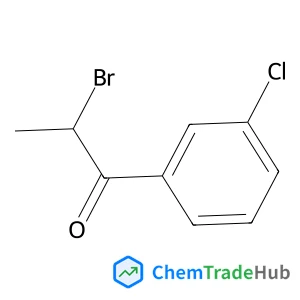
CAS Number
Related Products
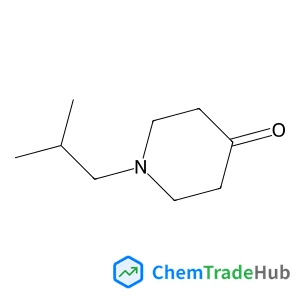
1-Isobutyl-4-piperidinone
CAS Number: 72544-16-2
![Methyl 2-[4-(4-chlorobutanoyl)phenyl]-2-methylpropanoate](https://static.chemtradehub.com/structs/154/154477-54-0-4239.webp)
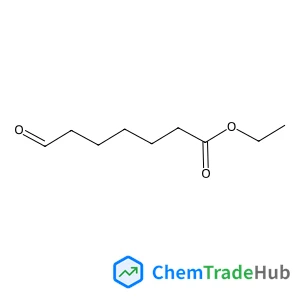
Ethyl 7-oxoheptanoate
CAS Number: 3990-05-4
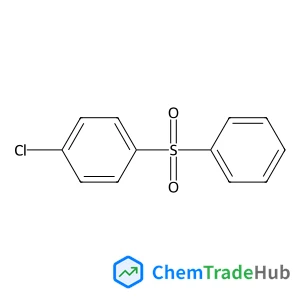
Dapsone Impurity 1
CAS Number: 80-00-2
![N-[2-(Dimethylamino)ethyl]-5-methoxy-N-methyl-N'-[4-(1-methyl-1H-indol-3-yl)-2-pyrimidinyl]-2-nitro-1,4-benzenediamine](https://static.chemtradehub.com/structs/142/1421372-67-9-cf75.webp)
![[(3aS,5R,6S,6aS)-6-Hydroxy-2,2-dimethyltetrahydrofuro[2,3-d][1,3]dioxol-5-yl](4-morpholinyl)methanone (non-preferred name)](https://static.chemtradehub.com/structs/110/1103738-19-7-ae24.webp)
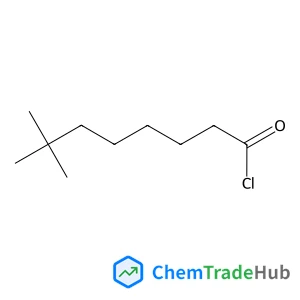
Neodecanoyl chloride
CAS Number: 40292-82-8
![2-Methyl-2-propanyl (1S,3S,5S)-3-carbamoyl-2-azabicyclo[3.1.0]hexane-2-carboxylate](https://static.chemtradehub.com/structs/361/361440-67-7-9233.webp)
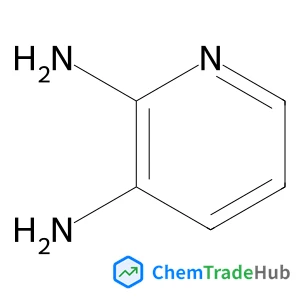
2,3-Pyridinediamine
CAS Number: 452-58-4
Other Suppliers for 2-Bromo-1-(3-chlorophenyl)-1-propanone





Basic Information
Molecular Formula
C9H8BrClO
Molecular Weight
247.52 g/mol
Chemical Identifiers
SMILES
CC(C(=O)C1=CC(=CC=C1)Cl)Br
InChIKey
OFNMQTRHMBQQEA-UHFFFAOYSA-N
Database References
MDL Number
MFCD03701150
Beilstein Registry Number
2360404
FAQ
2-Bromo-1-(3-chlorophenyl)-1-propanone (CAS: 34911-51-8) has a crystalline form at room temperature. It has a molecular weight of approximately 226.01 g/mol. This compound is slightly soluble in water but more soluble in organic solvents like ethanol and acetone. Chemically, it is relatively stable but can undergo bromination and chlorination reactions under certain conditions. It does not have strong reactivity towards common organic reagents.
2-Bromo-1-(3-chlorophenyl)-1-propanone (CAS: 34911-51-8) is typically synthesized through a multi-step procedure involving the bromination of 1-(3-chlorophenyl)-1-propanone. The synthesis requires careful control of reaction conditions, such as temperature and reagent concentration, to achieve high selectivity and yield. Commonly used catalysts include organobromine compounds under basic conditions.
2-Bromo-1-(3-chlorophenyl)-1-propanone (CAS: 34911-51-8) is used in a range of industries, including pharmaceuticals, where it serves as an intermediate in the synthesis of various drugs. It is also used in the production of polymers and in the development of sensors and semiconductors due to its chemical reactivity and specific functional groups.
When handling 2-Bromo-1-(3-chlorophenyl)-1-propanone (CAS: 34911-51-8), appropriate personal protective equipment (PPE), such as gloves, goggles, and a lab coat, should be worn. It is essential to work in a well-ventilated area or fume hood to avoid inhalation of vapors. Spills should be handled carefully using absorbent materials, and the material safety data sheet (MSDS) should be consulted for specific spill procedures. Direct contact with skin and eyes must be avoided, and proper disposal methods should be followed according to local regulations.
Safety Notice
Please verify product specifications and safety data before use. Contact the supplier for detailed safety information.
Always follow proper handling procedures
Contact Information
Contact Person
Manager Zhang
rick@rcc.net.cn