



AD
3-(benzyloxy)cyclobutan-1-one(CAS: 30830-27-4)
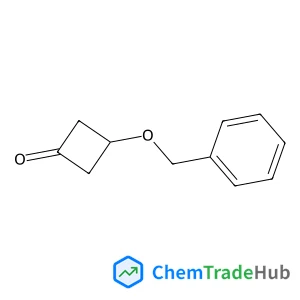
CAS Number
Related Products
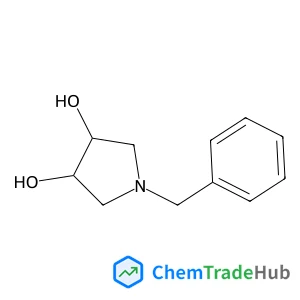
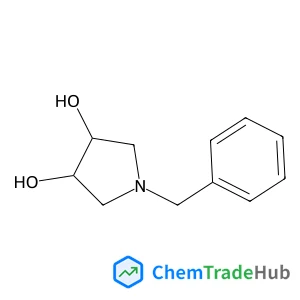
(3S,4S)-1-benzylpyrrolidine-3,4-diol
CAS Number: 90365-74-5
![(4R,5S,6S)-6-[(1R)-1-Hydroxyethyl]-4-methyl-7-oxo-3-({(3S,5S)-5-[(sulfamoylamino)methyl]-3-pyrrolidinyl}sulfanyl)-1-azabicyclo[3.2.0]hept-2-ene-2-carboxylic acid](https://static.chemtradehub.com/structs/148/148016-81-3-1211.webp)
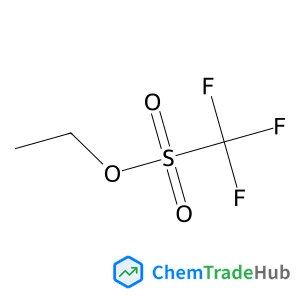
Ethyl trifluoromethanesulfonate
CAS Number: 425-75-2
![2,8-Diazaspiro[4.5]decan-3-one](https://static.chemtradehub.com/structs/561/561314-57-6-ad09.webp)
2,8-Diazaspiro[4.5]decan-3-one
CAS Number: 561314-57-6
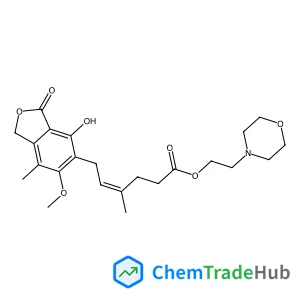
Mycophenolate Mofetil
CAS Number: 115007-34-6
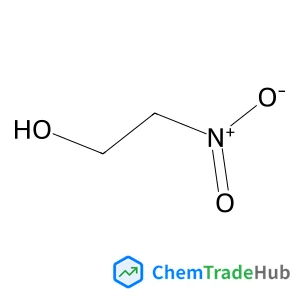
2-Nitroethanol
CAS Number: 625-48-9
Other Suppliers for 3-(benzyloxy)cyclobutan-1-one





Basic Information
Molecular Formula
C11H12O2
Molecular Weight
176.21 g/mol
Physical Properties
Boiling Point
285 ºC
Flash Point
126 ºC
Chemical Identifiers
SMILES
O=C1CC(C1)OCc2ccccc2
InChIKey
GPPSQLLIFNWNSB-UHFFFAOYSA-N
Database References
MDL Number
MFCD09755991
FAQ
3-(Benzyloxy)cyclobutan-1-one (CAS: 30830-27-4) is a solid with a crystalline form. Its molecular weight is approximately 212.25 g/mol. It is slightly soluble in water but soluble in organic solvents like ethanol and acetone. This compound exhibits moderate reactivity, particularly towards nucleophilic substitution reactions. It has a melting point of around 85-87°C and a boiling point of about 190-195°C.
3-(Benzyloxy)cyclobutan-1-one (CAS: 30830-27-4) is typically synthesized through the condensation of benzyl alcohol and cyclobutanone using a Lewis acid catalyst such as aluminum chloride. This reaction is carried out in an inert solvent like dichloromethane. The yield is usually around 75-85%, and the product can be purified by recrystallization or distillation.
3-(Benzyloxy)cyclobutan-1-one (CAS: 30830-27-4) is used primarily in pharmaceuticals for the synthesis of certain drug intermediates. It also finds applications in the polymer industry as a monomer for the production of functionalized polymers. Additionally, this compound is used in the sensor industry for gas detection and in semiconductor manufacturing as a precursor for functional materials.
When handling 3-(benzyloxy)cyclobutan-1-one (CAS: 30830-27-4), it is crucial to wear appropriate personal protective equipment (PPE) such as gloves, goggles, and a lab coat. Work in a well-ventilated area or a fume hood to avoid inhalation of vapors. Spills should be handled by absorbing with an appropriate material and disposing of the waste in accordance with local regulations. Always consult the Material Safety Data Sheet (MSDS) for detailed safety information.
Safety Notice
Please verify product specifications and safety data before use. Contact the supplier for detailed safety information.
Always follow proper handling procedures