



AD
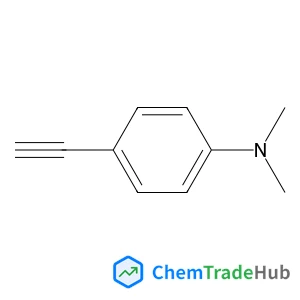
4-Ethynyl-N,N-dimethylaniline(CAS: 17573-94-3)
CAS Number
Related Products
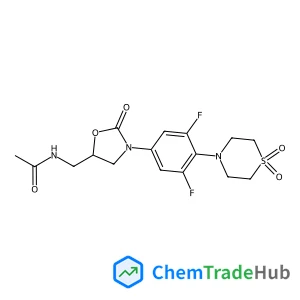
![3-Cyclopropyl-1-(2-fluoro-4-iodophenyl)-5-hydroxy-6,8-dimethylpyrido[2,3-d]pyrimidine-2,4,7(1H,3H,8H)-trione](https://static.chemtradehub.com/structs/871/871700-24-2-c5dd.webp)
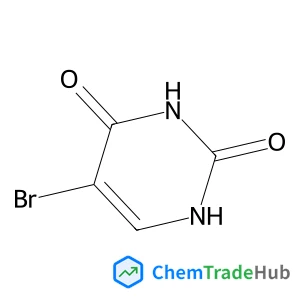
5-Bromo-2,4(1H,3H)-pyrimidinedione
CAS Number: 51-20-7
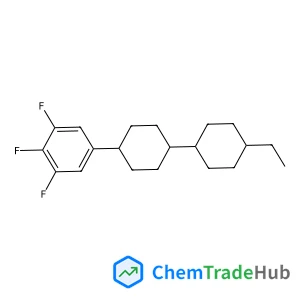
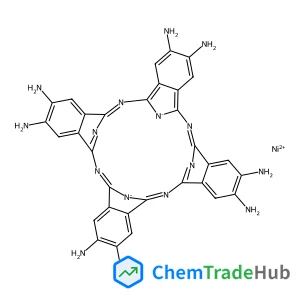
![3-Iodo-1H-pyrrolo[2,3-b]pyridine-4-carbonitrile](https://static.chemtradehub.com/structs/956/956485-59-9-1f04.webp)
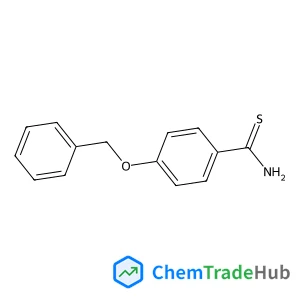
4-Benzyloxy-thiobenzamide
CAS Number: 161975-22-0
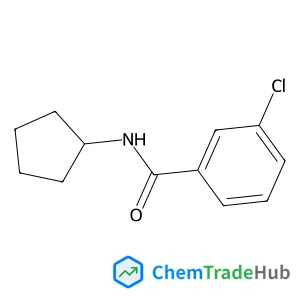
3-Chloro-N-cyclopentylbenzamide
CAS Number: 349128-33-2
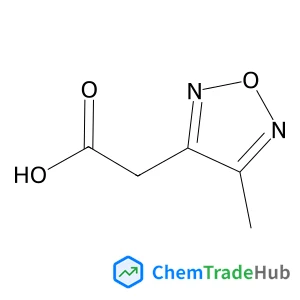
Other Suppliers for 4-Ethynyl-N,N-dimethylaniline





Basic Information
Molecular Formula
C10H11N
Molecular Weight
145.2 g/mol
Physical State
Pale-yellow to Yellow-brown Solid
Physical Properties
Melting Point
49.0 to 53.0 deg-C
Boiling Point
227.9±23.0 ºC (760 Torr),
Chemical Identifiers
SMILES
CN(C)C1=CC=C(C=C1)C#C
InChIKey
ZWMAYLMVFSCMMS-UHFFFAOYSA-N
Database References
MDL Number
MFCD00168816
FAQ
4-Ethynyl-N,N-dimethylaniline (CAS: 17573-94-3) falls under multiple regulatory guidelines. It is classified under GHS hazard category 4, and its handling and storage must comply with OSHA and NFPA standards. For synthesis and manufacturing, REACH regulations mandate registration, evaluation, and authorization. FDA and EPA regulations require documentation of safe handling and disposal practices to ensure environmental protection and worker safety.
While 4-Ethynyl-N,N-dimethylaniline (CAS: 17573-94-3) is a specific compound, alternatives like 4-aminopyridine or other substituted anilines can be used as equivalents in certain synthetic pathways. These alternatives offer similar functional groups for modification and can be chosen based on reaction conditions, availability, and cost. It is important to consider the specific requirements of the synthesis when selecting a substitute.
The market for 4-Ethynyl-N,N-dimethylaniline (CAS: 17573-94-3) is currently stable with increasing research interest due to its unique chemical properties. Recent studies focus on its applications in organic synthesis, particularly in the preparation of functionalized compounds. Trends indicate growing demand in pharmaceutical and material science sectors, driven by its ability to enhance reactivity and introduce specific functional groups.
Handling waste containing 4-Ethynyl-N,N-dimethylaniline (CAS: 17573-94-3) requires careful attention to environmental and safety regulations. Waste should be collected in appropriate containers and stored away from heat and direct sunlight. Professional waste disposal services should be utilized for proper incineration or chemical treatment. Environmental precautions include ensuring no spillage and wearing personal protective equipment (PPE) to prevent exposure. Compliance with local hazardous waste regulations is essential to avoid environmental contamination and ensure worker safety.
Safety Notice
Please verify product specifications and safety data before use. Contact the supplier for detailed safety information.
Always follow proper handling procedures
Contact Information
Contact Person
Fang Rui
wangkang@jskchem.com
Mobile
15221441005
Telephone
15221441005
Visit Website
https://www.jskchem.comAddress
No chemical compound information was provided to translate. Please provide the relevant chemical information for translation.