



AD
1-Benzyl-3-pyrrolidinamine(CAS: 18471-40-4)
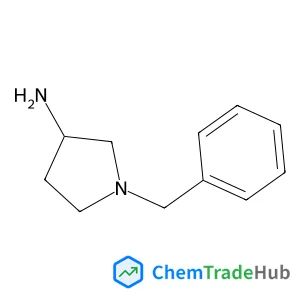
CAS Number
Related Products
![[3-(2-Hydroxyethyl)phenyl]boronic acid](https://static.chemtradehub.com/structs/647/647853-32-5-c363.webp)
![N-(Butylsulfonyl)-O-[4-(4-piperidinyl)butyl]-L-tyrosine hydrochloride hydrate](https://static.chemtradehub.com/structs/150/150915-40-5-1679.webp)
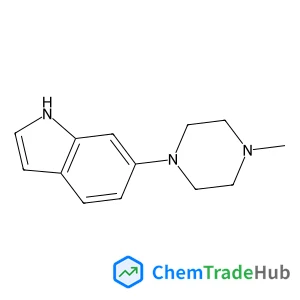
6-(4-methylpiperazin-1-yl)-1H-indole
CAS Number: 321745-04-4
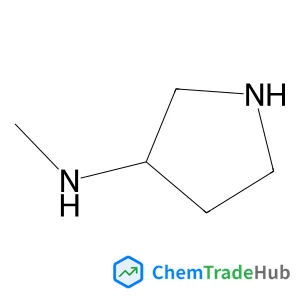
N-Methyl-3-pyrrolidinamine
CAS Number: 83030-08-4
![2-Chloro-N-[4-chloro-3-(2-pyridinyl)phenyl]-4-(methylsulfonyl)benzamide](https://static.chemtradehub.com/structs/879/879085-55-9-5abe.webp)

3-Nonyne
CAS Number: 20184-89-8
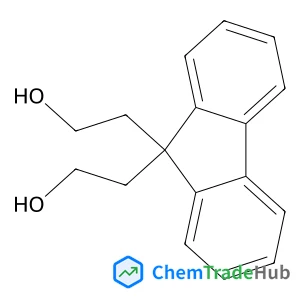
2,2'-(9H-fluorene-9,9-diyl)diethanol
CAS Number: 203070-78-4
![1,4-Dioxaspiro[4.5]dec-8-ylacetic acid](https://static.chemtradehub.com/structs/134/134136-04-2-8def.webp)
Other Suppliers for 1-Benzyl-3-pyrrolidinamine






Basic Information
Molecular Formula
C11H16N2
Molecular Weight
176.26 g/mol
Physical Properties
Melting Point
No data available
Boiling Point
261.5±33.0 °C at 760 mmHg
Flash Point
>110 ºC
Chemical Identifiers
SMILES
C1CN(CC1N)CC2=CC=CC=C2
InChIKey
HBVNLKQGRZPGRP-UHFFFAOYSA-N
Database References
MDL Number
MFCD00059036
FAQ
1-Benzyl-3-pyrrolidinamine (CAS: 18471-40-4) is regulated under the Globally Harmonized System of Classification and Labeling of Chemicals (GHS), REACH regulations in the EU, and FDA/EPA guidelines. Producers and handlers must ensure compliance with these regulations, including proper labeling, safety data sheets, and documentation of handling and disposal methods.
Alternatives to 1-Benzyl-3-pyrrolidinamine include other pyrrolidinamine derivatives such as 1-phenyl-3-pyrrolidinamine and 1-methyl-3-pyrrolidinamine. These compounds can serve as substitutes in certain synthetic processes due to their similar functional groups and chemical properties, although specific alternatives depend on the desired reaction outcomes and molecular targets.
The research trend for 1-Benzyl-3-pyrrolidinamine (CAS: 18471-40-4) focuses on its applications in medicinal chemistry, particularly in the development of novel therapeutic agents. Market trends indicate increasing interest in its potential as a precursor for drug synthesis and in the exploration of its pharmacological activities. Emerging studies are also investigating its role in the modification of protein structures and its use in the formulation of advanced pharmaceuticals.
Waste containing 1-Benzyl-3-pyrrolidinamine (CAS: 18471-40-4) should be collected in appropriate containers and stored separately from incompatible materials. Proper waste disposal must adhere to local regulations and guidelines. For safe disposal, consider professional waste treatment services that specialize in handling organic compounds. Environmental precautions include ensuring that waste is neutralized or rendered non-toxic before disposal to prevent contamination of soil and water resources.
Safety Notice
Please verify product specifications and safety data before use. Contact the supplier for detailed safety information.
Always follow proper handling procedures

Contact Information
Contact Person
Miss Xu
1986399151@qq.com
Mobile
15221998634
Telephone
021-59178156
Visit Website
https://www.yingxinbio.com/Address
Yugang Town Yiling Road 258 Lane C Zone