



AD
2-amino-4-phenylbutanoic acid(CAS: 1012-05-1)
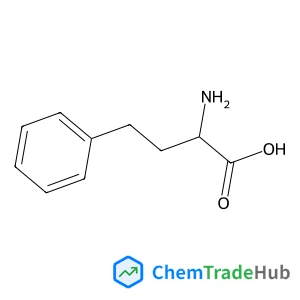
CAS Number
Related Products
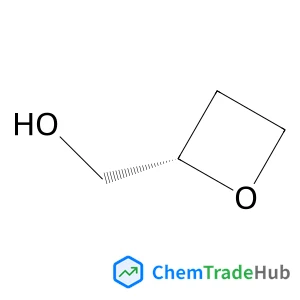
(2S)-2-Oxetanylmethanol
CAS Number: 2090778-00-8
![Bis(2-ethylhexyl) 4,4'-{[6-({4-[(2-methyl-2-propanyl)carbamoyl]phenyl}amino)-1,3,5-triazine-2,4-diyl]diimino}dibenzoate](https://static.chemtradehub.com/structs/154/154702-15-5-db8d.webp)
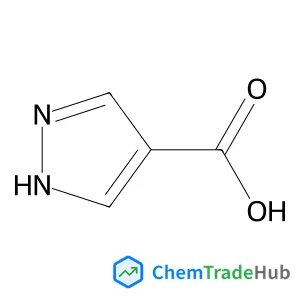
1H-Pyrazole-4-carboxylic acid
CAS Number: 37718-11-9
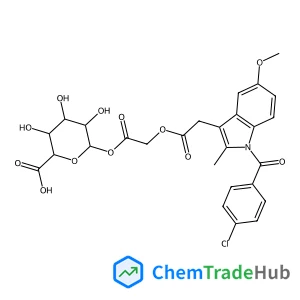
Acemetacin-Acyl-β-D-Glucuronide
CAS Number: 1260603-31-3
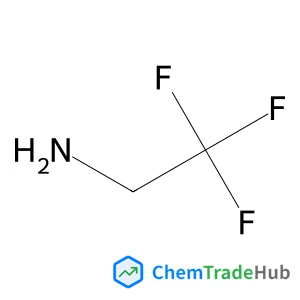
2,2,2-Trifluoroethanamine
CAS Number: 753-90-2
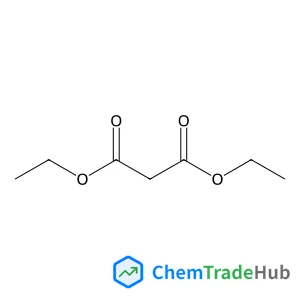
Diethyl malonate
CAS Number: 105-53-3
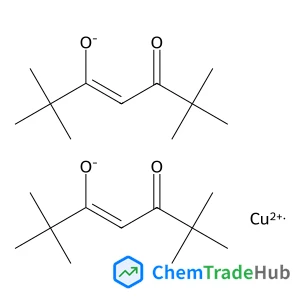
Di(dipivaloylmethanato)copper
CAS Number: 14040-05-2
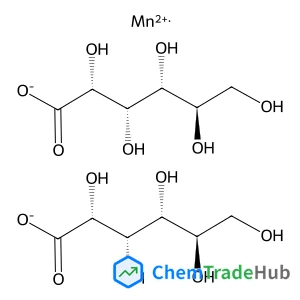
Manganese(2+) di(D-gluconate)
CAS Number: 6485-39-8
Other Suppliers for 2-amino-4-phenylbutanoic acid






Basic Information
Molecular Formula
C10H13NO2
Molecular Weight
179.22 g/mol
Physical Properties
Melting Point
294°C(lit.)
Boiling Point
5100°C
Density
1.1640
Flash Point
150.2±25.9 °C
Chemical Identifiers
SMILES
C1=CC=C(C=C1)CCC(C(=O)O)N
InChIKey
JTTHKOPSMAVJFE-UHFFFAOYSA-N
Database References
MDL Number
MFCD00063092
FAQ
2-Amino-4-phenylbutanoic acid is a white to off-white crystalline solid with a molecular weight of approximately 212.26 g/mol. It has a solubility of about 0.2 g/L in water and is slightly soluble in ethanol. It is moderately reactive, capable of undergoing amide and ester formation. It is stable under normal storage conditions but should be protected from moisture and light.
2-Amino-4-phenylbutanoic acid is typically synthesized by the coupling of phenylalanine with an amino acid or via the condensation of 4-phenylbutyric anhydride with an amine. Commonly, the synthesis involves the use of coupling agents like dicyclohexylcarbodiimide (DCC) and 4-(dimethylamino)pyridine (DMAP) as catalysts, with good yield and selectivity.
2-Amino-4-phenylbutanoic acid is used in the pharmaceutical industry for the synthesis of certain drugs due to its biological activity. It is also used in the preparation of organic polymers, particularly in the development of biodegradable materials. Additionally, it can be employed in the manufacturing of sensors and semiconductors.
When handling 2-amino-4-phenylbutanoic acid, it is important to use personal protective equipment (PPE) such as gloves, goggles, and a lab coat. Work should be conducted in a fume hood to minimize inhalation risks. Spills should be cleaned up using appropriate spill kits, and the area should be well-ventilated. Safety data sheets (SDS) should be consulted for detailed handling procedures and emergency response guidelines.
Safety Notice
Please verify product specifications and safety data before use. Contact the supplier for detailed safety information.
Always follow proper handling procedures
Contact Information
Contact Person
Manager Cai
507167383@qq.com
Mobile
18662931390
Telephone
0513-66017679
Visit Website
https://www.rfhckj.com/Address
Yongli Road 17, Chongchuan District