



AD
Methyl (2-{4-[(4-chlorophenyl)(phenyl)methyl]-1-piperazinyl}ethoxy)acetate(CAS: 83881-46-3)
![Methyl (2-{4-[(4-chlorophenyl)(phenyl)methyl]-1-piperazinyl}ethoxy)acetate](https://static.chemtradehub.com/structs/838/83881-46-3-a055.webp "Methyl (2-{4-[(4-chlorophenyl)(phenyl)methyl]-1-piperazinyl}ethoxy)acetate")
CAS Number
Related Products
![2-[(6-Methoxy-1H-benzimidazol-2-yl)methyl]-3,5-dimethyl-4(1H)-pyridinone](https://static.chemtradehub.com/structs/138/1384163-92-1-9a16.webp)
![N-[(2'-Cyano-4-biphenylyl)methyl]-N-pentanoyl-L-valine](https://static.chemtradehub.com/structs/443/443093-86-5-91f8.webp)
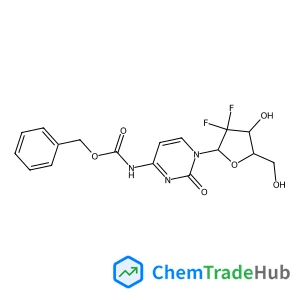
N-Carboxybenzyl Gemcitabine
CAS Number: 138685-83-3
![3-(6-Chloro-5-fluoropyrimidin-4-YL)-2-(2,4-difluorophenyl)-1-[1,2,4]triazol-1-YL-butan-2-OL](https://static.chemtradehub.com/structs/137/137234-75-4-eadc.webp)
![1-[[(2E)-3-Phenyl-2-propen-1-yl]oxy]naphthalene](https://static.chemtradehub.com/structs/109/1091626-77-5-7310.webp)
![5-[(2S)-2-{[2-(2-Ethoxyphenoxy)ethyl]amino}propyl]-2-methoxybenzenesulfonamide](https://static.chemtradehub.com/structs/106/106138-88-9-ea21.webp)
Other Suppliers for Methyl (2-{4-[(4-chlorophenyl)(phenyl)methyl]-1-piperazinyl}ethoxy)acetate
![Methyl (2-{4-[(4-chlorophenyl)(phenyl)methyl]-1-piperazinyl}ethoxy)acetate — ShenZhenZhenJiangShengWuJiShu Co Ltd](https://static.chemtradehub.com/suppliers/67cec9142b2de6e8e95a51e7/67cec9142b2de6e8e95a51e7-logo.webp)
![Methyl (2-{4-[(4-chlorophenyl)(phenyl)methyl]-1-piperazinyl}ethoxy)acetate — Shanghai Jixiang Biotechnology Co., Ltd.](https://static.chemtradehub.com/suppliers/67ce6f4d2b2de6e8e95a45bf/67ce6f4d2b2de6e8e95a45bf-logo.webp)
![Methyl (2-{4-[(4-chlorophenyl)(phenyl)methyl]-1-piperazinyl}ethoxy)acetate — Hubei Yangxin Pharmaceutical Technology Co., Ltd.](https://static.chemtradehub.com/suppliers/67cded3957537e5c8069af88/67cded3957537e5c8069af88-logo.webp)
![Methyl (2-{4-[(4-chlorophenyl)(phenyl)methyl]-1-piperazinyl}ethoxy)acetate — Shanghai Yuyeh Biotechnology Co., Ltd.](https://static.chemtradehub.com/suppliers/67ce9f132b2de6e8e95a48fe/67ce9f132b2de6e8e95a48fe-logo.webp)
![Methyl (2-{4-[(4-chlorophenyl)(phenyl)methyl]-1-piperazinyl}ethoxy)acetate — ShenZhenAiTaHuaXue Co Ltd](https://static.chemtradehub.com/suppliers/67ced0fb2b2de6e8e95a67fa/67ced0fb2b2de6e8e95a67fa-logo.webp)
Basic Information
Molecular Formula
C22H27ClN2O3
Molecular Weight
402.92 g/mol
Chemical Identifiers
SMILES
COC(=O)COCCN1CCN(CC1)C(c2ccccc2)c3ccc(cc3)Cl
InChIKey
BYCHNMFDSQCCDD-UHFFFAOYSA-N
Database References
MDL Number
MFCD18252586
FAQ
Methyl (2-{4-[(4-chlorophenyl)(phenyl)methyl]-1-piperazinyl}ethoxy)acetate (CAS: 83881-46-3) falls under the scope of the Globally Harmonized System of Classification and Labelling of Chemicals (GHS) and is classified as a hazardous substance based on its potential health and environmental impacts. Additionally, it must comply with the Registration, Evaluation, Authorisation and Restriction of Chemicals (REACH) regulations in the European Union, which require detailed safety data sheets (SDS) and risk management information. In the United States, the Food and Drug Administration (FDA) and Environmental Protection Agency (EPA) mandate compliance with specific handling and disposal requirements to ensure worker safety and environmental protection.
There are several alternatives to Methyl (2-{4-[(4-chlorophenyl)(phenyl)methyl]-1-piperazinyl}ethoxy)acetate (CAS: 83881-46-3) in synthesis, including the use of related piperazine derivatives or other acylating agents that can serve similar functional roles in organic chemistry. Common alternatives include 4-(phenylmethyl)piperazine-1-carboxylic acid, which can be used to create similar ether structures through esterification and acylation processes. These alternatives can offer similar reactivity and functionality but may have different handling and regulatory requirements.
The market and research trends for Methyl (2-{4-[(4-chlorophenyl)(phenyl)methyl]-1-piperazinyl}ethoxy)acetate (CAS: 83881-46-3) are primarily driven by its use in pharmaceuticals and fine chemicals. Recent research has focused on optimizing synthetic methods and exploring its potential in drug discovery and development. Market trends indicate increasing demand in the pharmaceutical industry, particularly for novel therapeutics targeting specific diseases. The trend is also towards more sustainable and environmentally friendly synthesis methods to meet regulatory and ethical standards.
Waste containing Methyl (2-{4-[(4-chlorophenyl)(phenyl)methyl]-1-piperazinyl}ethoxy)acetate (CAS: 83881-46-3) should be collected in appropriate, labeled containers and stored in a well-ventilated area away from sources of ignition and incompatible materials. For safe disposal, consult the material safety data sheet (MSDS) and follow local, state, and federal regulations regarding hazardous waste management. Typically, professional waste disposal services should be utilized to ensure compliance with environmental protection standards. Proper incineration in a licensed facility or chemical recycling processes may be necessary to manage the waste effectively while minimizing environmental impact.
Safety Notice
Please verify product specifications and safety data before use. Contact the supplier for detailed safety information.
Always follow proper handling procedures
Contact Information
Contact Person
Wang Manager
3008058303@qq.com