



AD
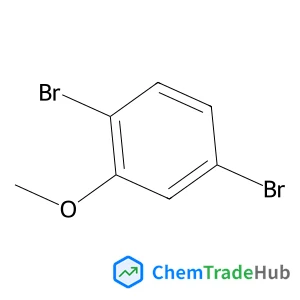
2,5-Dibromoanisole(CAS: 95970-08-4)
CAS Number
Related Products
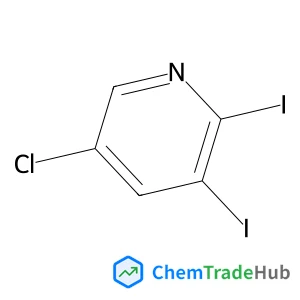
5-Chloro-2,3-diiodopyridine
CAS Number: 1261365-71-2
![5-Bromo-6-fluoro-1H-pyrrolo[2,3-b]pyridine](https://static.chemtradehub.com/structs/120/1207625-29-3-38b4.webp)

Tco-peg12-dbco
CAS Number: 2055022-06-3
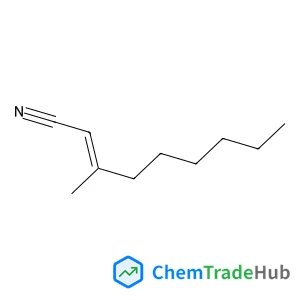
3-Methyl-2-nonenenitrile
CAS Number: 53153-66-5
![Ethyl 2-ethoxy-4-[2-({(1S)-3-methyl-1-[2-(1-piperidinyl)phenyl]butyl}amino)-2-oxoethyl]benzoate](https://static.chemtradehub.com/structs/147/147770-06-7-5fb6.webp)
![2-Methyl[1,3]oxazolo[5,4-d]pyrimidin-7(6H)-one](https://static.chemtradehub.com/structs/274/27433-55-2-83e8.webp)
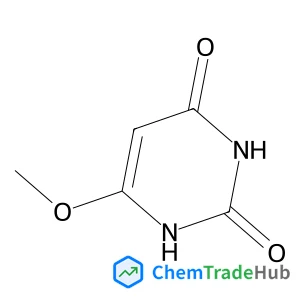
6-Methoxy-2,4(1H,3H)-pyrimidinedione
CAS Number: 29458-38-6
Other Suppliers for 2,5-Dibromoanisole





Basic Information
Molecular Formula
C7H6Br2O
Molecular Weight
265.93 g/mol
Physical Properties
Boiling Point
257-261 ºC
Density
1.823±0.06 g/cm3 (20 ºC 760 Torr),
Flash Point
99.1±20.3 ºC,
Chemical Identifiers
SMILES
COC1=C(C=CC(=C1)Br)Br
InChIKey
YJGNTPRGNRICPY-UHFFFAOYSA-N
Database References
MDL Number
MFCD07780698
FAQ
2,5-Dibromoanisole (CAS: 95970-08-4) falls under the classification of a brominated compound. It is regulated under the Globally Harmonized System of Classification and Labeling of Chemicals (GHS), which requires specific hazard communication labels and safety data sheets (SDS). According to REACH regulations in the European Union, it may require authorization if it meets the criteria for a SEHC or SSVHC. In the USA, it is regulated by the FDA for certain uses and by the EPA regarding environmental and occupational safety.
Yes, there are alternatives to 2,5-Dibromoanisole in synthesis. Common substitutes include other brominated anisoles or isomers, such as 2-bromoanisole or 5-bromoanisole, which can serve similar functions in different applications. Additionally, some syntheses may use alternative brominating agents or reagents to achieve the desired bromination without the specific compound.
The market for 2,5-Dibromoanisole (CAS: 95970-08-4) is driven by its use in the fragrance and flavor industry, particularly as a minor component in certain perfumes. Research trends are focusing on its use in the food industry and its potential environmental impact. Recent studies are exploring its biodegradability and possible applications in biocidal products. Demand may fluctuate based on these trends and regulatory changes.
Waste containing 2,5-Dibromoanisole (CAS: 95970-08-4) should be handled according to the specific disposal regulations. Proper collection and neutralization of the waste is recommended to reduce its toxicity. Incineration is an effective method, especially in industrial settings. Professional waste disposal services should be used to ensure compliance with environmental regulations. Environmental protection measures include ensuring the waste does not contaminate water sources and that all disposal methods are safe for workers.
Safety Notice
Please verify product specifications and safety data before use. Contact the supplier for detailed safety information.
Always follow proper handling procedures

Contact Information
Contact Person
Manager Yu
710378061@qq.com
Mobile
18605105771
Visit Website
https://www.sanhua-chem.com/Address
No. 688 Jiushuire Lu, Building 1, Jinshanwei Town, Jinshan District, Shanghai