



AD
2-Methyl-2-propanyl 3-(aminomethyl)-1-piperidinecarboxylate(CAS: 162167-97-7)
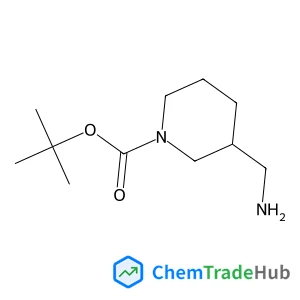
CAS Number
Related Products
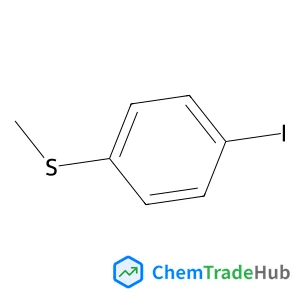
1-Iodo-4-(methylsulfanyl)benzene
CAS Number: 35371-03-0
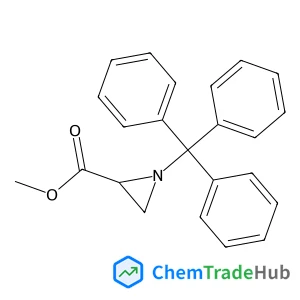

Dichloro-lambda~2~-plumbane
CAS Number: 7758-95-4
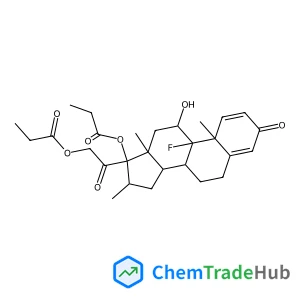
PUMICE STONE
CAS Number: 1332-09-8
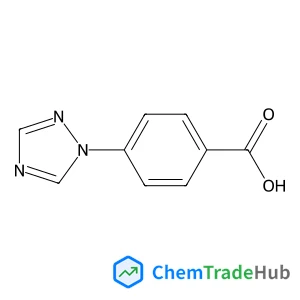
4-(1H-1,2,4-Triazol-1-yl)benzoic acid
CAS Number: 162848-16-0

2,3-Dibromobutane
CAS Number: 5408-86-6
SOYBEAN MEAL
CAS Number: 68308-36-1
![2-Chloro-N-[2-(2,6-dioxo-3-piperidinyl)-1,3-dioxo-2,3-dihydro-1H-isoindol-4-yl]acetamide](https://static.chemtradehub.com/structs/444/444287-84-7-fa4b.webp)
Other Suppliers for 2-Methyl-2-propanyl 3-(aminomethyl)-1-piperidinecarboxylate




Basic Information
Molecular Formula
C11H22N2O2
Molecular Weight
214.31 g/mol
Physical State
Colorless to Yellow Liquid
Physical Properties
Boiling Point
299.4℃ at 760 mmHg
Chemical Identifiers
SMILES
CC(C)(C)OC(=O)N1CCCC(C1)CN
InChIKey
WPWXYQIMXTUMJB-UHFFFAOYSA-N
Database References
MDL Number
MFCD01317792
FAQ
2-Methyl-2-propanyl 3-(aminomethyl)-1-piperidinecarboxylate (CAS: 162167-97-7) is a colorless to slightly yellow crystalline solid with a molecular weight of approximately 226.35 g/mol. It has a solubility in water of about 2 g/L at 20°C. The compound is moderately reactive, particularly susceptible to hydrolysis under basic conditions. It is soluble in common organic solvents such as methanol and acetonitrile.
2-Methyl-2-propanyl 3-(aminomethyl)-1-piperidinecarboxylate (CAS: 162167-97-7) is typically synthesized through the reaction of 3-(aminomethyl)-1-piperidinecarboxylic acid with 2-methyl-2-propanol. The synthesis usually involves esterification under basic conditions, using sodium hydroxide or potassium hydroxide as catalysts. The reaction yields a mixture that can be purified by recrystallization from an appropriate solvent.
2-Methyl-2-proanyl 3-(aminomethyl)-1-piperidinecarboxylate (CAS: 162167-97-7) is primarily used in the pharmaceutical industry as an intermediate in the synthesis of various drugs. It also finds applications in the polymer industry for the preparation of functionalized polymers and in sensor technology for the development of biosensors and chemosensors.
When handling 2-Methyl-2-proanyl 3-(aminomethyl)-1-piperidinecarboxylate (CAS: 162167-97-7), it is important to use appropriate personal protective equipment (PPE) such as gloves, goggles, and lab coat. Work should be done in a well-ventilated area or a fume hood to avoid inhalation. Spills should be handled by sweeping or vacuuming, not by sweeping with a broom. Follow standard laboratory safety protocols and consult the Material Safety Data Sheet (MSDS/SDS) for detailed handling instructions.
Safety Notice
Please verify product specifications and safety data before use. Contact the supplier for detailed safety information.
Always follow proper handling procedures
Contact Information
Contact Person
Ludu
order@canspecsci.com