



AD
ethyl 2-cyano-4,4-diethoxybutanoate(CAS: 52133-67-2)
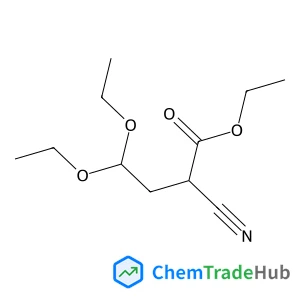
CAS Number
Related Products
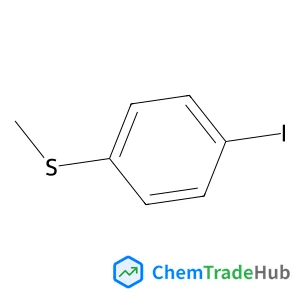
1-Iodo-4-(methylsulfanyl)benzene
CAS Number: 35371-03-0
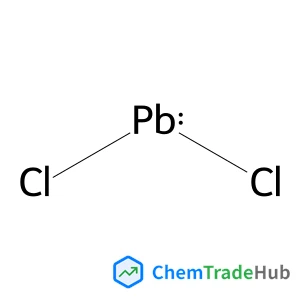
Dichloro-lambda~2~-plumbane
CAS Number: 7758-95-4
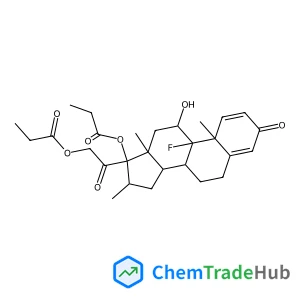
PUMICE STONE
CAS Number: 1332-09-8
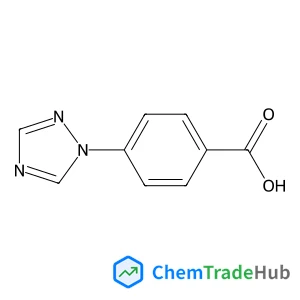
4-(1H-1,2,4-Triazol-1-yl)benzoic acid
CAS Number: 162848-16-0
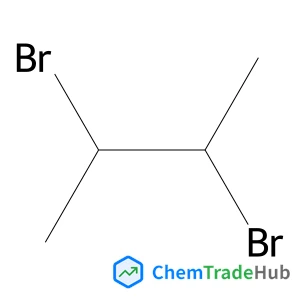
2,3-Dibromobutane
CAS Number: 5408-86-6
SOYBEAN MEAL
CAS Number: 68308-36-1
![2-Chloro-N-[2-(2,6-dioxo-3-piperidinyl)-1,3-dioxo-2,3-dihydro-1H-isoindol-4-yl]acetamide](https://static.chemtradehub.com/structs/444/444287-84-7-fa4b.webp)
Other Suppliers for ethyl 2-cyano-4,4-diethoxybutanoate



Basic Information
Molecular Formula
C11H19NO4
Molecular Weight
229.27 g/mol
Physical Properties
Boiling Point
335.2℃ at 760 mmHg
Density
1,025 g/cm3
Flash Point
>110°C
Chemical Identifiers
SMILES
CCOC(CC(C#N)C(=O)OCC)OCC
InChIKey
AHKACZDKUNMFBD-UHFFFAOYSA-N
Database References
MDL Number
MFCD02094250
FAQ
Ethyl 2-cyano-4,4-diethoxybutanoate is a colorless to slightly yellow liquid at room temperature. Its molecular weight is approximately 258.25 g/mol. It has a pKa of around 14, indicating basicity. This compound is soluble in common organic solvents such as ethanol and acetone. Chemically, it is reactive towards nucleophiles and can undergo ester hydrolysis or cyanide displacement reactions.
Ethyl 2-cyano-4,4-diethoxybutanoate is commonly synthesized via the reaction of 2-cyano-4,4-diethoxybutanoyl chloride with ethanol. This reaction requires a suitable catalyst for better control over the diesterification step, often using a phase transfer catalyst. The yield is generally around 85-90%, with high selectivity towards the desired product.
Ethyl 2-cyano-4,4-diethoxybutanoate finds application in the pharmaceutical industry for the synthesis of certain intermediates. It is also used in the polymer industry as a monomer or additive, and in the sensor industry for the development of gas-sensitive materials. Its unique chemical properties make it suitable for use in semiconductors as well.
Proper Personal Protective Equipment (PPE) is essential when handling ethyl 2-cyano-4,4-diethoxybutanoate. This includes gloves, safety goggles, and a lab coat. It is recommended to use a fume hood to minimize exposure to vapors. Spills should be handled by neutralizing the cyanide group with a basic solution, followed by appropriate disposal. Always refer to the Safety Data Sheet (SDS) for more detailed safety information.
Safety Notice
Please verify product specifications and safety data before use. Contact the supplier for detailed safety information.
Always follow proper handling procedures
Contact Information
Contact Person
Ludu
order@canspecsci.com