



AD
F4-TCNQ(CAS: 29261-33-4)
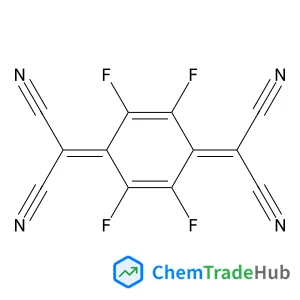
CAS Number
Related Products
![[3-(2-Hydroxyethyl)phenyl]boronic acid](https://static.chemtradehub.com/structs/647/647853-32-5-c363.webp)
![N-(Butylsulfonyl)-O-[4-(4-piperidinyl)butyl]-L-tyrosine hydrochloride hydrate](https://static.chemtradehub.com/structs/150/150915-40-5-1679.webp)
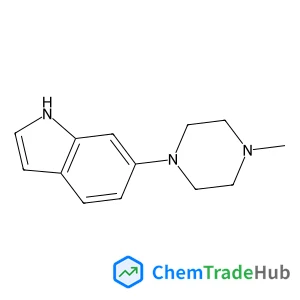
6-(4-methylpiperazin-1-yl)-1H-indole
CAS Number: 321745-04-4
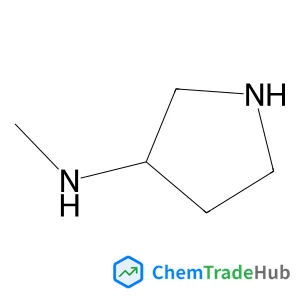
N-Methyl-3-pyrrolidinamine
CAS Number: 83030-08-4
![2-Chloro-N-[4-chloro-3-(2-pyridinyl)phenyl]-4-(methylsulfonyl)benzamide](https://static.chemtradehub.com/structs/879/879085-55-9-5abe.webp)
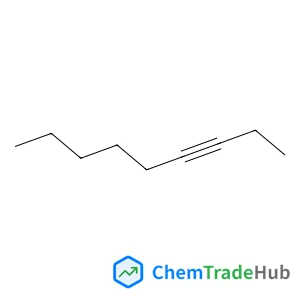
3-Nonyne
CAS Number: 20184-89-8
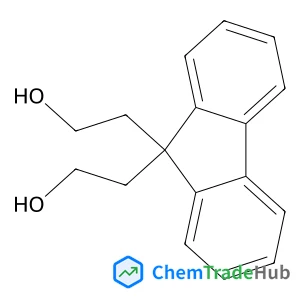
2,2'-(9H-fluorene-9,9-diyl)diethanol
CAS Number: 203070-78-4
![1,4-Dioxaspiro[4.5]dec-8-ylacetic acid](https://static.chemtradehub.com/structs/134/134136-04-2-8def.webp)
Other Suppliers for F4-TCNQ




Basic Information
Molecular Formula
C12F4N4
Molecular Weight
276.15 g/mol
Physical Properties
Melting Point
300°C(dec.)(lit.)
Chemical Identifiers
SMILES
C(#N)C(=C1C(=C(C(=C(C#N)C#N)C(=C1F)F)F)F)C#N
InChIKey
IXHWGNYCZPISET-UHFFFAOYSA-N
Database References
MDL Number
MFCD00042382
FAQ
F4-TCNQ (CAS: 29261-33-4) is classified under the Globally Harmonized System (GHS) as a Category 1A Skin Corrosion/Irritation agent. It falls under the European Union's Registration, Evaluation, Authorization and Restriction of Chemicals (REACH) regulation, requiring registration if manufactured or imported in quantities exceeding one tonne annually. Additionally, the U.S. Environmental Protection Agency (EPA) and the Food and Drug Administration (FDA) have specific handling and reporting requirements for chemicals with similar properties.
Alternatives to F4-TCNQ (CAS: 29261-33-4) in synthesis include other tetracyanoquinodimethane derivatives such as TCNQ, F2-TCNQ, and F3-TCNQ. Researchers often explore these derivatives due to similar electronic properties and ease of synthesis. Other substitution strategies may involve using polyanilines or other conductive polymers as alternatives, depending on the specific application requirements.
F4-TCNQ (CAS: 29261-33-4) is increasingly being investigated for use in organic molecular electronics, particularly in field-effect transistors and organic photovoltaics. Market trends indicate a growing interest in its application in flexible and wearable technologies, where its unique properties make it a promising candidate. Research focus also includes its use in superconducting materials and as a dopant in organic semiconductor devices.
Waste containing F4-TCNQ (CAS: 29261-33-4) should be collected and stored in appropriate, leak-proof containers. The waste should be managed under controlled conditions to prevent any environmental release. Incineration is a common method for disposal, but professional waste disposal services are recommended to ensure compliance with local regulations. Proper training and personal protective equipment (PPE) are essential during handling to avoid skin contact and inhalation. Environmental protection measures, such as spill containment and neutralization, should be implemented to mitigate any potential environmental impact.
Safety Notice
Please verify product specifications and safety data before use. Contact the supplier for detailed safety information.
Always follow proper handling procedures

Contact Information
Contact Person
Miss Xu
1986399151@qq.com
Mobile
15221998634
Telephone
021-59178156
Visit Website
https://www.yingxinbio.com/Address
Yugang Town Yiling Road 258 Lane C Zone