



AD
1,2,3-Propanetriyl triheptanoate(CAS: 620-67-7)
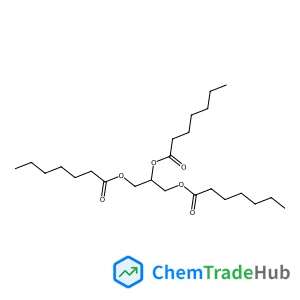
CAS Number
Related Products
![(2R)-2,7,8-Trimethyl-2-[(4R,8R)-4,8,12-trimethyltridecyl]-6-chromanol](https://static.chemtradehub.com/structs/54-/54-28-4-155c.webp)
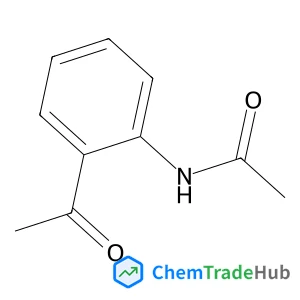
N-(2-Acetylphenyl)acetamide
CAS Number: 5234-26-4
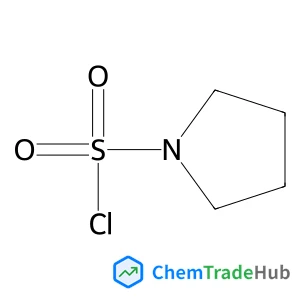
1-Pyrrolidinesulfonyl chloride
CAS Number: 1689-02-7
![3-Hexyl-2-[3-(3-hexyl-1,3-benzoxazol-2(3H)-ylidene)-1-propen-1-yl]-1,3-benzoxazol-3-ium iodide](https://static.chemtradehub.com/structs/532/53213-82-4-e483.webp)
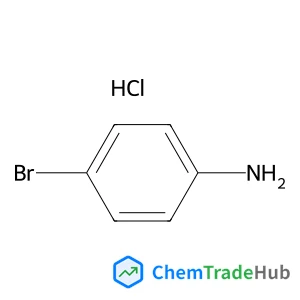
4-Bromoaniline hydrochloride (1:1)
CAS Number: 624-19-1
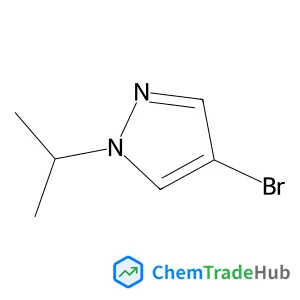
4-Bromo-1-isopropyl-1H-pyrazole
CAS Number: 313735-62-5
Other Suppliers for 1,2,3-Propanetriyl triheptanoate







Basic Information
Molecular Formula
C24H44O6
Molecular Weight
428.61 g/mol
Physical Properties
Boiling Point
Vapour density:
Density
0.966 g/mL at 20 °C(lit.)
Flash Point
195.5°C
Chemical Identifiers
SMILES
CCCCCCC(=O)OCC(COC(=O)CCCCCC)OC(=O)CCCCCC
InChIKey
PJHKBYALYHRYSK-UHFFFAOYSA-N
Database References
MDL Number
MFCD00042910
FAQ
1,2,3-Propanetriyl triheptanoate (CAS: 620-67-7) is a clear, colorless liquid at room temperature. Its molecular weight is approximately 396.45 g/mol. This compound has a low solubility in water but is soluble in organic solvents like ethanol and acetone. Chemically, it is less reactive compared to other esters, making it stable under normal conditions. It has a characteristic fragrance and is used as a flavor and fragrance ingredient in the food and cosmetic industries.
1,2,3-Propanetriyl triheptanoate (CAS: 620-67-7) is typically synthesized by esterification of heptanoic acid with 1,2,3-propanetriol. This process involves heating the reactants in the presence of a catalyst such as sulfuric acid or a solid acid catalyst. The reaction is conducted under reflux conditions, and the product is isolated by distillation. The yield and selectivity are influenced by the reaction conditions and catalyst choice.
1,2,3-Propanetriyl triheptanoate (CAS: 620-67-7) is commonly used in the food and cosmetic industries as a flavor and fragrance ingredient. It is also utilized in the pharmaceutical industry for its chemical properties, and in polymer manufacturing where it can improve the physical properties of polymer films and coatings.
When handling 1,2,3-Propanetriyl triheptanoate (CAS: 620-67-7), it is important to use appropriate personal protective equipment (PPE), including gloves, goggles, and a lab coat. Work should be conducted in a well-ventilated area or fume hood to minimize inhalation risk. Spills should be cleaned up immediately using appropriate absorbents, and the area should be thoroughly rinsed with water. The Safety Data Sheet (SDS) should always be consulted for specific handling and emergency procedures.
Safety Notice
Please verify product specifications and safety data before use. Contact the supplier for detailed safety information.
Always follow proper handling procedures
