



AD
6-Bromo-3,4-dihydro-1(2H)-isoquinolinone(CAS: 147497-32-3)
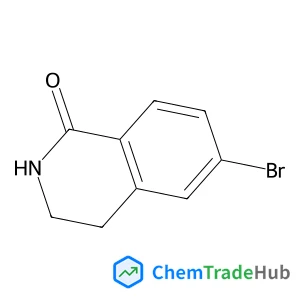
CAS Number
Related Products
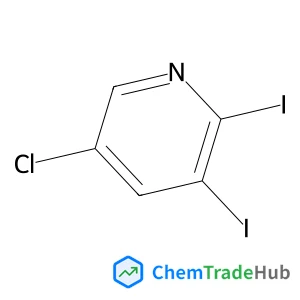
5-Chloro-2,3-diiodopyridine
CAS Number: 1261365-71-2
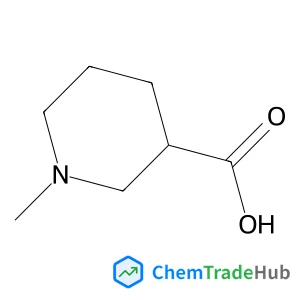
![5-Bromo-6-fluoro-1H-pyrrolo[2,3-b]pyridine](https://static.chemtradehub.com/structs/120/1207625-29-3-38b4.webp)
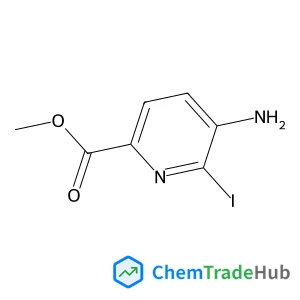

Tco-peg12-dbco
CAS Number: 2055022-06-3
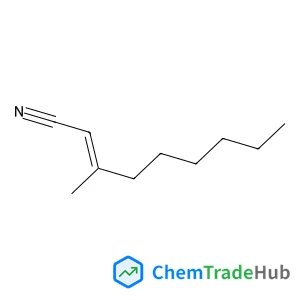
3-Methyl-2-nonenenitrile
CAS Number: 53153-66-5
![Ethyl 2-ethoxy-4-[2-({(1S)-3-methyl-1-[2-(1-piperidinyl)phenyl]butyl}amino)-2-oxoethyl]benzoate](https://static.chemtradehub.com/structs/147/147770-06-7-5fb6.webp)
![2-Methyl[1,3]oxazolo[5,4-d]pyrimidin-7(6H)-one](https://static.chemtradehub.com/structs/274/27433-55-2-83e8.webp)
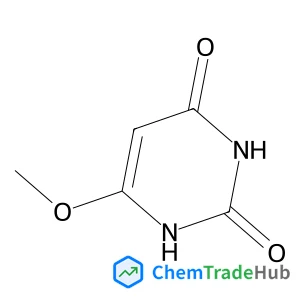
6-Methoxy-2,4(1H,3H)-pyrimidinedione
CAS Number: 29458-38-6
Other Suppliers for 6-Bromo-3,4-dihydro-1(2H)-isoquinolinone






Basic Information
Molecular Formula
C9H8BrNO
Molecular Weight
226.07 g/mol
Physical State
Pale-yellow to Yellow-brown Solid
Physical Properties
Boiling Point
453.3°C at 760 mmHg
Chemical Identifiers
SMILES
C1CNC(=O)C2=C1C=C(C=C2)Br
InChIKey
FQPKKECSRKYXIZ-UHFFFAOYSA-N
Database References
MDL Number
MFCD04114858
FAQ
6-Bromo-3,4-dihydro-1(2H)-isoquinolinone (CAS: 147497-32-3) is subject to various regulatory guidelines. It falls under the GHS classification, which includes health, environmental, and physical hazards. For European markets, it must comply with the REACH regulations, ensuring that all necessary documentation is provided for safe handling and use. Additionally, it is regulated by the FDA and EPA for any potential use in pharmaceuticals or environmental applications.
While 6-Bromo-3,4-dihydro-1(2H)-isoquinolinone (CAS: 147497-32-3) is a valuable intermediate, several alternatives can be used depending on the desired outcome. Common reagents like 3,4-Dihydro-1(2H)-isoquinolinone or related brominated compounds may serve as substitutes. Isomers or analogs such as 6-Chloro-3,4-dihydro-1(2H)-isoquinolinone can also be considered for similar synthetic pathways.
The market for 6-Bromo-3,4-dihydro-1(2H)-isoquinolinone (CAS: 147497-32-3) is growing, driven by its applications in pharmaceuticals and research. Recent trends indicate increased interest in its use as a key intermediate in drug discovery and development. Research is focusing on its potential in treating various diseases, making it a sought-after compound in the scientific community.
Waste containing 6-Bromo-3,4-dihydro-1(2H)-isoquinolinone (CAS: 147497-32-3) should be managed carefully to ensure safety and compliance with environmental laws. Collect waste liquids in appropriate containers and store them in a well-ventilated area. For disposal, professional waste management services should be used. Incineration is a common method, but ensure it is done in a controlled environment to prevent environmental contamination. Always follow local regulations for hazardous waste management.
Safety Notice
Please verify product specifications and safety data before use. Contact the supplier for detailed safety information.
Always follow proper handling procedures

Contact Information
Contact Person
Manager Yu
710378061@qq.com
Mobile
18605105771
Visit Website
https://www.sanhua-chem.com/Address
No. 688 Jiushuire Lu, Building 1, Jinshanwei Town, Jinshan District, Shanghai