



AD
2-Chloro-4-methoxynicotinonitrile(CAS: 98645-43-3)
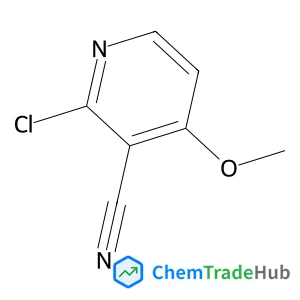
CAS Number
Related Products
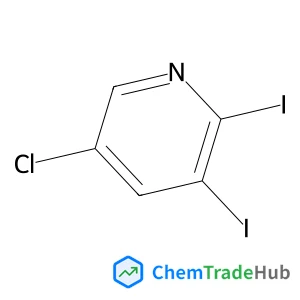
5-Chloro-2,3-diiodopyridine
CAS Number: 1261365-71-2
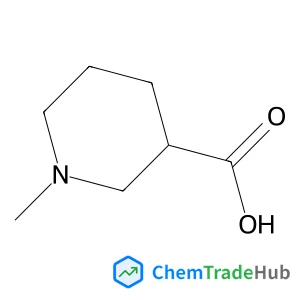
![5-Bromo-6-fluoro-1H-pyrrolo[2,3-b]pyridine](https://static.chemtradehub.com/structs/120/1207625-29-3-38b4.webp)


Tco-peg12-dbco
CAS Number: 2055022-06-3
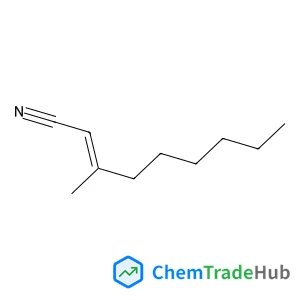
3-Methyl-2-nonenenitrile
CAS Number: 53153-66-5
![Ethyl 2-ethoxy-4-[2-({(1S)-3-methyl-1-[2-(1-piperidinyl)phenyl]butyl}amino)-2-oxoethyl]benzoate](https://static.chemtradehub.com/structs/147/147770-06-7-5fb6.webp)
![2-Methyl[1,3]oxazolo[5,4-d]pyrimidin-7(6H)-one](https://static.chemtradehub.com/structs/274/27433-55-2-83e8.webp)

6-Methoxy-2,4(1H,3H)-pyrimidinedione
CAS Number: 29458-38-6
Other Suppliers for 2-Chloro-4-methoxynicotinonitrile



Basic Information
Molecular Formula
C7H5ClN2O
Molecular Weight
157.6 g/mol
Physical State
White to Yellow Solid
Physical Properties
Melting Point
173.0 to 177.0 deg-C
Chemical Identifiers
SMILES
COC1=C(C(=NC=C1)Cl)C#N
InChIKey
MOKUXMQJIYHZCA-UHFFFAOYSA-N
Database References
MDL Number
MFCD00975444
FAQ
2-Chloro-4-methoxynicotinonitrile (CAS: 98645-43-3) falls under the classification of a hazardous chemical. Regulatory guidelines include GHS classification, which categorizes it as a skin and eye irritant. For manufacturing and supplier obligations, REACH regulations require manufacturers and importers to register the substance if it is manufactured or imported in quantities exceeding one tonne per year. Additionally, FDA and EPA regulations require proper handling and disposal to ensure environmental safety and worker protection.
Alternatives to 2-Chloro-4-methoxynicotinonitrile (CAS: 98645-43-3) in synthesis include 2-Methoxynicotinonitrile and 2-Chloronicotinonitrile. These compounds can be used as substitutes depending on the specific requirements of the chemical reaction. Researchers often explore these options to avoid the use of potentially more hazardous chemicals.
The market for 2-Chloro-4-methoxynicotinonitrile (CAS: 98645-43-3) is growing due to its applications in pharmaceuticals and agrochemicals. Research trends focus on its use as an intermediate in the synthesis of bioactive compounds. However, there is also an emerging trend towards developing safer and more sustainable alternatives, reflecting broader industry shifts towards reducing the use of hazardous chemicals.
Waste containing 2-Chloro-4-methoxynicotinonitrile (CAS: 98645-43-3) should be managed carefully to prevent environmental contamination. Waste liquids should be collected in appropriate containers and stored in a well-ventilated area. For disposal, incineration is a common method, but professional waste disposal services should be utilized to ensure compliance with environmental regulations. Environmental protection measures include proper labeling and documentation of the waste disposal process to ensure safety and regulatory adherence.
Safety Notice
Please verify product specifications and safety data before use. Contact the supplier for detailed safety information.
Always follow proper handling procedures

Contact Information
Contact Person
Manager Yu
710378061@qq.com
Mobile
18605105771
Visit Website
https://www.sanhua-chem.com/Address
No. 688 Jiushuire Lu, Building 1, Jinshanwei Town, Jinshan District, Shanghai