



AD
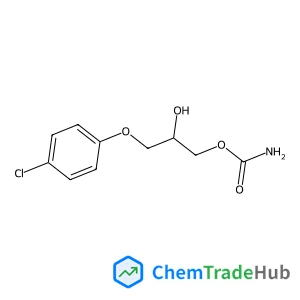
3-(4-Chlorophenoxy)-2-hydroxypropyl carbamate(CAS: 886-74-8)
CAS Number
Related Products
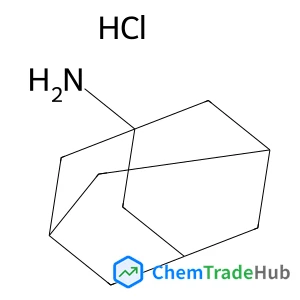
1-Amino Adamantane HCl (Amantadine HCl)
CAS Number: 665-66-7
![3-[9-({4-[(2,5-Dioxo-1-pyrrolidinyl)oxy]-4-oxobutyl}[(4-methylphenyl)sulfonyl]carbamoyl)-10-acridiniumyl]-1-propanesulfonate](https://static.chemtradehub.com/structs/199/199293-83-9-e07b.webp)
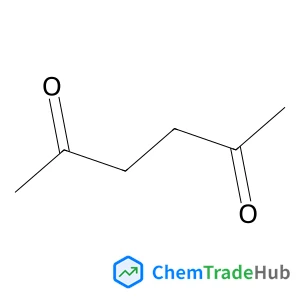
2,5-Hexanedione
CAS Number: 110-13-4
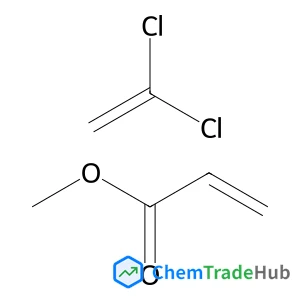
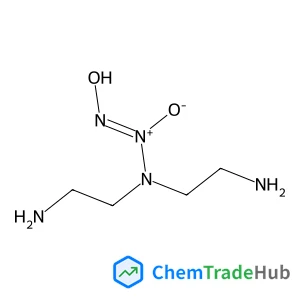
DETA NONOate
CAS Number: 146724-94-9
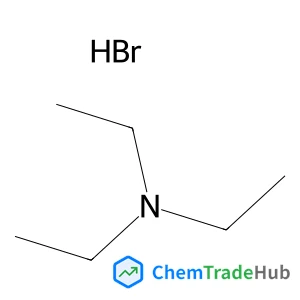
Triethylamine hydrobromide
CAS Number: 636-70-4
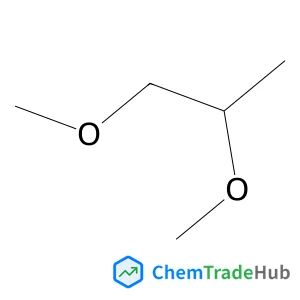
1,2-Dimethoxypropane
CAS Number: 7778-85-0
![Methyl 5-methyl-4-oxo-1,4-dihydropyrrolo[2,1-f][1,2,4]triazine-6-carboxylate](https://static.chemtradehub.com/structs/310/310431-29-9-3e32.webp)
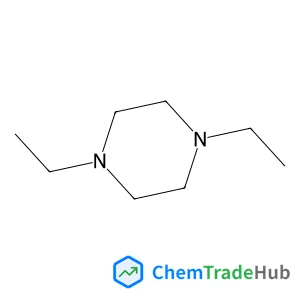
1,4-Diethylpiperazine
CAS Number: 6483-50-7
Other Suppliers for 3-(4-Chlorophenoxy)-2-hydroxypropyl carbamate





Basic Information
Molecular Formula
C10H12ClNO4
Molecular Weight
245.66 g/mol
Physical Properties
Melting Point
89-91°
Density
1.3336 (rough estimate)
Chemical Identifiers
SMILES
C1=CC(=CC=C1OCC(COC(=O)N)O)Cl
InChIKey
SKPLBLUECSEIFO-UHFFFAOYSA-N
Database References
MDL Number
MFCD00072002
FAQ
3-(4-Chlorophenoxy)-2-hydroxypropyl carbamate (CAS: 886-74-8) is a white to off-white crystalline solid. Its molecular weight is approximately 298.8 g/mol. It is slightly soluble in water and soluble in ethanol. It is known for its low reactivity under normal conditions, but it can undergo hydrolysis in basic conditions. It has a pKa of around 7.5, indicating weak acidity.
3-(4-Chlorophenoxy)-2-hydroxypropyl carbamate (CAS: 886-74-8) is typically synthesized by the reaction of 4-chlorophenol with 2-hydroxypropyl carbamate. The process involves the condensation of 4-chlorophenol with 2-hydroxypropyl isocyanate in the presence of a suitable base such as potassium carbonate. The reaction is carried out in an aprotic solvent like dimethylformamide (DMF) at room temperature. The yield is usually around 70-80%, and the product is isolated by filtration and recrystallization.
3-(4-Chlorophenoxy)-2-hydroxypropyl carbamate (CAS: 886-74-8) is primarily used in the pharmaceutical industry as an intermediate in the synthesis of drugs. It is also utilized in the polymer industry for the modification of polymers to enhance their stability and reactivity. Additionally, it has applications in the sensor industry for the development of gas sensors, and in the semiconductor industry for the fabrication of certain components due to its carbamate functional group.
When handling 3-(4-Chlorophenoxy)-2-hydroxypropyl carbamate (CAS: 886-74-8), it is important to wear appropriate personal protective equipment (PPE) such as gloves, goggles, and a lab coat. This compound is not highly reactive, but it should be kept away from strong acids and bases to prevent hydrolysis. It should be stored in a cool, dry place, away from heat sources. In case of a spill, it should be cleaned up using appropriate methods, and the area should be well-ventilated. Always refer to the safety data sheet (SDS) for detailed handling and storage instructions.
Safety Notice
Please verify product specifications and safety data before use. Contact the supplier for detailed safety information.
Always follow proper handling procedures

Contact Information
Contact Person
Wan Li Rui
1400858822@qq.com
Mobile
13986212397
Telephone
027-59220433
Fax
027-59220433
Visit Website
http://www.hbchenghai.comAddress
Hubei Province Tianmen City Huangtan Town Yaite Village, Group 3