



AD
tert-Butyl 3-(4,4,5,5-tetramethyl-1,3,2-dioxaborolan-2-yl)-5,6-dihydropyridine-1(2H)-carboxylate(CAS: 885693-20-9)
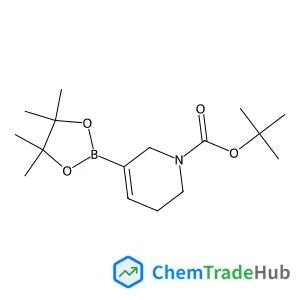
CAS Number
Related Products
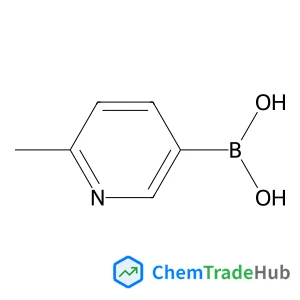
(6-Methyl-3-pyridinyl)boronic acid
CAS Number: 659742-21-9
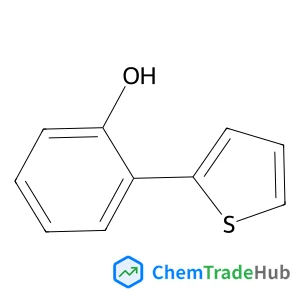
2-(2-Thienyl)phenol
CAS Number: 106584-13-8
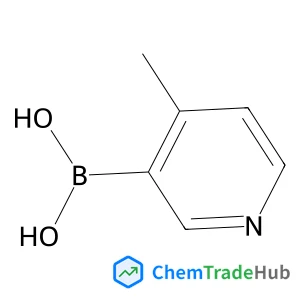
(4-Methyl-3-pyridinyl)boronic acid
CAS Number: 148546-82-1
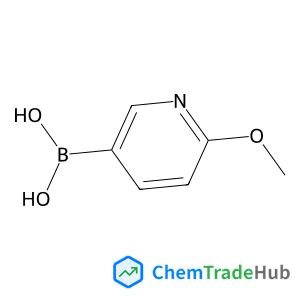
(6-Methoxy-3-pyridinyl)boronic acid
CAS Number: 163105-89-3
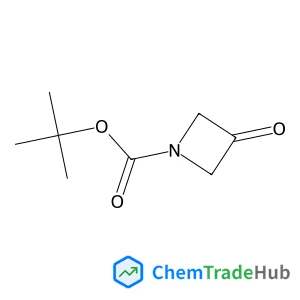
![[3-chloro-4-(trifluoromethyl)phenyl]boronic acid](https://static.chemtradehub.com/structs/847/847756-88-1-0c6a.webp)
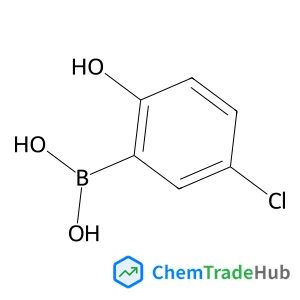
5-Chloro-2-hydroxyphenylboronic acid
CAS Number: 89488-25-5
Other Suppliers for tert-Butyl 3-(4,4,5,5-tetramethyl-1,3,2-dioxaborolan-2-yl)-5,6-dihydropyridine-1(2H)-carboxylate







Basic Information
Molecular Formula
C16H28BNO4
Molecular Weight
309.22 g/mol
Physical Properties
Melting Point
103.0 to 107.0 deg-C
Boiling Point
348℃ at 760 mmHg
Density
1.05
Flash Point
348.007 °C at 760 mmHg
Chemical Identifiers
SMILES
B1(OC(C(O1)(C)C)(C)C)C2=CCCN(C2)C(=O)OC(C)(C)C
InChIKey
KEEIJBAOTMNSEN-UHFFFAOYSA-N
Database References
MDL Number
MFCD10697911
FAQ
The compound has a crystalline form with a molecular weight of approximately 376.47 g/mol. It is sparingly soluble in water but soluble in organic solvents like ethanol and dichloromethane. Chemically, it exhibits reactivity towards nucleophiles and can be used in various transformations such as ring opening reactions. It is stable under normal conditions but should be stored in a dry environment to prevent degradation.
The compound is typically synthesized via a Suzuki coupling reaction, where a pyridine derivative is coupled with a boronic acid derivative in the presence of a palladium catalyst and a base. The reaction conditions involve heating under argon atmosphere to ensure sterically unhindered access of the coupling partners. The yield is around 70-80%, and the reaction is selective for the desired product.
This compound finds applications in the pharmaceutical industry for the synthesis of complex organic molecules and in the polymer industry for the modification of polymer functionalities. It can also be used in the development of chemical sensors and semiconductors due to its unique reactivity and structural features.
Proper personal protective equipment (PPE) such as gloves, goggles, and a lab coat should be worn at all times. The compound should be handled in a well-ventilated area or a fume hood to prevent inhalation. Spills should be cleaned up immediately with appropriate absorbents, and the area should be thoroughly washed down. For detailed safety information, refer to the safety data sheet (SDS) for the compound.
Safety Notice
Please verify product specifications and safety data before use. Contact the supplier for detailed safety information.
Always follow proper handling procedures
Contact Information
chemscaler@yahoo.com.cn