



AD
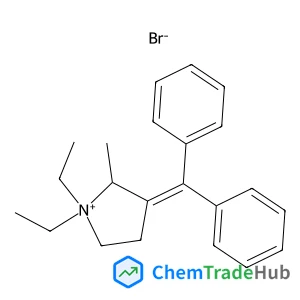
3-(Diphenylmethylene)-1,1-diethyl-2-methylpyrrolidinium bromide(CAS: 4630-95-9)
CAS Number
Related Products

methanol; trifluoro-methoxy-boron
CAS Number: 2802-68-8
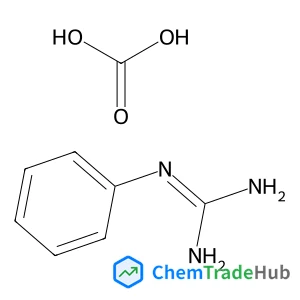
Carbonic acid - 1-phenylguanidine (1:1)
CAS Number: 6685-76-3
![1,7,7-Trimethylbicyclo[2.2.1]heptane-2,3-dione](https://static.chemtradehub.com/structs/103/10373-78-1-714c.webp)
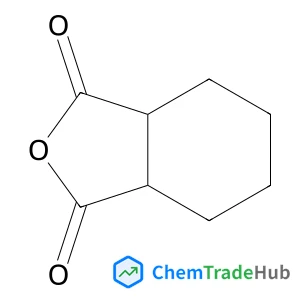
octahydro-2-benzofuran-1,3-dione
CAS Number: 85-42-7
![1-[(4xi)-beta-D-(~13~C_5_)-erythro-Pentofuranosyl]-1H-1,2,4-triazole-3-carboxamide](https://static.chemtradehub.com/structs/164/1646818-35-0-ea01.webp)

1-Propanamine hydrochloride (1:1)
CAS Number: 556-53-6
![1,1,2,2-Tetrafluoro-1-[2-(1,1,2,2-tetrafluoroethoxy)ethoxy]ethane](https://static.chemtradehub.com/structs/358/358-39-4-0089.webp)
Other Suppliers for 3-(Diphenylmethylene)-1,1-diethyl-2-methylpyrrolidinium bromide





Basic Information
Molecular Formula
C22H28BrN
Molecular Weight
386.4 g/mol
Physical Properties
Melting Point
216-218°
Boiling Point
(Free base, bp0.15 183-185°)
Chemical Identifiers
SMILES
CC[N+]1(CCC(=C(C2=CC=CC=C2)C3=CC=CC=C3)C1C)CC.[Br-]
InChIKey
UCGJZJXOPSNTGZ-UHFFFAOYSA-M
Database References
MDL Number
MFCD00865211
FAQ
3-(Diphenylmethylene)-1,1-diethyl-2-methylpyrrolidinium bromide is a crystalline solid with a molecular weight of approximately 518.5 g/mol. It has a high solubility in organic solvents and moderate solubility in water. Chemically, it is relatively stable but can react with strong acids or bases. Specific physical properties include a melting point of around 85-87°C.
3-(Diphenylmethylene)-1,1-diethyl-2-methylpyrrolidinium bromide is synthesized through the bromination of 3-(diphenylmethylene)-1,1-diethyl-2-methylpyrrolidinium chloride using hydrogen bromide. The reaction is typically carried out in an inert solvent such as toluene, at room temperature. Commonly, a stoichiometric amount of hydrogen bromide is used, and the yield is around 85-90%.
3-(Diphenylmethylene)-1,1-diethyl-2-methylpyrrolidinium bromide is used in the pharmaceutical industry for the synthesis of certain drugs. It also finds applications in the polymer industry for the preparation of high-performance polymers. Additionally, it is used in the development of sensors and as a precursor in semiconductor processing.
When handling 3-(Diphenylmethylene)-1,1-diethyl-2-methylpyrrolidinium bromide, it is important to wear appropriate personal protective equipment (PPE) such as gloves, goggles, and a laboratory coat. Work must be performed in a well-ventilated area or a fume hood to minimize inhalation risks. Spills should be cleaned up using appropriate absorbents and disposed of according to local regulations. Always refer to the safety data sheet (SDS) for detailed handling instructions and emergency procedures.
Safety Notice
Please verify product specifications and safety data before use. Contact the supplier for detailed safety information.
Always follow proper handling procedures