



AD
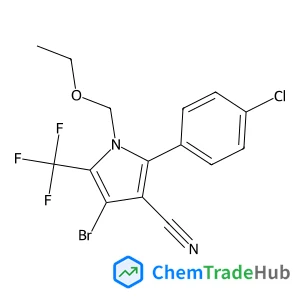
4-Bromo-2-(4-chlorophenyl)-1-(ethoxymethyl)-5-(trifluoromethyl)-1H-pyrrole-3-carbonitrile(CAS: 122453-73-0)
CAS Number
Related Products
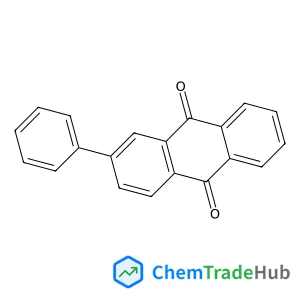
2-Phenyl-9,10-anthraquinone
CAS Number: 6485-97-8
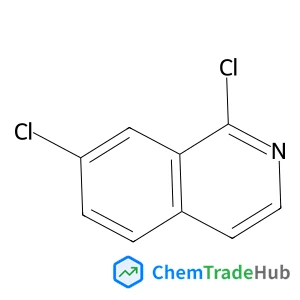
1,7-Dichloroisoquinoline
CAS Number: 70810-24-1
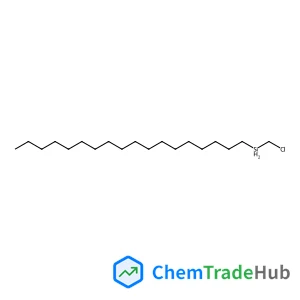
Silane, chloromethyloctadecyl-
CAS Number: 124694-97-9
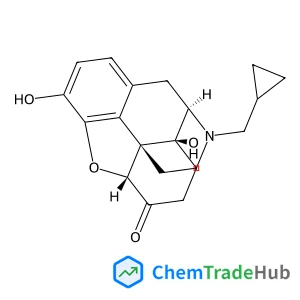
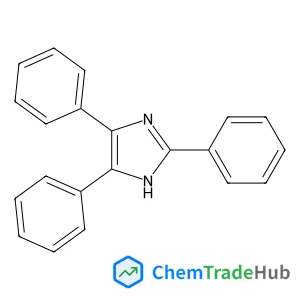
2,4,5-Triphenyl-1H-imidazole
CAS Number: 484-47-9
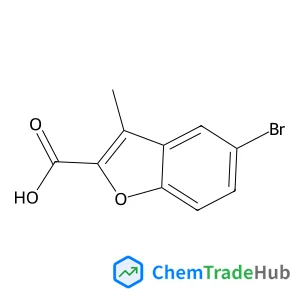
![[4-(Difluoromethoxy)phenyl]acetonitrile](https://static.chemtradehub.com/structs/414/41429-16-7-ae43.webp)
Other Suppliers for 4-Bromo-2-(4-chlorophenyl)-1-(ethoxymethyl)-5-(trifluoromethyl)-1H-pyrrole-3-carbonitrile



Basic Information
Molecular Formula
C15H11BrClF3N2O
Molecular Weight
17.03 g/mol
Physical Properties
Melting Point
100-104°C
Boiling Point
443.5 °C at 760 mmHg
Density
1.53±0.1 g/cm3(Predicted)
Flash Point
222 °C
Chemical Identifiers
SMILES
N#CC1=C(C2=CC=C(Cl)C=C2)N(COCC)C(C(F)(F)F)=C1Br
InChIKey
CWFOCCVIPCEQCK-UHFFFAOYSA-N
Database References
MDL Number
MFCD01631152
Beilstein Registry Number
6940152
FAQ
4-Bromo-2-(4-chlorophenyl)-1-(ethoxymethyl)-5-(trifluoromethyl)-1H-pyrrole-3-carbonitrile (CAS: 122453-73-0) is a synthetic organic compound containing a pyrrole ring with multiple substituents. It features a bromo group, a chlorophenyl group, an ethoxymethyl group, and a trifluoromethyl group. This molecule is known for its complex structure and potential applications in medicinal chemistry due to its functional groups and reactivity.
This compound is primarily used in pharmaceutical research as a potential lead molecule for drug development. Its unique combination of halogenated and substituted aromatic groups makes it valuable for studying biological activity and chemical reactivity. It is also used in organic synthesis and as a building block for creating more complex molecules in industrial and academic settings.
Safety of 4-Bromo-2-(4-chlorophenyl)-1-(ethoxymethyl)-5-(trifluoromethyl)-1H-pyrrole-3-carbonitrile (CAS: 122453-73-0) depends on exposure conditions. It is considered hazardous due to its chemical structure, and proper protective measures such as gloves, goggles, and ventilation are essential during handling. Safety data sheets (SDS) should be consulted for detailed guidelines.
This compound should be stored in a cool, dry, and well-ventilated place, away from light and moisture. It is typically kept in sealed glass containers to maintain stability. Storage conditions should be controlled to prevent degradation, and incompatible materials should be avoided to ensure safety and product integrity.
Safety Notice
Please verify product specifications and safety data before use. Contact the supplier for detailed safety information.
Always follow proper handling procedures
Contact Information
Contact Person
Li Jun
2801519207@qq.com