



AD
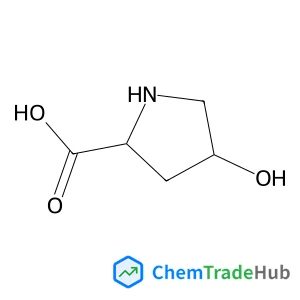
(2R,4S)-4-hydroxypyrrolidine-2-carboxylic acid(CAS: 3398-22-9)
CAS Number
Related Products
![N-[6-(2,5-Dioxo-2,5-dihydro-1H-pyrrol-1-yl)hexanoyl]glycylglycyl-L-phenylalanyl-N-[(carboxymethoxy)methyl]glycinamide](https://static.chemtradehub.com/structs/159/1599440-25-1-2ec4.webp)
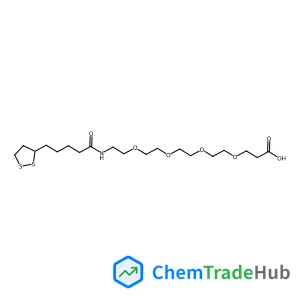
Lipoamido-PEG4-acid
CAS Number: 1334172-69-8
![2-Methyl-2-propanyl (3-{2-[2-(3-aminopropoxy)ethoxy]ethoxy}propyl)carbamate](https://static.chemtradehub.com/structs/194/194920-62-2-0231.webp)
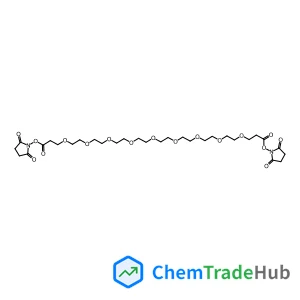
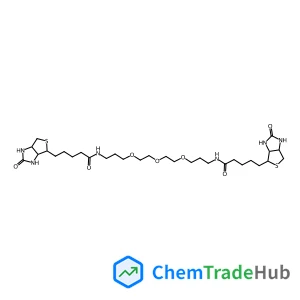
Bis-dPEG3-biotin
CAS Number: 1263044-47-8
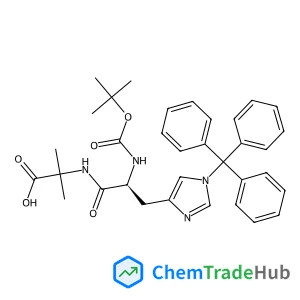
Boc-His(Trt)-Aib-OH
CAS Number: 2061897-68-3
![N-{20-[(2,5-Dioxo-1-pyrrolidinyl)oxy]-4,20-dioxo-8,11,14,17-tetraoxa-5-azaicosan-3-yl}-5-[(3aS,4S,6aR)-2-oxohexahydro-1H-thieno[3,4-d]imidazol-4-yl]pentanamide](https://static.chemtradehub.com/structs/133/1334172-61-0-18f8.webp)
Other Suppliers for (2R,4S)-4-hydroxypyrrolidine-2-carboxylic acid






Basic Information
Molecular Formula
C5H9NO3
Molecular Weight
131.13 g/mol
Physical Properties
Melting Point
261 °C (dec)
Boiling Point
355.2°C at 760 mmHg
Density
1.395
Flash Point
168.6℃
Chemical Identifiers
SMILES
C1C(CNC1C(=O)O)O
InChIKey
PMMYEEVYMWASQN-IUYQGCFVSA-N
Database References
MDL Number
MFCD03414107
FAQ
What regulatory guidelines apply to (2R,4S)-4-hydroxypyrrolidine-2-carboxylic acid (CAS: 3398-22-9)?
Regulatory guidelines for (2R,4S)-4-hydroxypyrrolidine-2-carboxylic acid (CAS: 3398-22-9) include GHS classification, which categorizes it as a skin irritant. It is also subject to REACH regulations in the EU, requiring suppliers to register the substance if produced or imported in quantities above 1 ton per year. Additionally, FDA and EPA have specific requirements for its handling and disposal to ensure environmental safety and compliance with U.S. regulations.
In the synthesis of (2R,4S)-4-hydroxypyrrolidine-2-carboxylic acid (CAS: 3398-22-9), several alternatives can be used. For instance, (2R,4R)- and (2S,4S)-isomers can serve as viable alternatives. Common alternative reagents include amino acids like proline, which can be modified to achieve similar structural properties. Utilizing these alternatives can help in achieving the desired product with better efficiency and safety.
The market and research trends for (2R,4S)-4-hydroxypyrrolidine-2-carboxylic acid (CAS: 3398-22-9) are increasingly focused on its applications in pharmaceuticals and as a chiral building block in synthetic chemistry. Recent research trends highlight its use in developing new drug candidates and in the production of advanced materials. Market studies predict steady growth due to its high demand in these sectors, with ongoing exploration into its potential for use in biotechnology and nanotechnology.
Waste containing (2R,4S)-4-hydroxypyrrolidine-2-carboxylic acid (CAS: 3398-22-9) should be collected in appropriate containers and disposed of through professional waste disposal services. Incineration is a common method for disposal, ensuring complete destruction of the compound. Environmental protection precautions include minimizing the release of waste into the environment and adhering to local and international environmental regulations to prevent contamination. Proper training and safety measures are essential to ensure the safe handling and disposal of this substance.
Safety Notice
Please verify product specifications and safety data before use. Contact the supplier for detailed safety information.
Always follow proper handling procedures
Contact Information
Contact Person
Wei Manager
qisiyu@pu-kang.com