



AD
Mecamylamine hydrochloride(CAS: 826-39-1)
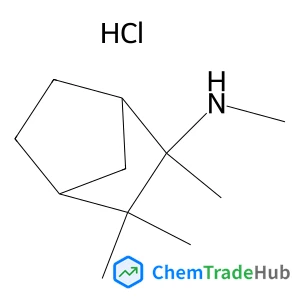
CAS Number
Related Products
![4-{[1-(Dimethylamino)-3-{2-[2-(3-methoxyphenyl)ethyl]phenoxy}-2-propanyl]oxy}-4-oxobutanoic acid hydrochloride (1:1)](https://static.chemtradehub.com/structs/135/135159-51-2-4f6e.webp)
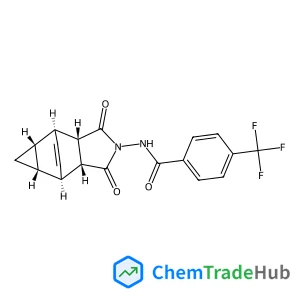
![4-Fluoro-5-{[(2S)-2-methyl-1,4-diazepan-1-yl]sulfonyl}isoquinoline](https://static.chemtradehub.com/structs/223/223645-67-8-4244.webp)
![(7aS,13aS)-9,10-Dimethoxy-3,3-dimethyl-13,13a-dihydro-3H-chromeno[3,4-b]pyrano[2,3-h]chromen-7(7aH)-one](https://static.chemtradehub.com/structs/522/522-17-8-8dd3.webp)
![(3aS,6aR,9aR,9bS)-3,6,9-Tris(methylene)decahydroazuleno[4,5-b]furan-2(3H)-one](https://static.chemtradehub.com/structs/477/477-43-0-775b.webp)
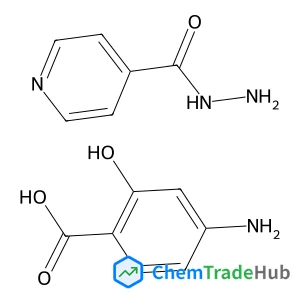
![{[5-Bromo-4-(4-cyclopropyl-1-naphthyl)-4H-1,2,4-triazol-3-yl]sulfanyl}acetic acid](https://static.chemtradehub.com/structs/878/878672-00-5-38f2.webp)
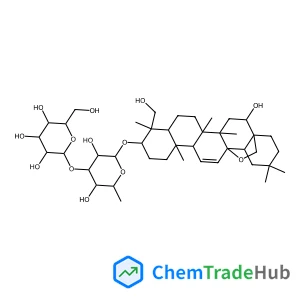
Other Suppliers for Mecamylamine hydrochloride





Basic Information
Molecular Formula
C11H22ClN
Molecular Weight
203.76 g/mol
Physical Properties
Melting Point
266-267°C
Boiling Point
189.3 °C at 760 mmHg
Flash Point
58.1 °C
Chemical Identifiers
SMILES
CC1(C2CCC(C2)C1(C)NC)C.Cl
InChIKey
PKVZBNCYEICAQP-UHFFFAOYSA-N
Database References
MDL Number
MFCD00151462
FAQ
Mecamylamine hydrochloride (CAS: 826-39-1) falls under the regulatory guidelines of the Globally Harmonized System of Classification and Labelling of Chemicals (GHS), which includes classification as a toxic substance. In the European Union, it is also subject to the Registration, Evaluation, Authorisation and Restriction of Chemicals (REACH) regulation. In the United States, it is regulated by the Food and Drug Administration (FDA) and the Environmental Protection Agency (EPA) for safety and environmental impact.
There are several alternatives to mecamylamine hydrochloride (CAS: 826-39-1) in synthesis, including analogs like chlorisondamine and analogs with similar pharmacological properties. Common alternative reagents in synthesis include other cholinergic receptor antagonists such as tubocurarine and d-tubocurarine. These alternatives offer similar functionalities but may have different physical and chemical properties, making them suitable for specific applications.
The market for mecamylamine hydrochloride (CAS: 826-39-1) has shown steady growth due to its application in treating certain medical conditions, particularly in the field of neurology. Research trends are focusing on understanding its mechanisms of action, potential as an adjuvant in cancer therapy, and exploring its use in treating neurological disorders. Additionally, there is interest in developing more specific and potent analogs to reduce side effects.
Waste containing mecamylamine hydrochloride (CAS: 826-39-1) should be collected in appropriate containers and stored away from incompatible materials. Proper disposal methods include incineration or professional waste disposal services that can handle hazardous substances. Environmental protection precautions include ensuring that disposal methods comply with local and national regulations to prevent contamination of soil and water. It is crucial to follow safety guidelines and use personal protective equipment during handling and disposal.
Safety Notice
Please verify product specifications and safety data before use. Contact the supplier for detailed safety information.
Always follow proper handling procedures
Contact Information
Contact Person
Biosin Wu Manager
wuchufeng@yeasen.com
Mobile
13916346489
Telephone
021-34615975
Visit Website
https://www.yeasen.com/Address
Shanghai Pudong New Area International Medical Park Tiexiong Road, No. 166, Building 1, South Unit, 3rd Floor