



AD
(4-Pentylphenyl)boronic acid(CAS: 121219-12-3)
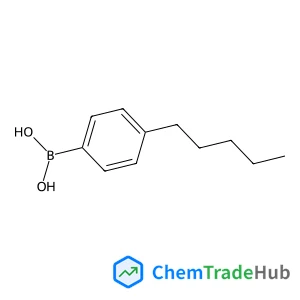
CAS Number
Related Products
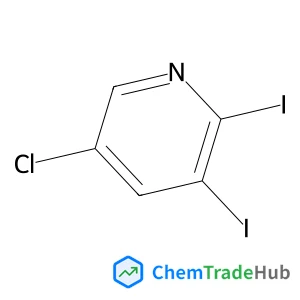
5-Chloro-2,3-diiodopyridine
CAS Number: 1261365-71-2
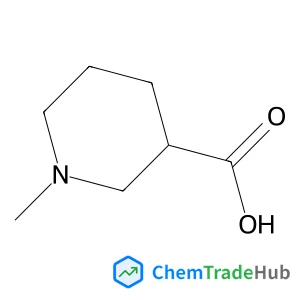
![5-Bromo-6-fluoro-1H-pyrrolo[2,3-b]pyridine](https://static.chemtradehub.com/structs/120/1207625-29-3-38b4.webp)
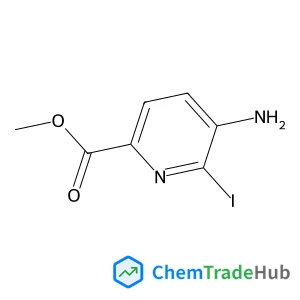

Tco-peg12-dbco
CAS Number: 2055022-06-3
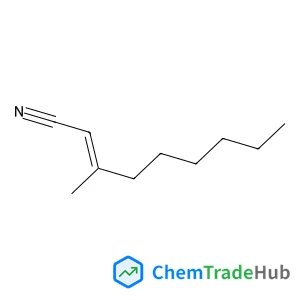
3-Methyl-2-nonenenitrile
CAS Number: 53153-66-5
![Ethyl 2-ethoxy-4-[2-({(1S)-3-methyl-1-[2-(1-piperidinyl)phenyl]butyl}amino)-2-oxoethyl]benzoate](https://static.chemtradehub.com/structs/147/147770-06-7-5fb6.webp)
![2-Methyl[1,3]oxazolo[5,4-d]pyrimidin-7(6H)-one](https://static.chemtradehub.com/structs/274/27433-55-2-83e8.webp)
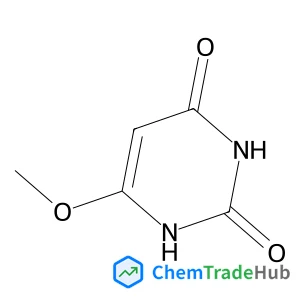
6-Methoxy-2,4(1H,3H)-pyrimidinedione
CAS Number: 29458-38-6
Other Suppliers for (4-Pentylphenyl)boronic acid




Basic Information
Molecular Formula
C11H17BO2
Molecular Weight
192.07 g/mol
Physical Properties
Melting Point
82-84°C
Boiling Point
328℃ at 760 mmHg
Density
1.0100
Flash Point
152.2℃
Chemical Identifiers
SMILES
B(C1=CC=C(C=C1)CCCCC)(O)O
InChIKey
UZRMPSOGFATLJE-UHFFFAOYSA-N
Database References
MDL Number
MFCD00995151
Beilstein Registry Number
4782754
FAQ
(4-Pentylphenyl)boronic acid (CAS: 121219-12-3) falls under the classification of chemicals subject to the Global Harmonized System (GHS) for Classification and Labeling of Chemicals. It is also regulated by the REACH regulations in the European Union. For use in the United States, FDA and EPA have specific requirements for the handling, storage, and disposal of this compound. Proper labeling, documentation, and safety measures must be followed to comply with these regulations.
Yes, there are alternatives to (4-Pentylphenyl)boronic acid in synthesis, such as other boronic acids or boronate esters. Commonly, (3-Pentylphenyl)boronic acid and (2-Pentylphenyl)boronic acid are used as alternatives depending on the specific reaction requirements. Other boron-containing compounds can also serve as effective substitutes.
The market for (4-Pentylphenyl)boronic acid (CAS: 121219-12-3) is steadily growing, driven by increasing demand in pharmaceutical and organic synthesis applications. Research trends are focusing on its applications in catalysis, drug discovery, and asymmetric synthesis. The compound's unique properties make it a valuable reagent in these fields, and ongoing studies are exploring its potential in developing new materials and technologies.
Waste containing (4-Pentylphenyl)boronic acid (CAS: 121219-12-3) should be collected in appropriate containers and stored away from sources of ignition. Proper disposal methods include incineration in a licensed facility or professional waste disposal services. Environmental protection measures include ensuring that waste does not contaminate water sources and that all handling practices comply with local and national regulations to minimize environmental impact.
Safety Notice
Please verify product specifications and safety data before use. Contact the supplier for detailed safety information.
Always follow proper handling procedures

Contact Information
Contact Person
Manager Yu
710378061@qq.com
Mobile
18605105771
Visit Website
https://www.sanhua-chem.com/Address
No. 688 Jiushuire Lu, Building 1, Jinshanwei Town, Jinshan District, Shanghai