



AD
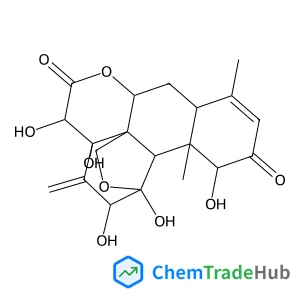
Eurycomanone(CAS: 84633-29-4)
CAS Number
Related Products
![1-(2-{4-[3-(Trifluoromethyl)phenyl]-1-piperazinyl}ethyl)-1,3-dihydro-2H-benzimidazol-2-one](https://static.chemtradehub.com/structs/167/167933-07-5-12a4.webp)
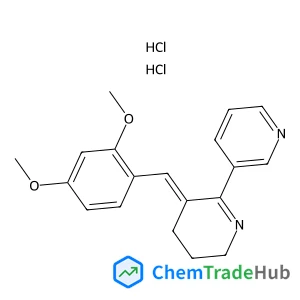
GTS-21 dihydrochloride
CAS Number: 156223-05-1
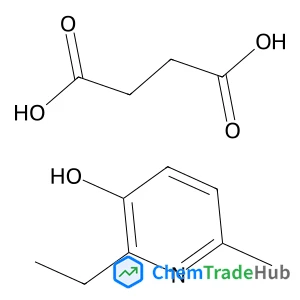
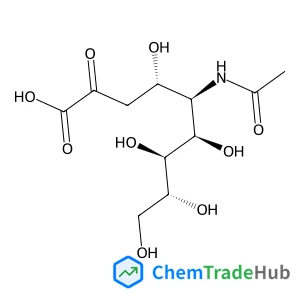
N-Acetylneuraminic acid
CAS Number: 131-48-6
![(5Z)-7-{(1R,2R,3R,5S)-3,5-Dihydroxy-2-[(1E,3S)-3-hydroxy-5-phenyl-1-penten-1-yl]cyclopentyl}-N-ethyl-5-heptenamide](https://static.chemtradehub.com/structs/155/155206-00-1-3faa.webp)
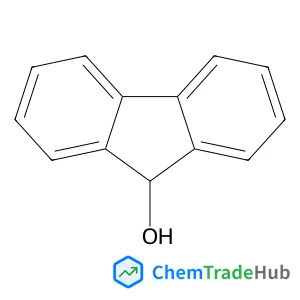
9H-Fluoren-9-ol
CAS Number: 1689-64-1
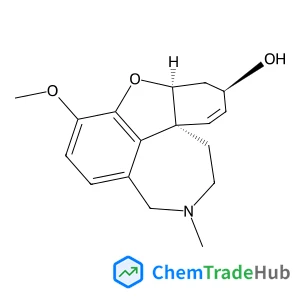
Galanthamine
CAS Number: 357-70-0
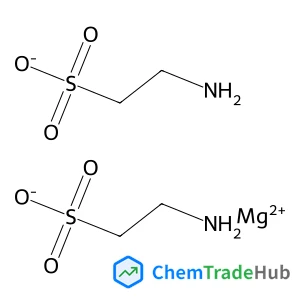
Magnesium taurate
CAS Number: 334824-43-0
Other Suppliers for Eurycomanone



Basic Information
Molecular Formula
C20H24O9
Molecular Weight
408.4 g/mol
Physical State
Powder
Physical Properties
Melting Point
273-285 ºC (methanol ethyl ether )
Density
1.63±0.1 g/cm3 (20 ºC 760 Torr),
Chemical Identifiers
SMILES
CC1=CC(=O)C(C2(C1CC3C45C2C(C(C(=C)C4(C(C(=O)O3)O)O)O)(OC5)O)C)O
InChIKey
UCUWZJWAQQRCOR-OKNZMGBLSA-N
Database References
MDL Number
MFCD31726288
FAQ
Eurycomanone is a colorless to pale yellow solid with a crystalline form. It has a molecular weight of approximately 400.46 g/mol. The compound is slightly soluble in water but soluble in organic solvents like ethanol and acetone. It exhibits limited reactivity under normal conditions but can undergo hydrogenation and oxidation reactions under specific conditions. Eurycomanone is stable at room temperature but should be stored in a cool, dry place to avoid decomposition.
Eurycomanone can be synthesized through multi-step organic synthesis processes involving the conversion of eurycomanol to eurycomanone. Common methods include selective hydrogenation of eurycomanol followed by oxidation. This can be achieved using palladium catalysts and appropriate oxidants. The overall yield is around 70%, and the process requires precise control over the reaction conditions to achieve high selectivity and purity.
Eurycomanone is primarily used in the pharmaceutical industry for the development of new drugs with potential anti-inflammatory and anti-cancer properties. It is also explored in the food and cosmetic industries for its bioactive properties. Additionally, it has applications in sensor technology and as a precursor in the synthesis of other bioactive compounds.
When handling Eurycomanone, it is essential to wear appropriate personal protective equipment (PPE) such as gloves, safety goggles, and lab coat. Work should be conducted in a well-ventilated fume hood to minimize exposure to the compound. Spills should be cleaned up using appropriate absorbent materials and disposed of according to waste regulations. Always refer to the Safety Data Sheet (SDS) for detailed safety information and emergency procedures.
Safety Notice
Please verify product specifications and safety data before use. Contact the supplier for detailed safety information.
Always follow proper handling procedures
Contact Information
Contact Person
Nancy
1271876073@qq.com