



AD
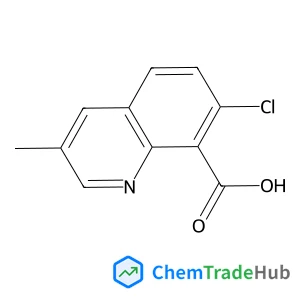
Quinmerac(CAS: 90717-03-6)
CAS Number
Related Products
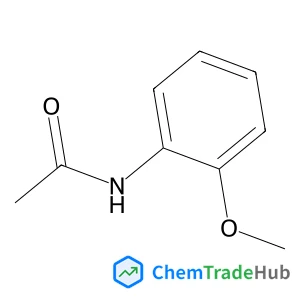
N-(2-Methoxyphenyl)acetamide
CAS Number: 93-26-5
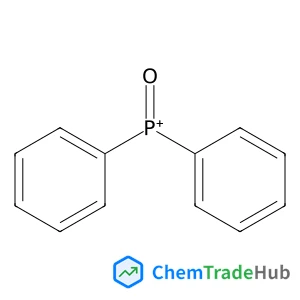
Diphenylphosphine oxide
CAS Number: 4559-70-0
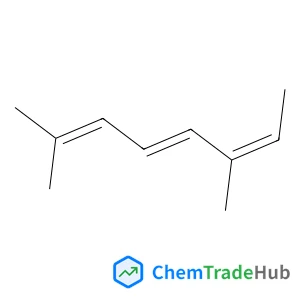
2,6-Dimethyl-2,4,6-octatriene
CAS Number: 673-84-7
![1,2-Dimethoxy-12-methyl[1,3]benzodioxolo[5,6-c]phenanthridin-12-ium 13-methyl[1,3]benzodioxolo[5,6-c][1,3]dioxolo[4,5-i]phenanthridin-13-ium chloride (1:1:2)](https://static.chemtradehub.com/structs/112/112025-60-2-37be.webp)
![(7aS,13aS)-9,10-Dimethoxy-3,3-dimethyl-13,13a-dihydro-3H-chromeno[3,4-b]pyrano[2,3-h]chromen-7(7aH)-one](https://static.chemtradehub.com/structs/522/522-17-8-8dd3.webp)
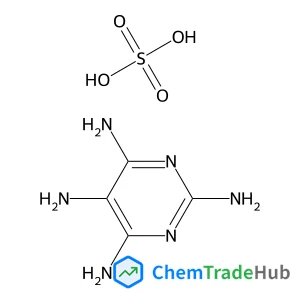
2,4,5,6-Tetraaminopyrimidine Sulfate
CAS Number: 5392-28-9
Other Suppliers for Quinmerac





Basic Information
Molecular Formula
C11H8ClNO2
Molecular Weight
221.64 g/mol
Physical Properties
Melting Point
244 ºC
Boiling Point
416°C at 760 mmHg
Density
1.406±0.06 g/cm3 (20 ºC 760 Torr),
Flash Point
205.4°C
Chemical Identifiers
SMILES
CC1=CC2=C(C(=C(C=C2)Cl)C(=O)O)N=C1
InChIKey
ALZOLUNSQWINIR-UHFFFAOYSA-N
Database References
MDL Number
MFCD00145199
FAQ
Quinmerac (CAS: 90717-03-6) falls under the classification of a fungicide. It must comply with the REACH regulations in the EU, which cover the registration, evaluation, authorization, and restriction of chemicals. In the U.S., it is regulated by the EPA, and must adhere to the FDA's safety and efficacy standards for agricultural chemicals. Additionally, it should follow the Globally Harmonized System of Classification and Labeling of Chemicals (GHS) guidelines for safety data sheets and hazard communication.
Yes, there are alternatives to Quinmerac (CAS: 90717-03-6) for synthesis. Common alternatives include other fungicides like benzimidazoles, strobilurins, and morpholines. These alternatives may offer similar or different modes of action and can be chosen based on the specific needs of the synthesis, such as broader spectrum activity, lower toxicity, or improved environmental safety.
The market for Quinmerac (CAS: 90717-03-6) is driven by its effectiveness against various fungal diseases in crops. Research trends are focusing on developing more environmentally friendly and sustainable fungicides. Additionally, there is an increasing demand for products that can enhance crop productivity while minimizing environmental impact. Quinmerac continues to be a relevant compound in both established and emerging markets.
Waste containing Quinmerac (CAS: 90717-03-6) should be collected in appropriate containers and labeled with the chemical name and CAS number. Incineration is a common disposal method, but it should be conducted in a professional incinerator to minimize environmental impact. Alternatively, professional waste disposal services that specialize in hazardous waste can ensure safe disposal. Always follow local and national regulations regarding the handling and disposal of hazardous chemicals.
Safety Notice
Please verify product specifications and safety data before use. Contact the supplier for detailed safety information.
Always follow proper handling procedures

Contact Information
Contact Person
Liu Ziying
1400878822@qq.com
Mobile
13986246535
Visit Website
http://www.hubeidahao.comAddress
Hubei Province Tianmen City Huangtan Town Ximiao Village 1 Group