












Atomic Spectrometry Update—Environmental Analysis
Literature Information
Publication Date
DOI
10.1039/JA989040001R
Impact Factor
4.023
Authors
View Original
Abstract
This review covers published papers and major conference presentations available to the authors for the year ending in the summer of 1988. It will be of interest to those using, or planning to use, analytical atomic spectrometry for the analysis of environmental samples. The full references on which it is based may be found in JAAS, Volume 3 (1988). As is often the case in the world of “real” samples, sample preparation procedures are again a dominant feature of the review. Speciation continues to attract interest, especially in waters. Electrothermal atomisation with matrix modification, frequently using the platform-in-furnace technique, is gaining ever wider acceptance for routine analysis, as is ICP-MS. The latter is now being used with increasing frequency for isotope dilution analysis—the ultimate in internal standardisation for the atomic spectroscopist! Practitioners of slurry atomisation are becoming rather more abundant, especially in the soils and plants arena, to such an extent that slurry atomisation justifies a separate section this year.
Related Literature
Electronic and optical properties of nanostructured MoS2 materials: influence of reduced spatial dimensions and edge effects
2017-06-01
Paper
DOI: 10.1039/C7CP03229C
Determination of growth regimes of Pd nanostructures on c-plane sapphire by the control of deposition amount at different annealing temperatures
Sundar Kunwar, Mao Sui, Puran Pandey, Quanzhen Zhang, Ming-Yu Li, Harish Bhandari, Jihoon Lee
2017-05-16
Paper
DOI: 10.1039/C7CP01410D
Gas phase hydration of halogenated benzene cations. Is it hydrogen or halogen bonding?
Kyle A. Mason, Adam C. Pearcy, Isaac K. Attah, Sean P. Platt, Saadullah G. Aziz, M. Samy El-Shall
2017-06-29
Paper
DOI: 10.1039/C7CP03778C
Glucose directs amyloid-beta into membrane-active oligomers
Niraja Kedia, Michael Almisry, Jan Bieschke
2017-06-26
Paper
DOI: 10.1039/C7CP02849K
Water–chromophore electron transfer determines the photochemistry of cytosine and cytidine
Holger Kruse, Jiří Šponer, Robert W. Góra
2017-06-21
Communication
DOI: 10.1039/C7CP02635H
Cation distribution: a key to ascertain the magnetic interactions in a cobalt substituted Mg–Mn nanoferrite matrix
Gagan Kumar, R. K. Kotnala, Jyoti Shah, Vijay Kumar, Arun Kumar, Pooja Dhiman, M. Singh
2017-06-06
Paper
DOI: 10.1039/C7CP01993A
Investigation of the shock-induced chemical reaction (SICR) in Ni + Al nanoparticle mixtures
Yongnan Xiong, Shifang Xiao, Huiqiu Deng, Wenjun Zhu, Wangyu Hu
2017-06-14
Paper
DOI: 10.1039/C7CP03176A
Growth of germanium on Au(111): formation of germanene or intermixing of Au and Ge atoms?
Esteban D. Cantero, Lara M. Solis, Javier D. Fuhr, María Luz Martiarena, Oscar Grizzi, Esteban A. Sánchez
2017-06-27
Paper
DOI: 10.1039/C7CP02949G
Computing distance distributions from dipolar evolution data with overtones: RIDME spectroscopy with Gd(iii)-based spin labels
Katharina Keller, Valerie Mertens, Mian Qi, Anna I. Nalepa, Adelheid Godt, Anton Savitsky, Gunnar Jeschke, Maxim Yulikov
2017-06-21
Paper
DOI: 10.1039/C7CP01524K
Ultrahigh-sensitive optical temperature sensing based on quasi-thermalized green emissions from Er:ZnO
Subrata Senapati, Karuna Kar Nanda
2016-12-14
Paper
DOI: 10.1039/C6CP06608A
You might also like
Compound Q&A
How should waste containing (6-Bromo-2-naphthyl)oxy](dimethyl)(2-methyl-2-propanyl)silane be handled?
Waste containing (6-Bromo-2-naphthyl)oxy](dimethyl)(2-methyl-2-propanyl)silane (...
100751-65-3[(6-Bromo-2-naphthyl...
Compound Q&A
How is 7-Fluoro-4-isoquinolinecarboxylic acid (CAS: 1841081-40-0) typically synthesized?
7-Fluoro-4-isoquinolinecarboxylic acid can be synthesized via a multi-step proce...
1841081-40-07-Fluoro-4-isoquinol...
Compound Q&A
What are the physical and chemical properties of 2,3,5,6-Tetrabromothieno[3,2-b]thiophene (CAS: 124638-53-5)?
2,3,5,6-Tetrabromothieno[3,2-b]thiophene is a crystalline compound with a high m...
124638-53-52,3,5,6-Tetrabromoth...
Compound Q&A
Is 1-[4-(Benzylamino)-7,8-dihydro-5H-pyrano[4,3-d]pyrimidin-2-yl]-2-methyl-1H-indole-4-carboxamide (CAS: 1542705-92-9) safe?
1-[4-(Benzylamino)-7,8-dihydro-5H-pyrano[4,3-d]pyrimidin-2-yl]-2-methyl-1H-indol...
1542705-92-91-[4-(Benzylamino)-7...
Compound Q&A
What is the market or research trend for imidazo[5,1-d]-1,2,3,5-tetrazine-8-carboxylic acid, 3,4-dihydro-3-methyl-4-oxo- (CAS: 113942-30-6)?
The market for imidazo[5,1-d]-1,2,3,5-tetrazine-8-carboxylic acid, 3,4-dihydro-3...
113942-30-6Imidazo[5,1-d]-1,2,3...
Compound Q&A
What is 3-(Triisopropylsilyl)propiolaldehyde (CAS: 163271-80-5)?
3-(Triisopropylsilyl)propiolaldehyde is a synthetic organic compound with the CA...
163271-80-53-(Triisopropylsilyl...
Compound Q&A
What regulatory guidelines apply to 6-Nitro-2H-1,4-benzoxazin-3(4H)-one (CAS: 81721-87-1)?
6-Nitro-2H-1,4-benzoxazin-3(4H)-one (CAS: 81721-87-1) is subject to various regu...
81721-87-16-Nitro-2H-1,4-benzo...
Compound Q&A
How should waste containing (3-Fluorophenyl)(4-{[(2-methyl-2-propanyl)oxy]carbonyl}-1-piperazinyl)acetic acid (CAS: 885272-91-3) be handled?
Waste containing (3-Fluorophenyl)(4-{[(2-methyl-2-propanyl)oxy]carbonyl}-1-piper...
885272-91-3(3-Fluorophenyl)(4-{...
Compound Q&A
What are the physical and chemical properties of N,N'-4,4'-Biphenyldiyldiisonicotinamide (CAS: 55119-40-9)?
N,N'-4,4'-Biphenyldiyldiisonicotinamide is a white crystalline solid with a mole...
55119-40-9N,N'-4,4'-Biphenyldi...
Compound Q&A
What industries use 6-Bromo-8-fluoro-2-quinazolinol (CAS: 1036756-15-6)?
6-Bromo-8-fluoro-2-quinazolinol is primarily used in the pharmaceutical industry...
1036756-15-66-Bromo-8-fluoro-2-q...
Source Journal
Journal of Analytical Atomic Spectrometry

CiteScore:
6.2
Self-citation Rate:
25.8%
Articles per Year:
254
The Journal of Analytical Atomic Spectrometry (JAAS) is the central journal for publishing innovative research on fundamentals, instrumentation, and methods in the determination, speciation and isotopic analysis of (trace) elements within all fields of application. This includes, but is not restricted to, the most recent progress, developments and achievements in all forms of atomic and elemental detection, isotope ratio determination, molecular analysis, plasma-based analysis and X-ray techniques. The journal welcomes full papers, communications, technical notes, critical and tutorial review articles, editorials, and comments, in addition to the Atomic Spectrometry Updates (ASU) literature reviews that are prepared by an expert panel. Submissions are welcome in the following areas, but note this list reflects the current scope and authors are strongly encouraged to contact the Editorial team if they believe that their work offers potentially new and emerging research relevant to the journal remit: Fundamental studies in the following. New and existing sources for atomic emission, absorption, fluorescence and mass spectrometry and those that provide both atomic and molecular information Sample introduction techniques for solids, liquids, gases Improvements in sensitivity, selectivity, precision, accuracy and/or robustness Isotope ratio measurements, including techniques for improving precision and mass bias correction Single channel and multichannel simultaneous detection systems Chemometrics, statistics, calibration techniques and internal standardisation Theoretical and numerical modelling of fundamental processes related to all of the above methodologies Novel or improved methodologies in areas of application including, but not limited to the following. Biosciences, including elemental, speciation and isotopic analysis in biological systems, immunoassays based on metal-labeled antibodies, bio-imaging, and nanoparticle toxicology Geochemistry Environmental science Materials science, including engineered nanoparticles and quantum dots Metrology, including reference materials Forensic analysis Food and agricultural sciences Energy Archaeometry Molecular analysis. Molecular sources for elemental and isotopic analysis Atomic sources for molecular analysis Atomic and molecular techniques simultaneously used for complementary chemical information All contributions are judged on originality and quality of scientific content, and appropriateness of length to content of new science.
Recommended Compounds
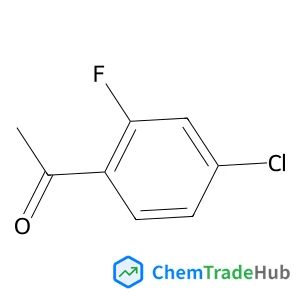
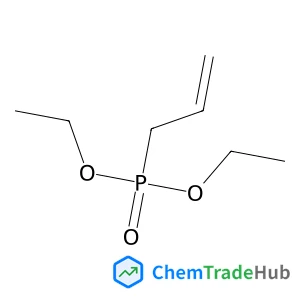

![N-[(E)-Phenylmethylene]benzenesulfonamide structure](https://static.chemtradehub.com/structs/139/13909-34-7-8167.webp "N-[(E)-Phenylmethylene]benzenesulfonamide structure")
Recommended Suppliers






Disclaimer
This page provides academic journal information for reference and research purposes only. We are not affiliated with any journal publishers and do not handle publication submissions. For publication-related inquiries, please contact the respective journal publishers directly.
If you notice any inaccuracies in the information displayed, please contact us at support@chemtradehub.com. We will promptly review and address your concerns.