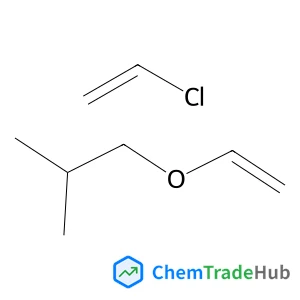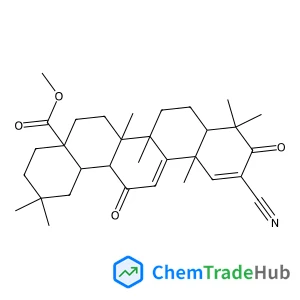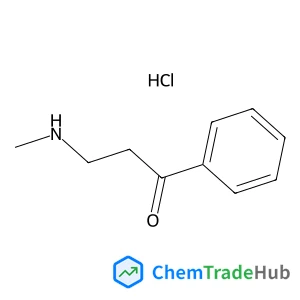
3-(Methylamino)-1-phenyl-1-propanone hydrochloride (1:1)
CAS Number:
2538-50-3
Molecular Formula:
C10H14ClNO
Chang Shu, Yadong Chen, Zhenzhen Zhang, Yuqing Lei, Jiajia Xu, Weiwei Lao, Qingping Xi, Qiang Sun, Xiaojun Li, Hongbing Liao, Qiaojie Luo, Xiaodong Li
Structural degeneration of a hybrid layer composed of a demineralized dentin matrix (DDM) and adhesive causes unsatisfactory functional outcomes in terms of bonding repair and caries treatment and is accompanied by high prevalence of secondary caries. Clinically, defects in the hybrid layer from insufficient adhesive infiltration, bacterial load from retained infected-dentin, and bacterial attack from the oral cavity are the main threats to degeneration. Currently, there is no strategy to simultaneously address adhesive penetration and bacterial infection. Herein, based on the core role of the strongly-polar hydrated DDM interface in dentin bonding, an interface-reconstructed bonding strategy assisted by electrostatic assembly of broad-spectrum germicidal polyhexamethylene biguanide (PHMB) is proposed that kills two birds with one stone. PHMB is absorbed onto the anionic 3D DDM forming a PHMB/DDM complex. The surface potential of the DDM increases by about 100 mV, the anion content decreases by 20%, and the interface water content decreases by nearly 40%. All of these changes contribute to the penetration of the adhesive, thereby improving the bonding strength and durability. After thermal cycling aging, the bonding strength of the PHMB group was 1.45–1.65 times that of the control group. In terms of antibacterial properties, PHMB treatment not only has a bacterial-killing ability due to the already formed biofilm but also significantly reduces the adhesion of bacteria, thereby delaying the occurrence of secondary caries. In summary, PHMB treatment reconstructed the DDM interface, resulting in a defect-low and inherent antibacterial hybrid layer that improves the bonding effect, treatment of caries and even prevention of secondary caries.
Dongpo Xu, Mingxia Gao, Chunhui Deng, Xiangmin Zhang
DOI: 10.1039/C6AN00361C
Jing Han, Zhihua Wang, Lihui Yin, Wei Zhang, You Peng, Zongxiu Nie
DOI: 10.1039/C9AN01612K
Qi Kang, Dazhong Shen, Yunqing Wang
DOI: 10.1039/C9AN01694E
Patrick Kubryk, Reinhard Niessner, Natalia P. Ivleva
DOI: 10.1039/C6AN00306K
Holly J. Butler, Martin R. McAinsh
DOI: 10.1039/C6AN00392C
A. Bondarenko, Y. Zhu, L. Qiao, F. Cortés Salazar, H. Pick, H. H. Girault
DOI: 10.1039/C6AN00126B
Bartolomeo Della Ventura, Martina Banchelli, Riccardo Funari, Anna Illiano, Marella De Angelis, Paola Taroni, Angela Amoresano, Paolo Matteini, Raffaele Velotta
DOI: 10.1039/C9AN00443B
Yijia Wang, Shiwu Zhang, Chunze Zhang, Zhenying Zhao, Xiaoli Zheng, Lihua Xue, Jun Liu, X.-C. Yuan
DOI: 10.1039/C6AN00264A
Manman Lin, Bin Xu, Huilu Yao, Aiguo Shen, Jiming Hu
DOI: 10.1039/C5AN02315G
Sean Goggins, Christopher G. Frost
DOI: 10.1039/C6AN00348F
When handling 4-(2-Furylmethyl)thiomorpholine 1,1-dioxide (CAS: 79206-94-3), it ...
When handling 4-Chloro-N-[2-(4-morpholinyl)ethyl]benzamide (CAS: 71320-77-9), it...
Waste containing this compound (CAS: 62921-74-8) should be handled according to ...
Waste containing (S)-Methyl 2-amino-3-cyclohexylpropanoate should be collected i...
This compound can be synthesized using a multi-step process involving the conjug...
There are several alternatives to (2E)-3-(3,4-Dichlorophenyl)acrylic acid in syn...
Ethyl 6-(2-nitrophenyl)imidazo[2,1-b][1,3]thiazole-3-carboxylate (CAS: 925437-84...
Waste containing 2-(1,3-Thiazol-2-yl)ethanamine (CAS: 18453-07-1) should be coll...
Methyl 5-iodo-2-methylbenzoate can be synthesized through the iodination of meth...
5-Chloro[1,2,4]triazolo[1,5-a]pyridine is commonly synthesized via the condensat...
Journal of Materials Chemistry A, B & C cover high quality studies across all fields of materials chemistry. The journals focus on those theoretical or experimental studies that report new understanding, applications, properties and synthesis of materials. The journals have a strong history of publishing quality reports of interest to interdisciplinary communities and providing an efficient and rigorous service through peer review and publication. The journals are led by an international team of Editors-in-Chief and Associate Editors who are all active researchers in their fields. Journal of Materials Chemistry A, B & C are separated by the intended application of the material studied. Broadly, applications in energy and sustainability are of interest to Journal of Materials Chemistry A, applications in biology and medicine are of interest to Journal of Materials Chemistry B, and applications in optical, magnetic and electronic devices are of interest to Journal of Materials Chemistry C. More than one Journal of Materials Chemistry journal may be suitable for certain fields and researchers are encouraged to submit their paper to the journal that they feel best fits for their particular article. Example topic areas within the scope of Journal of Materials Chemistry B are listed below. This list is neither exhaustive nor exclusive. Antifouling coatings Biocompatible materials Bioelectronics Bioimaging Biomimetics Biomineralisation Bionics Biosensors Diagnostics Drug delivery Gene delivery Immunobiology Nanomedicine Regenerative medicine & Tissue engineering Scaffolds Soft robotics Stem cells Therapeutic devices image block All articles published in Journal of Materials Chemistry B from 2019 onwards will be indexed in MEDLINE®. Articles that primarily focus on providing insight into the underlying science and performance of biomaterials within a biological environment are more suited to our companion journal, Biomaterials Science.
![1-Naphthalenesulfonic acid, 2-[(2-hydroxy-1-naphthalenyl)azo]-, bariumsalt (2:1) structure](https://static.chemtradehub.com/structs/110/1103-38-4-0b33.webp "1-Naphthalenesulfonic acid, 2-[(2-hydroxy-1-naphthalenyl)azo]-, bariumsalt (2:1) structure")