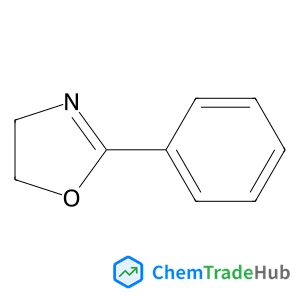
3,5-Dihydroxy-4-(3-methylbutanoyl)-2,6,6-tris(3-methyl-2-buten-1-yl)-2,4-cyclohexadien-1-one
CAS Number:
468-28-0
Molecular Formula:
C26H38O4
Weiguang Fang, Xinxin Yu, Juanjuan Zhao, Zhiqian Cao, Mingzai Wu, Derek Ho, Haibo Hu
The rapid progress in wearable electronic devices has resulted in high demands for compatible advanced power sources with stringent requirements, such as a high energy density and operation safety, long lifespan, excellent space adaptability and mechanical robustness. Given their high theoretical energy density, intrinsic safety and adjustable form factor, rechargeable flexible zinc–air batteries (F-ZABs) are among the most promising candidates. Energy efficiency, mechanical properties and integrability with modern electronics are the three core characteristics of F-ZABs. Although efforts have been devoted to developing various cutting-edge F-ZABs, existing reviews tend to focus on electrocatalysts and battery performance and do not directly address the challenges related to other key components and architectures exclusive to F-ZABs. Herein, we have systematically summarized the recent advances in F-ZABs from a component-centric perspective. The review begins with a description of the working principle of F-ZABs, and then elucidates the recent advances in bifunctional cathode catalysts, flexible air/zinc electrodes, quasi-solid-state electrolytes, and device architecture. Aspects such as single-atomic catalysts with high catalyst-mass ratios, self-supporting electrodes with holistic structures, zinc dendrite inhibition, hydrogel electrolytes with enhanced conductivity and strength and integrable coplanar batteries are especially highlighted. Important technical hurdles and potential solutions are summarized to facilitate a broad discussion between different research communities.
Snigdha Panda, Harkesh B. Singh, Ray J. Butcher
DOI: 10.1039/B312358H
DOI: 10.1039/B315080A
Xiaoyu Yang, Yu Han, Kaifeng Lin, Ge Tian, Yefei Feng, Xiangju Meng, Yan Di, Yuncheng Du, Yonglai Zhang, Feng-Shou Xiao
DOI: 10.1039/B410305J
Kyoung-Tae Youm, Seong Huh, Young Jun Park, Sangwoo Park, Moon-Gun Choi, Moo-Jin Jun
DOI: 10.1039/B409596K
Hemant K. Sharma, Keith H. Pannell
DOI: 10.1039/B410822A
Florence Sallas, Kenichi Niikura, Shin-Ichiro Nishimura
DOI: 10.1039/B316365B
Tie-Zhen Ren, Zhong-Yong Yuan, Bao-Lian Su
DOI: 10.1039/B410763B
Weon-Sik Chae, Sang-Wook Lee, Sung-Jae Im, Sik-Won Moon, Wang-Cheol Zin, Jin-Kyu Lee, Yong-Rok Kim
DOI: 10.1039/B410631H
Abd-Alhakeem H. Abu-Nawwas, Joan Cano, Paul Christian, Talal Mallah, Gopalan Rajaraman, Simon J. Teat, Richard E. P. Winpenny, Yasuhiko Yukawa
DOI: 10.1039/B312947K
Vitaliy L. Budarin, James H. Clark, Stewart J. Tavener, Karen Wilson
DOI: 10.1039/B411222A
When handling 2-Chloro-1,2-bis(4-methylphenyl)ethanone (CAS: 71193-32-3), it is ...
4-Ethoxy-3-(5-methyl-4-oxo-7-propyl-1,4-dihydroimidazo[5,1-f][1,2,4]triazin-2-yl...
Methyl 3-Oxo-4-Androsten-17-Carboxylate (CAS: 2681-55-2) should be stored in a c...
(R)-3-Amino-4-(3-hexylphenylamino)-4-oxobutylphosphonic acid is primarily used i...
2-Methyl-2-propanyl 3-amino-3-carbamoyl-1-azetidinecarboxylate (CAS: 1254120-14-...
There are alternative reagents that can be used in synthesis instead of (E)-4-(t...
[2-(3-Chlorophenyl)-1,3-thiazol-4-yl]methanol (CAS: 121202-20-8) is a crystallin...
The market and research trends for Methyl (2S)-[(4S)-2,2-dimethyl-1,3-dioxolan-4...
The market for 1-Bromo-2-isocyanatoethane (CAS: 42865-19-0) is driven by its use...
4-Nitro-D-phenylalanine hydrochloride (CAS: 147065-06-3) is primarily used in re...

Journal of Materials Chemistry A, B & C cover high quality studies across all fields of materials chemistry. The journals focus on those theoretical or experimental studies that report new understanding, applications, properties and synthesis of materials. The journals have a strong history of publishing quality reports of interest to interdisciplinary communities and providing an efficient and rigorous service through peer review and publication. The journals are led by an international team of Editors-in-Chief and Associate Editors who are all active researchers in their fields. Journal of Materials Chemistry A, B & C are separated by the intended application of the material studied. Broadly, applications in energy and sustainability are of interest to Journal of Materials Chemistry A, applications in biology and medicine are of interest to Journal of Materials Chemistry B, and applications in optical, magnetic and electronic devices are of interest to Journal of Materials Chemistry C. More than one Journal of Materials Chemistry journal may be suitable for certain fields and researchers are encouraged to submit their paper to the journal that they feel best fits for their particular article. Example topic areas within the scope of Journal of Materials Chemistry A are listed below. This list is neither exhaustive nor exclusive. Artificial photosynthesis Batteries Carbon dioxide conversion Catalysis Fuel cells Gas capture/separation/storage Green/sustainable materials Hydrogen generation Hydrogen storage Photocatalysis Photovoltaics Self-cleaning materials Self-healing materials Sensors Supercapacitors Thermoelectrics Water splitting Water treatment

![(1R)-3-Bromo-1,7,7-trimethylbicyclo[2.2.1]heptan-2-one structure](https://static.chemtradehub.com/structs/102/10293-06-8-dd8a.webp "(1R)-3-Bromo-1,7,7-trimethylbicyclo[2.2.1]heptan-2-one structure")