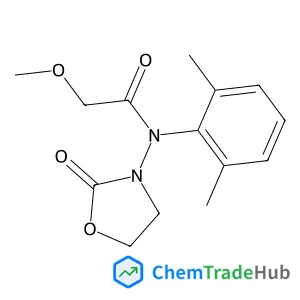
N-(2,6-Dimethylphenyl)-2-methoxy-N-(2-oxo-1,3-oxazolidin-3-yl)acetamide
CAS Number:
77732-09-3
Molecular Formula:
C14H18N2O4
Rafiuzzaman Pritom, Rahul Jayan, Md Mahbubul Islam
This study integrates density functional theory (DFT) and machine learning (ML) methodologies to investigate the charging performance and catalyst design principles of porphyrin-supported single atom catalysts (SACs) based on 3d and 4d transition metals (TMs) in the context of nonaqueous Mg–CO2 batteries. Specifically, we utilize DFT calculations to elucidate the adsorption energies of the primary discharge product, MgCO3, on SACs supported on NxSy (where x = 4, 3, 2 and y = 0, 1, 2, respectively) moieties of porphyrin. Our analysis unveils the ability of these SACs to effectively bind with MgCO3, which correlates with enhancing the kinetics of its decomposition, a pivotal factor influencing the charging performance. The results demonstrate that the improved adsorption energies of early TMs are expected to reduce the decomposition barrier for MgCO3 during battery charging. Furthermore, we leverage a DFT-derived dataset to construct ML models using Gradient Boosting Regression (GBR) and Artificial Neural Network (ANN) algorithms. Employing K-fold cross-validation, both algorithms consistently exhibit remarkable accuracy in their predictions. To unravel the catalyst design principles, we also conduct feature importance analysis, using SHapley Additive exPlanations (SHAP), Permutation Importance, and Mean Decrease Impurity (MDI) techniques to identify the most significant features. This study reveals that the ionization potential of TMs is the most important descriptor for the selection of SACs for cathodes in Mg–CO2 batteries. Overall, this combined DFT and ML investigation provides insights into both the charging performance of SACs in Mg–CO2 batteries and the fundamental principles governing catalyst design.
N. Hickey, P. Fornasiero, R. Di Monte, J. Kašpar, J. R. González-Velasco, M. A. Gutiérrez-Ortiz, M. P. González-Marcos, J. M. Gatica, S. Bernal
DOI: 10.1039/B308321G
Helena Almer, Tomas Szabo
DOI: 10.1039/B311912B
Victorio Cadierno, Josefina Díez, Sergio E. García-Garrido, José Gimeno
DOI: 10.1039/B410812D
DOI: 10.1039/B315080A
Avelino Corma, Michael Renz
DOI: 10.1039/B313738D
Thomas Sommermann, Boo Geun Kim, Karl Peters, Eva-Maria Peters, Torsten Linker
DOI: 10.1039/B410120K
Masaru Sakomura, Kazuyoshi Ueda, Masamichi Fujihira
DOI: 10.1039/B410262B
A. Ratnamala, V. Durga Kumari, M. Subrahmanyam, N. Archana
DOI: 10.1039/B409413A
Tieme A. van den Berg, Johannes W. de Boer, Wesley R. Browne, Gerard Roelfes, Ben L. Feringa
DOI: 10.1039/B412016G
Naoufel Haddour, Chantal Gondran, Serge Cosnier
DOI: 10.1039/B311566F
When handling 2-Chloro-1,2-bis(4-methylphenyl)ethanone (CAS: 71193-32-3), it is ...
4-Ethoxy-3-(5-methyl-4-oxo-7-propyl-1,4-dihydroimidazo[5,1-f][1,2,4]triazin-2-yl...
Methyl 3-Oxo-4-Androsten-17-Carboxylate (CAS: 2681-55-2) should be stored in a c...
(R)-3-Amino-4-(3-hexylphenylamino)-4-oxobutylphosphonic acid is primarily used i...
2-Methyl-2-propanyl 3-amino-3-carbamoyl-1-azetidinecarboxylate (CAS: 1254120-14-...
There are alternative reagents that can be used in synthesis instead of (E)-4-(t...
[2-(3-Chlorophenyl)-1,3-thiazol-4-yl]methanol (CAS: 121202-20-8) is a crystallin...
The market and research trends for Methyl (2S)-[(4S)-2,2-dimethyl-1,3-dioxolan-4...
The market for 1-Bromo-2-isocyanatoethane (CAS: 42865-19-0) is driven by its use...
4-Nitro-D-phenylalanine hydrochloride (CAS: 147065-06-3) is primarily used in re...
Journal of Materials Chemistry A, B & C cover high quality studies across all fields of materials chemistry. The journals focus on those theoretical or experimental studies that report new understanding, applications, properties and synthesis of materials. The journals have a strong history of publishing quality reports of interest to interdisciplinary communities and providing an efficient and rigorous service through peer review and publication. The journals are led by an international team of Editors-in-Chief and Associate Editors who are all active researchers in their fields. Journal of Materials Chemistry A, B & C are separated by the intended application of the material studied. Broadly, applications in energy and sustainability are of interest to Journal of Materials Chemistry A, applications in biology and medicine are of interest to Journal of Materials Chemistry B, and applications in optical, magnetic and electronic devices are of interest to Journal of Materials Chemistry C. More than one Journal of Materials Chemistry journal may be suitable for certain fields and researchers are encouraged to submit their paper to the journal that they feel best fits for their particular article. Example topic areas within the scope of Journal of Materials Chemistry A are listed below. This list is neither exhaustive nor exclusive. Artificial photosynthesis Batteries Carbon dioxide conversion Catalysis Fuel cells Gas capture/separation/storage Green/sustainable materials Hydrogen generation Hydrogen storage Photocatalysis Photovoltaics Self-cleaning materials Self-healing materials Sensors Supercapacitors Thermoelectrics Water splitting Water treatment