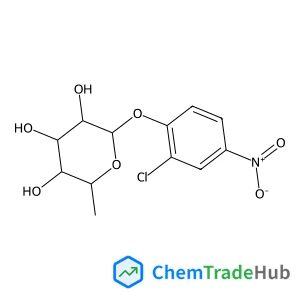
2-Chloro-4-nitrophenyl 6-deoxy-alpha-L-galactopyranoside
CAS Number:
157843-41-9
Molecular Formula:
C12H14ClNO7
Abir Boublia, Zahir Guezzout, Nacerddine Haddaoui, Michael Badawi, Byong-Hun Jeon
This study employs various machine learning algorithms to model the electrical conductivity and gas sensing responses of polyaniline/graphene (PANI/Gr) nanocomposites based on a comprehensive dataset gathered from over 100 references. Artificial neural networks (ANNs) demonstrated superior predictive accuracy among the models. The investigation delves into identifying and mitigating outliers, both structural and response-related, showcasing the robustness of the proposed ANN models. The study emphasizes the critical role of applicability domain (AD) analysis in evaluating model reliability. Results indicate high accuracy for electrical conductivity (RMSE: 0.408, R2: 0.984) and gas sensing responses for ammonia, toluene, and benzene gases (RMSE: 0.350, 0.232, and 0.081, R2: 0.967, 0.983, and 0.976, respectively). Input contribution analysis highlights key parameters influencing performance. The σ-profiles of additives emerge as significant contributors, emphasizing the importance of molecular-input understanding in machine learning models. These findings contribute to developing high-performance PANI/Gr nanocomposites with implications for diverse applications like supercapacitors, gas sensors, and energy storage devices. The study underscores the need for further research to deepen the understanding of molecular inputs' impact on PANI/Gr system performance, enabling more precise material design.
Pedro Augusto Franco Pinheiro Moreira, Roberto Gomes de Aguiar Veiga, Ingrid de Almeida Ribeiro, Julian Helfferich
DOI: 10.1039/C8CP00933C
Maolin Yu, Xiaofei Liu, Wanlin Guo
DOI: 10.1039/C7CP07912E
Mengguo Ren, Xiaonan Lu, Lu Deng, Po-Hsuen Kuo, Jincheng Du
DOI: 10.1039/C7CP08358K
DOI: 10.1039/C7CP08239H
Larwsk H. Gonçalves da Silva, David Hochberg
DOI: 10.1039/C8CP01828F
Wenjing Xie, Chak-Keung Chan
DOI: 10.1039/C8CP00524A
Arun K. Pal, Thomas J. Duignan, Jochen Autschbach
DOI: 10.1039/C7CP08655E
Dhamodaran Manikandan, S. Amirthapandian, I. S. Zhidkov, A. I. Kukharenko, S. O. Cholakh, Ramaswamy Murugan
DOI: 10.1039/C7CP07182E
A. Ryzhikov, H. Nouali, T. J. Daou, J. Patarin
DOI: 10.1039/C7CP06520E
When handling 2-Chloro-1,2-bis(4-methylphenyl)ethanone (CAS: 71193-32-3), it is ...
4-Ethoxy-3-(5-methyl-4-oxo-7-propyl-1,4-dihydroimidazo[5,1-f][1,2,4]triazin-2-yl...
Methyl 3-Oxo-4-Androsten-17-Carboxylate (CAS: 2681-55-2) should be stored in a c...
(R)-3-Amino-4-(3-hexylphenylamino)-4-oxobutylphosphonic acid is primarily used i...
2-Methyl-2-propanyl 3-amino-3-carbamoyl-1-azetidinecarboxylate (CAS: 1254120-14-...
There are alternative reagents that can be used in synthesis instead of (E)-4-(t...
[2-(3-Chlorophenyl)-1,3-thiazol-4-yl]methanol (CAS: 121202-20-8) is a crystallin...
The market and research trends for Methyl (2S)-[(4S)-2,2-dimethyl-1,3-dioxolan-4...
The market for 1-Bromo-2-isocyanatoethane (CAS: 42865-19-0) is driven by its use...
4-Nitro-D-phenylalanine hydrochloride (CAS: 147065-06-3) is primarily used in re...

Journal of Materials Chemistry A, B & C cover high quality studies across all fields of materials chemistry. The journals focus on those theoretical or experimental studies that report new understanding, applications, properties and synthesis of materials. The journals have a strong history of publishing quality reports of interest to interdisciplinary communities and providing an efficient and rigorous service through peer review and publication. The journals are led by an international team of Editors-in-Chief and Associate Editors who are all active researchers in their fields. Journal of Materials Chemistry A, B & C are separated by the intended application of the material studied. Broadly, applications in energy and sustainability are of interest to Journal of Materials Chemistry A, applications in biology and medicine are of interest to Journal of Materials Chemistry B, and applications in optical, magnetic and electronic devices are of interest to Journal of Materials Chemistry C. More than one Journal of Materials Chemistry journal may be suitable for certain fields and researchers are encouraged to submit their paper to the journal that they feel best fits for their particular article. Example topic areas within the scope of Journal of Materials Chemistry A are listed below. This list is neither exhaustive nor exclusive. Artificial photosynthesis Batteries Carbon dioxide conversion Catalysis Fuel cells Gas capture/separation/storage Green/sustainable materials Hydrogen generation Hydrogen storage Photocatalysis Photovoltaics Self-cleaning materials Self-healing materials Sensors Supercapacitors Thermoelectrics Water splitting Water treatment