












Novel two-dimensional ferromagnetic semiconductors: Ga-based transition-metal trichalcogenide monolayers
Literature Information
Publication Date
2018-01-30
DOI
10.1039/C7CP07912E
Impact Factor
3.676
Authors
Maolin Yu, Xiaofei Liu, Wanlin Guo
View Original
Abstract
Ga-based two-dimensional transition-metal trichalcogenides with tunable ferromagnetic semiconducting properties are explored by first-principles calculations. It is found that the CrGaTe3 monolayer is an intrinsic ferromagnetic semiconductor with an indirect bandgap of 0.3 eV and exhibits strong dynamical, thermal and mechanical stabilities in the free-standing form. Its Curie temperature of 71 K estimated by Monte Carlo simulations can be significantly enhanced up to near room-temperature (263 K) by 5% biaxial tensile strain at which its structure still remains dynamically stable, while compressive strain can turn the monolayer from a ferromagnetic semiconductor to an antiferromagnetic semiconductor and finally to a ferromagnetic metal with a Curie temperature of 473 K at −5% strain. It is revealed that the pronounced strain tunability originates from the competition between a variety of magnetic exchange interactions. The CrGaSe3 monolayer is found to exhibit similar intrinsic ferromagnetic semiconducting properties and strain tunability. The exceptional properties render Ga-based transition-metal trichalcogenides promising candidates for spintronic applications.
Related Literature
Nanomaterials: stimulants for biofuels and renewables, yield and energy optimization
Yogendra Kumar, Prerna Yogeshwar, Sushant Bajpai, Pooja Jaiswal, Shalu Yadav, Diksha Praveen Pathak, Muskan Sonker, Saurabh Kr Tiwary
2021-07-15
Review Article
DOI: 10.1039/D1MA00538C
Novel resin-based vacuum distillation-crystallisation method for recovery of succinic acid crystals from fermentation broths
Chenyu Du, Alexandra Cristina Blaga, Maria Camarut, Colin Webb, Christian V. Stevens, Wim Soetaert
2010-02-20
Paper
DOI: 10.1039/B913021G
A one-step and biocompatible cellulose functionalization for covalent antibody immobilization on immunoassay membranes
Hervé Volland, Julie Dano, Thomas Berthelot
2013-05-01
Paper
DOI: 10.1039/C3TB20380H
Sonogashira coupling reactions in biodegradable ionic liquids derived from nicotinic acid
Jitendra R. Harjani, Alwyn T. Gomez, M. Teresa Garcia, Robert D. Singer, Peter J. Scammells
2010-02-10
Paper
DOI: 10.1039/B919394D
In situ determination of sulfur isotopes in sulfur-rich materials by laser ablation multiple-collector inductively coupled plasma mass spectrometry (LA-MC-ICP-MS)
Paul R. D. Mason, Jan Košler, Paul J. Sylvester, Simon Meffan-Main
2005-12-20
Paper
DOI: 10.1039/B510883G
Non-matrix matched calibration of major and minor concentrations of Zn and Cu in brass, aluminium and silicate glass using NIR femtosecond laser ablation inductively coupled plasma mass spectrometry
Qunzhou Bian, Carmen C. Garcia, Joachim Koch, Kay Niemax
2005-12-20
Paper
DOI: 10.1039/B513690C
Understanding the low voltage losses in high-performance non-fullerene acceptor-based organic solar cells
Jakob Hofinger, Felix Mayr, Katarina Gugujonovic, Dominik Wielend, Markus C. Scharber
2021-05-25
Paper
DOI: 10.1039/D1MA00293G
You might also like
Compound Q&A
What precautions should be taken when handling 4-Methyl-6-(trifluoromethyl)quinoline (CAS: 40716-16-3)?
When handling 4-Methyl-6-(trifluoromethyl)quinoline (CAS: 40716-16-3), safety go...
40716-16-34-Methyl-6-(trifluor...
Compound Q&A
What is 4-(3,5-Difluorophenyl)aniline (CAS: 405058-00-6)?
4-(3,5-Difluorophenyl)aniline is an aromatic organic compound with the CAS numbe...
405058-00-64-(3,5-Difluoropheny...
Compound Q&A
How is 5-{[4-(Trifluoromethyl)phenyl]sulfanyl}-1,2,3-thiadiazole-4-carboxylic acid (CAS: 338982-07-3) typically synthesized?
5-{[4-(Trifluoromethyl)phenyl]sulfanyl}-1,2,3-thiadiazole-4-carboxylic acid can ...
338982-07-35-{[4-(Trifluorometh...
Compound Q&A
What is the market or research trend for 4-Benzylaniline hydrochloride (CAS: 6317-57-3)?
The market for 4-Benzylaniline hydrochloride (CAS: 6317-57-3) is steadily growin...
6317-57-34-Benzylaniline hydr...
Compound Q&A
Is [3-(Diethylsulfamoyl)phenyl]boronic acid (CAS: 871329-58-7) safe?
[3-(Diethylsulfamoyl)phenyl]boronic acid is generally considered safe when handl...
871329-58-7[3-(Diethylsulfamoyl...
Compound Q&A
What are the main uses of 3-Bromo-2,5-dimethoxyaniline (CAS: 115929-62-9)?
3-Bromo-2,5-dimethoxyaniline is mainly used in the pharmaceutical and chemical i...
115929-62-93-Bromo-2,5-dimethox...
Compound Q&A
What regulatory guidelines apply to N-Methyl-1-(5-methyl-1H-indol-3-yl)methanamine (CAS: 915922-67-7)?
N-Methyl-1-(5-methyl-1H-indol-3-yl)methanamine (CAS: 915922-67-7) is subject to ...
915922-67-7N-Methyl-1-(5-methyl...
Compound Q&A
What industries use Carbamic acid, N-[(5S)-5,6-diamino-6-oxohexyl]-, 1,1-dimethylethyl ester (CAS: 24828-96-4)?
This compound is primarily used in the pharmaceutical industry for the synthesis...
24828-96-4Carbamic acid, N-[(5...
Compound Q&A
How should 2-Methyl-2-propanyl [(1S,3R)-3-aminocyclohexyl]carbamate (CAS: 1298101-47-9) be stored?
2-Methyl-2-propanyl [(1S,3R)-3-aminocyclohexyl]carbamate (CAS: 1298101-47-9) sho...
1298101-47-92-Methyl-2-propanyl ...
Compound Q&A
What industries use Ethyl 2-bromo-4,4,4-trifluorobutanoate (CAS: 367-33-9)?
Ethyl 2-bromo-4,4,4-trifluorobutanoate (CAS: 367-33-9) is utilized in the pharma...
367-33-9Ethyl 2-bromo-4,4,4-...
Source Journal
Physical Chemistry Chemical Physics

CiteScore:
5.5
Self-citation Rate:
10.3%
Articles per Year:
3036
Physical Chemistry Chemical Physics (PCCP) is an international journal co-owned by 19 physical chemistry and physics societies from around the world. This journal publishes original, cutting-edge research in physical chemistry, chemical physics and biophysical chemistry. To be suitable for publication in PCCP, articles must include significant innovation and/or insight into physical chemistry; this is the most important criterion that reviewers and Editors will judge against when evaluating submissions. The journal has a broad scope and welcomes contributions spanning experiment, theory, computation and data science. Topical coverage includes spectroscopy, dynamics, kinetics, statistical mechanics, thermodynamics, electrochemistry, catalysis, surface science, quantum mechanics, quantum computing and machine learning. Interdisciplinary research areas such as polymers and soft matter, materials, nanoscience, energy, surfaces/interfaces, and biophysical chemistry are welcomed if they demonstrate significant innovation and/or insight into physical chemistry. Joined experimental/theoretical studies are particularly appreciated when complementary and based on up-to-date approaches.
Recommended Compounds
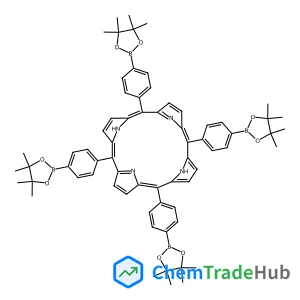
5,10,15,20-tetrakis(4-boronic acid pinacol ester phenyl) porphyrin
CAS Number:
1332748-00-1
Molecular Formula:
C68H74B4N4O8
![N-{3-[Benzyl(methyl)amino]propyl}-9-chloro-5,6,7,8-tetrahydro-2-acridinecarboxamide structure](https://static.chemtradehub.com/structs/142/1426944-49-1-1e4c.webp "N-{3-[Benzyl(methyl)amino]propyl}-9-chloro-5,6,7,8-tetrahydro-2-acridinecarboxamide structure")
N-{3-[Benzyl(methyl)amino]propyl}-9-chloro-5,6,7,8-tetrahydro-2-acridinecarboxamide
CAS Number:
1426944-49-1
Molecular Formula:
C25H28ClN3O
Recommended Suppliers






Disclaimer
This page provides academic journal information for reference and research purposes only. We are not affiliated with any journal publishers and do not handle publication submissions. For publication-related inquiries, please contact the respective journal publishers directly.
If you notice any inaccuracies in the information displayed, please contact us at support@chemtradehub.com. We will promptly review and address your concerns.