


![4-Nitrophenyl N-{[(2-methyl-2-propanyl)oxy]carbonyl}-L-isoleucinate structure](https://static.chemtradehub.com/structs/169/16948-38-2-c88f.webp "4-Nitrophenyl N-{[(2-methyl-2-propanyl)oxy]carbonyl}-L-isoleucinate structure")
4-Nitrophenyl N-{[(2-methyl-2-propanyl)oxy]carbonyl}-L-isoleucinate
CAS Number:
16948-38-2
Molecular Formula:
C17H24N2O6
Yuping Wang, Shulin Bai, Haonan Shi, Qian Cao, Bingchao Qin, Li-Dong Zhao
In recent years, the thermoelectric properties of SnSe crystals have been rather impressive, while those of polycrystalline SnSe are not ideal due to the grain boundary scattering, which results in impaired carrier mobility and electrical transport. In this work, we introduce the tetragonal-structure AgInSe2 into SnSe matrix, which not only modifies the crystal structure symmetry to boost carrier mobility, but also enlarges effective mass by inducing resonant energy levels near the valence bands. The compromise on carrier mobility and effective mass leads to a substantial optimization of the electrical transport in the measured temperature range, realizing a peak power factor (PF) value of ∼7.1 μW cm−1 K−2 in the 1.5% AgInSe2 alloyed sample, which exhibits nearly 2 times enhancement compared to the unalloyed sample. Subsequently, Ge alloying was introduced to further suppress phonon transport, leading to significantly suppressed lattice thermal conductivities by constructing microstructural point defects. The successive modulation of crystal, band, and microscopic structures facilitates effective phonon-electron decoupling, favoring a prominent peak ZT of ∼1.6 at 773 K in the 0.75% Ge-alloyed (SnSe)0.985(AgInSe2)0.015 sample. Our study provides a systematic strategy to decouple the phonon-electron transport and enhance thermoelectric performance by modulating various aspects of structures.

Green Chemistry

European Journal of Organic Chemistry

Current Pharmaceutical Biotechnology

Journal of Enzyme inhibition and Medicinal Chemistry

Foundations of Chemistry

Journal of Medical Biochemistry

Angewandte Chemie International Edition

Environmental Toxicology and Pharmacology

Advanced Engineering Materials

Photochemical & Photobiological Sciences
Ogaga G. Uzoh, Peter T. A. Galek, Sarah L. Price
DOI: 10.1039/C4CP05525J
Chuei-Jhih Chiou, Bing-Jian Sun, A. H. H. Chang
DOI: 10.1039/C4CP06043A
Keisuke Niimi, Tetsuya Taketsugu, Akira Nakayama
DOI: 10.1039/C5CP00568J
I. Esnal, G. Duran-Sampedro, A. R. Agarrabeitia, J. Bañuelos, I. García-Moreno, M. A. Macías, E. Peña-Cabrera, I. López-Arbeloa, S. de la Moya, M. J. Ortiz
DOI: 10.1039/C5CP00193E
Ionel Popescu, Zinovia Skoufa
DOI: 10.1039/C5CP00392J
R. R. Unwin, R. A. Cabanas, T. Yanagishima, T. R. Blower, H. Takahashi, G. P. C. Salmond, J. M. Edwardson, S. Fraden
DOI: 10.1039/C4CP05405A
David T. Valley, David P. Hoffman, Richard A. Mathies
DOI: 10.1039/C4CP05323K
H. Sun, D. Wu, X. Guo, A. Navrotsky
DOI: 10.1039/C5CP00016E
Yingqi Cui, Zhaoyang Lou, Xinqin Wang, Shengping Yu, Mingli Yang
DOI: 10.1039/C4CP06103A
Terry D. Humphries, Motoaki Matsuo, Guanqiao Li
DOI: 10.1039/C5CP00258C
Waste containing 2-Ethyl-4-Methyl-1H-Imidazole-5-Carbaldehyde (CAS: 88634-80-4) ...
Triethoxy(octyl)silane (CAS: 1385031-14-0) is widely used in the pharmaceuticals...
Several alternatives to 3-iodo-7-nitro-1H-indazole (CAS: 864724-64-1) exist in t...
Yes, there are alternatives to Benzene, bis[(trimethoxysilyl)ethyl] (CAS: 266317...
Isothiazole-3-carbonitrile (CAS: 1452-17-1) is generally considered safe when us...
(3-Chlorophenyl)methanol (CAS: 873-63-2) is considered low to moderately toxic. ...
(2S,3S)-2-Hydroxy-3-({[(2-methyl-2-propanyl)oxy]carbonyl}amino)-3-(2-naphthyl)pr...
Proper handling of methyl 2-(bromomethyl)-5-methoxybenzoate requires the use of ...
6,8-Dibromoimidazo[1,2-a]pyridine-2-carboxylic acid (CAS: 904805-36-3) is an aro...
3-Amino-5-bromo-2-pyridinecarbonitrile is considered safe when handled under pro...
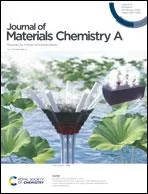
Journal of Materials Chemistry A, B & C cover high quality studies across all fields of materials chemistry. The journals focus on those theoretical or experimental studies that report new understanding, applications, properties and synthesis of materials. The journals have a strong history of publishing quality reports of interest to interdisciplinary communities and providing an efficient and rigorous service through peer review and publication. The journals are led by an international team of Editors-in-Chief and Associate Editors who are all active researchers in their fields. Journal of Materials Chemistry A, B & C are separated by the intended application of the material studied. Broadly, applications in energy and sustainability are of interest to Journal of Materials Chemistry A, applications in biology and medicine are of interest to Journal of Materials Chemistry B, and applications in optical, magnetic and electronic devices are of interest to Journal of Materials Chemistry C. More than one Journal of Materials Chemistry journal may be suitable for certain fields and researchers are encouraged to submit their paper to the journal that they feel best fits for their particular article. Example topic areas within the scope of Journal of Materials Chemistry A are listed below. This list is neither exhaustive nor exclusive. Artificial photosynthesis Batteries Carbon dioxide conversion Catalysis Fuel cells Gas capture/separation/storage Green/sustainable materials Hydrogen generation Hydrogen storage Photocatalysis Photovoltaics Self-cleaning materials Self-healing materials Sensors Supercapacitors Thermoelectrics Water splitting Water treatment
![4,4'-[2,5-Biphenyldiylbis(oxy)]dianiline structure](https://static.chemtradehub.com/structs/941/94148-67-1-24c6.webp "4,4'-[2,5-Biphenyldiylbis(oxy)]dianiline structure")





