













Ultralong lifespan of SuperRedox Capacitor using Ti-doped Li3V2(PO4)3 cathode with suppressed vanadium dissolution
Literature Information
Publication Date
2023-12-11
DOI
10.1039/D3TA06240F
Impact Factor
12.732
Authors
Yuta Harada, Naohisa Okita, Masahiro Fukuyama, Wako Naoi
View Original
Abstract
In this study, we successfully synthesized highly dispersed composites of multiwalled carbon nanotubes (MWCNTs). This was achieved by stoichiometrically substituting various metal ions, namely Ti4+, Al3+, and/or Mn2+, into monoclinic Li3V2−X MX(PO4)3 (LVP), where X varies from 0 to 0.5. The substituted LVP materials, including Ti-, Al-, and Mn-LVP, consistently exhibited enhanced electrochemical performance, surpassing 10 000 cycles in cycling tests. Notably, Ti-LVP (X = 0.1) displayed a remarkable capacity retention of 88.6% after 10 000 cycles. Our investigation entailed comprehensive characterization of the electrochemical behavior of Ti-LVP over the entire doping range (X = 0–0.5). This characterization considered the crystal structure and its potential dependence on V-sites and Li-sites, along with their interplay with the proposed mechanism. Remarkably, a significant reduction (>50%) of vanadium dissolution was observed in immersion tests in polar solvents under extreme conditions with Ti-doped LVP. To gain further insights into this groundbreaking suppression behavior, we employed a combination of X-ray absorption fine structure (XAFS) analysis and precise molecular orbital calculations via the DV-Xα method. This approach unveiled a potential reduction in the ionicity of V3+ in V–O bonds within the bulk of LVP crystals and underscored surface interactions with electrodes and particles as contributing factors. The impact of suppressing parasitic reactions at the anode due to vanadium dissolution was evident in full-cell tests employing a configuration of Li4Ti5O12/(1 M LiPF6/EC:DEC)/Li2.9V1.9Ti0.1(PO4)3, which demonstrated exceptional performance. Overall, the findings of this study hold significant promise for advancing the development of ultrafast and reliable energy storage technologies such as SuperRedox Capacitors, paving the way for a more sustainable and environmentally friendly future.
Related Literature
The role of temperature in the synthesis of hybrid inorganic–organic materials: the example of cobalt succinates
Paul M. Forster, Andrea R. Burbank, Carine Livage, Gérard Férey, Anthony K. Cheetham
2004-01-23
Communication
DOI: 10.1039/B311156C
Synthesis and structural characterization of the first unsymmetrical diarylpalladium complex trans-Pd(C6F5)(2,4,6-C6F3H2)(PEt3)2, derived from transmetallation between 2,4,6-trifluorophenylboronic acid and trans-Pd(C6F5)I(PEt3)2
Yasushi Nishihara, Hiroyuki Onodera, Kohtaro Osakada
2003-12-04
Communication
DOI: 10.1039/B308741G
Structural defects cause TiO2-based photocatalysts to be active in visible light
2004-09-16
Communication
DOI: 10.1039/B409730K
11-Aminoundecanoic acid: a versatile unit for the generation of low molecular weight gelators for water and organic solvents
Anthony D'Aléo, Jean-Luc Pozzo, Frédéric Fages, Marc Schmutz, Gudrun Mieden-Gundert, Fritz Vögtle, Vesna Caplar, Mladen Zinic
2003-11-18
Communication
DOI: 10.1039/B307846A
The substituent-dependent base-treatment chemistry of (η5-C5H5)Fe(CO)2SiR2SiR2Cl: formation of 1,2-disila-3-metallacyclobutanes, their ring-opened polymers, migrations and substitutions
Hemant K. Sharma, Keith H. Pannell
2004-10-06
Communication
DOI: 10.1039/B410822A
Enhanced fluorescence quenching in receptor-containing conjugated polymers: a calix[4]arene-containing poly(phenylene ethynylene)
Jordan H. Wosnick, Timothy M. Swager
2004-10-18
Communication
DOI: 10.1039/B411489B
Electrostatic interactions by design. Versatile methodology towards multifunctional assemblies/nanostructured electrodes
Maurizio Prato
2004-10-27
Feature Article
DOI: 10.1039/B410541A
Ordered mesoporous titanosilicates with catalytically stable and active four-coordinated titanium sites
Xiaoyu Yang, Yu Han, Kaifeng Lin, Ge Tian, Yefei Feng, Xiangju Meng, Yan Di, Yuncheng Du, Yonglai Zhang, Feng-Shou Xiao
2004-10-04
Communication
DOI: 10.1039/B410305J
A simulation of key aspects of a primary process in natural photosynthesis by a Langmuir–Blodgett film assembly
Masaru Sakomura, Kazuyoshi Ueda, Masamichi Fujihira
2004-09-29
Communication
DOI: 10.1039/B410262B
Short and stereoselective synthesis of C-glycosylated glycine derivatives from glycals by radical addition and reduction
Thomas Sommermann, Boo Geun Kim, Karl Peters, Eva-Maria Peters, Torsten Linker
2004-10-05
Communication
DOI: 10.1039/B410120K
You might also like
Compound Q&A
What precautions should be taken when handling 2-Chloro-1,2-bis(4-methylphenyl)ethanone (CAS: 71193-32-3)?
When handling 2-Chloro-1,2-bis(4-methylphenyl)ethanone (CAS: 71193-32-3), it is ...
71193-32-32-Chloro-1,2-bis(4-m...
Compound Q&A
What industries use 4-Ethoxy-3-(5-methyl-4-oxo-7-propyl-1,4-dihydroimidazo[5,1-f][1,2,4]triazin-2-yl)benzenesulfonyl chloride (CAS: 224789-26-8)?
4-Ethoxy-3-(5-methyl-4-oxo-7-propyl-1,4-dihydroimidazo[5,1-f][1,2,4]triazin-2-yl...
224789-26-84-Ethoxy-3-(5-methyl...
Compound Q&A
How should Methyl 3-Oxo-4-Androsten-17-Carboxylate (CAS: 2681-55-2) be stored?
Methyl 3-Oxo-4-Androsten-17-Carboxylate (CAS: 2681-55-2) should be stored in a c...
2681-55-2Methyl 3-Oxo-4-Andro...
Compound Q&A
What are the main uses of (R)-3-Amino-4-(3-hexylphenylamino)-4-oxobutylphosphonic acid (CAS: 909725-61-7)?
(R)-3-Amino-4-(3-hexylphenylamino)-4-oxobutylphosphonic acid is primarily used i...
909725-61-7(R)-3-Amino-4-(3-hex...
Compound Q&A
What regulatory guidelines apply to 2-Methyl-2-propanyl 3-amino-3-carbamoyl-1-azetidinecarboxylate (CAS: 1254120-14-3)?
2-Methyl-2-propanyl 3-amino-3-carbamoyl-1-azetidinecarboxylate (CAS: 1254120-14-...
1254120-14-32-Methyl-2-propanyl ...
Compound Q&A
Are there alternatives to (E)-4-(tert-Butoxy)-4-oxobut-2-enoic acid (CAS: 135355-96-3) in synthesis?
There are alternative reagents that can be used in synthesis instead of (E)-4-(t...
135355-96-3(E)-4-(tert-Butoxy)-...
Compound Q&A
What are the physical and chemical properties of [2-(3-Chlorophenyl)-1,3-thiazol-4-yl]methanol (CAS: 121202-20-8)?
[2-(3-Chlorophenyl)-1,3-thiazol-4-yl]methanol (CAS: 121202-20-8) is a crystallin...
121202-20-8[2-(3-Chlorophenyl)-...
Compound Q&A
What is the market or research trend for Methyl (2S)-[(4S)-2,2-dimethyl-1,3-dioxolan-4-yl]{[(4-methylphenyl)sulfonyl]oxy}acetate (CAS: 166249-17-8)?
The market and research trends for Methyl (2S)-[(4S)-2,2-dimethyl-1,3-dioxolan-4...
166249-17-8Methyl (2S)-[(4S)-2,...
Compound Q&A
What is the market or research trend for 1-Bromo-2-isocyanatoethane (CAS: 42865-19-0)?
The market for 1-Bromo-2-isocyanatoethane (CAS: 42865-19-0) is driven by its use...
42865-19-01-Bromo-2-isocyanato...
Compound Q&A
What are the main uses of 4-Nitro-D-phenylalanine hydrochloride (CAS: 147065-06-3)?
4-Nitro-D-phenylalanine hydrochloride (CAS: 147065-06-3) is primarily used in re...
147065-06-34-Nitro-D-phenylalan...
Source Journal
Journal of Materials Chemistry A

CiteScore:
19.5
Self-citation Rate:
4.7%
Articles per Year:
2211
Journal of Materials Chemistry A, B & C cover high quality studies across all fields of materials chemistry. The journals focus on those theoretical or experimental studies that report new understanding, applications, properties and synthesis of materials. The journals have a strong history of publishing quality reports of interest to interdisciplinary communities and providing an efficient and rigorous service through peer review and publication. The journals are led by an international team of Editors-in-Chief and Associate Editors who are all active researchers in their fields. Journal of Materials Chemistry A, B & C are separated by the intended application of the material studied. Broadly, applications in energy and sustainability are of interest to Journal of Materials Chemistry A, applications in biology and medicine are of interest to Journal of Materials Chemistry B, and applications in optical, magnetic and electronic devices are of interest to Journal of Materials Chemistry C. More than one Journal of Materials Chemistry journal may be suitable for certain fields and researchers are encouraged to submit their paper to the journal that they feel best fits for their particular article. Example topic areas within the scope of Journal of Materials Chemistry A are listed below. This list is neither exhaustive nor exclusive. Artificial photosynthesis Batteries Carbon dioxide conversion Catalysis Fuel cells Gas capture/separation/storage Green/sustainable materials Hydrogen generation Hydrogen storage Photocatalysis Photovoltaics Self-cleaning materials Self-healing materials Sensors Supercapacitors Thermoelectrics Water splitting Water treatment
Recommended Compounds
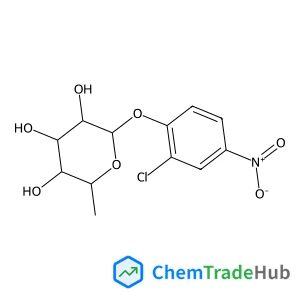
2-Chloro-4-nitrophenyl 6-deoxy-alpha-L-galactopyranoside
CAS Number:
157843-41-9
Molecular Formula:
C12H14ClNO7

Recommended Suppliers





Disclaimer
This page provides academic journal information for reference and research purposes only. We are not affiliated with any journal publishers and do not handle publication submissions. For publication-related inquiries, please contact the respective journal publishers directly.
If you notice any inaccuracies in the information displayed, please contact us at support@chemtradehub.com. We will promptly review and address your concerns.