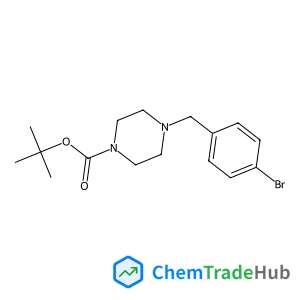
2-Methyl-2-propanyl 4-(4-bromobenzyl)-1-piperazinecarboxylate
CAS Number:
844891-10-7
Molecular Formula:
C16H23BrN2O2
Jiahong He, Qiang Xu, Bin Xiang
The strong adsorption of the exsolved A-site of SrCoO2.52 (SC) perovskite with peroxymonosulfate (PMS) makes the effective activation of PMS challenging. A surface reconstruction strategy has been applied to enhance direct electron transfer from the active B-site to PMS. Thus, an interface architecture of Co3O4 nanoparticles in situ growing on the SC perovskite [SrCoO3−δ@Co3O4 (SCC-2)] was developed, which exhibited enhanced catalytic activity. It was found that the surface reconstruction process not only transferred the adsorption site of PMS from the Sr to the Co site, but also enhanced the electron transfer ability of SCC-2. The formed Co–O metal–oxygen bridge facilitated the electron transfer from the bulk SrCoO3−δ to the Co sites of surface Co3O4, thus enhancing the Co2+/Co3+ redox cycle. Compared with pristine SC, the PMS activation improved by 13.1%, and ENR degradation boosted by 1.23 times for SCC-2. This study can provide guidelines to design superior catalysts by surface reconstruction.

Journal of Medical Biochemistry

CrystEngComm

Nature Reviews Drug Discovery

European Journal of Organic Chemistry

Photochemical & Photobiological Sciences

Angewandte Chemie International Edition

Contact Lens & Anterior Eye

Journal of Enzyme inhibition and Medicinal Chemistry

Green Chemistry

Molecular Diversity
Makhlouf Amoura, Nadine Nassif, Cécile Roux, Jacques Livage, Thibaud Coradin
DOI: 10.1039/B711380C
Dmitry M. Rudkevich
DOI: 10.1039/B704231K
Giacomo Bergamini, Paola Ceroni, Vincenzo Balzani, Marc Gingras, Jean-Manuel Raimundo, Vittorio Morandi, Pier Giorgio Merli
DOI: 10.1039/B708115D
Frédéric Oswald, Yasuyuki Araki, Vincent Troiani, Ruben Caballero, Pilar de la Cruz, Osamu Ito, Fernando Langa
DOI: 10.1039/B711194K
Atsutoshi Yokoyama, Takahiko Kojima, Kei Ohkubo, Shunichi Fukuzumi
DOI: 10.1039/B704994C
Mike Schmitkamp, Dianjun Chen, Jürgen Klankermayer, Giancarlo Franciò
DOI: 10.1039/B712068K
Keming Xu, Lihua Li, Ling Wang, Zhimou Yang
DOI: 10.1039/B712971H
Anke K. Eckert, M. Salomé Rodríguez-Morgade, Tomás Torres
DOI: 10.1039/B708496J
DOI: 10.1039/B608150A
Waste containing 2-Ethyl-4-Methyl-1H-Imidazole-5-Carbaldehyde (CAS: 88634-80-4) ...
Triethoxy(octyl)silane (CAS: 1385031-14-0) is widely used in the pharmaceuticals...
Several alternatives to 3-iodo-7-nitro-1H-indazole (CAS: 864724-64-1) exist in t...
Yes, there are alternatives to Benzene, bis[(trimethoxysilyl)ethyl] (CAS: 266317...
Isothiazole-3-carbonitrile (CAS: 1452-17-1) is generally considered safe when us...
(3-Chlorophenyl)methanol (CAS: 873-63-2) is considered low to moderately toxic. ...
(2S,3S)-2-Hydroxy-3-({[(2-methyl-2-propanyl)oxy]carbonyl}amino)-3-(2-naphthyl)pr...
Proper handling of methyl 2-(bromomethyl)-5-methoxybenzoate requires the use of ...
6,8-Dibromoimidazo[1,2-a]pyridine-2-carboxylic acid (CAS: 904805-36-3) is an aro...
3-Amino-5-bromo-2-pyridinecarbonitrile is considered safe when handled under pro...
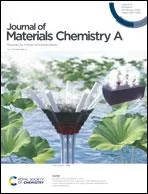
Journal of Materials Chemistry A, B & C cover high quality studies across all fields of materials chemistry. The journals focus on those theoretical or experimental studies that report new understanding, applications, properties and synthesis of materials. The journals have a strong history of publishing quality reports of interest to interdisciplinary communities and providing an efficient and rigorous service through peer review and publication. The journals are led by an international team of Editors-in-Chief and Associate Editors who are all active researchers in their fields. Journal of Materials Chemistry A, B & C are separated by the intended application of the material studied. Broadly, applications in energy and sustainability are of interest to Journal of Materials Chemistry A, applications in biology and medicine are of interest to Journal of Materials Chemistry B, and applications in optical, magnetic and electronic devices are of interest to Journal of Materials Chemistry C. More than one Journal of Materials Chemistry journal may be suitable for certain fields and researchers are encouraged to submit their paper to the journal that they feel best fits for their particular article. Example topic areas within the scope of Journal of Materials Chemistry A are listed below. This list is neither exhaustive nor exclusive. Artificial photosynthesis Batteries Carbon dioxide conversion Catalysis Fuel cells Gas capture/separation/storage Green/sustainable materials Hydrogen generation Hydrogen storage Photocatalysis Photovoltaics Self-cleaning materials Self-healing materials Sensors Supercapacitors Thermoelectrics Water splitting Water treatment
![L-Threonine, N-[[4,7,10-tris(carboxymethyl)-1,4,7,10-tetraazacyclododec-1-yl]acetyl]-D-phenylalanyl-L-cysteinyl-L-tyrosyl-D-tryptophyl-L-lysyl-L-threonyl-L-cysteinyl-, cyclic (2→7)-disulfide, acetate (salt) (9CI) structure](https://static.chemtradehub.com/structs/177/177943-89-4-6312.webp "L-Threonine, N-[[4,7,10-tris(carboxymethyl)-1,4,7,10-tetraazacyclododec-1-yl]acetyl]-D-phenylalanyl-L-cysteinyl-L-tyrosyl-D-tryptophyl-L-lysyl-L-threonyl-L-cysteinyl-, cyclic (2→7)-disulfide, acetate (salt) (9CI) structure")