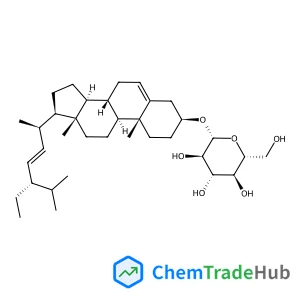
(3beta,22E)-Stigmasta-5,22-dien-3-yl beta-D-glucopyranoside
CAS Number:
19716-26-8
Molecular Formula:
C35H58O6
Jingyu Tan, Hongye Li, Yapeng Sun, Guanliang Li, Yujun Zhao, Huangzhong Yu
In organic solar cells (OSCs), ZnO is a widely used electron transport layer (ETL), but various vacancy defects on the surface of ZnO crystals form massive trap-assisted recombination centers, which hinders electron transmission in OSCs. In this paper, a ZnO&GeSe composite is constructed by modifying ZnO with two-dimensional (2D) GeSe, and it is used for the first time as a novel ETL in OSCs, which reduces the defect density on the ZnO surface and improves the electron extraction efficiency in OSCs. The results of first-principles calculations show that GeSe can deposit additional electrons on the surface of ZnO, which stabilizes the ZnO polar surface and reduces the formation of spontaneous defects on the ZnO polar surface. The electric dipole moment formed at the interface also promotes electron transport in OSCs. The power conversion efficiency (PCE) of OSCs based on PBDB-T:ITIC and PM6:Y6 active layers increases from 10.06% and 15.20% to 11.68% and 17.51%, respectively. Meanwhile, the OSC with the ZnO&GeSe composite ETL possesses good stability compared to the device with the pure ZnO ETL. This study shows that 2D GeSe has a good application prospect as a charge transport layer, and provides an idea for the defect modification of ZnO and other semiconductor crystals by 2D materials.
Yongchun Liu, Chang Liu, Jinzhu Ma, Qingxin Ma, Hong He
DOI: 10.1039/C0CP00402B
Ilia Kaminker, Alexey Potapov, Akiva Feintuch, Shimon Vega, Daniella Goldfarb
DOI: 10.1039/B906177K
B. Molina Concha, M. Chatenet, F. Maillard, E. A. Ticianelli, F. H. B. Lima, R. B. de Lima
DOI: 10.1039/C003652H
Saartje Swinnen, Myrna H. Matus, David A. Dixon
DOI: 10.1039/B823358F
J. Lawrence, E.-C. Yang, D. N. Hendrickson, S. Hill
DOI: 10.1039/B908460F
Julia Gath, Gina L. Hoaston, Robert L. Vold, Romain Berthoud, Christophe Copéret, Mary Grellier, Sylviane Sabo-Etienne, Anne Lesage, Lyndon Emsley
DOI: 10.1039/B907665D
DOI: 10.1039/C0CP00380H
Silvia Sottini, Guinevere Mathies, Peter Gast, Dimitrios Maganas, Panayotis Kyritsis, Edgar J.J. Groenen
DOI: 10.1039/B905726A
Konstantin Chingin, Roman M. Balabin, Konstantin Barylyuk, Huanwen Chen, Vladimir Frankevich, Renato Zenobi
DOI: 10.1039/C000807A
O. G. Poluektov, S. V. Paschenko, L. M. Utschig
DOI: 10.1039/B906521K
When handling 2-Chloro-1,2-bis(4-methylphenyl)ethanone (CAS: 71193-32-3), it is ...
4-Ethoxy-3-(5-methyl-4-oxo-7-propyl-1,4-dihydroimidazo[5,1-f][1,2,4]triazin-2-yl...
Methyl 3-Oxo-4-Androsten-17-Carboxylate (CAS: 2681-55-2) should be stored in a c...
(R)-3-Amino-4-(3-hexylphenylamino)-4-oxobutylphosphonic acid is primarily used i...
2-Methyl-2-propanyl 3-amino-3-carbamoyl-1-azetidinecarboxylate (CAS: 1254120-14-...
There are alternative reagents that can be used in synthesis instead of (E)-4-(t...
[2-(3-Chlorophenyl)-1,3-thiazol-4-yl]methanol (CAS: 121202-20-8) is a crystallin...
The market and research trends for Methyl (2S)-[(4S)-2,2-dimethyl-1,3-dioxolan-4...
The market for 1-Bromo-2-isocyanatoethane (CAS: 42865-19-0) is driven by its use...
4-Nitro-D-phenylalanine hydrochloride (CAS: 147065-06-3) is primarily used in re...

Journal of Materials Chemistry A, B & C cover high quality studies across all fields of materials chemistry. The journals focus on those theoretical or experimental studies that report new understanding, applications, properties and synthesis of materials. The journals have a strong history of publishing quality reports of interest to interdisciplinary communities and providing an efficient and rigorous service through peer review and publication. The journals are led by an international team of Editors-in-Chief and Associate Editors who are all active researchers in their fields. Journal of Materials Chemistry A, B & C are separated by the intended application of the material studied. Broadly, applications in energy and sustainability are of interest to Journal of Materials Chemistry A, applications in biology and medicine are of interest to Journal of Materials Chemistry B, and applications in optical, magnetic and electronic devices are of interest to Journal of Materials Chemistry C. More than one Journal of Materials Chemistry journal may be suitable for certain fields and researchers are encouraged to submit their paper to the journal that they feel best fits for their particular article. Example topic areas within the scope of Journal of Materials Chemistry A are listed below. This list is neither exhaustive nor exclusive. Artificial photosynthesis Batteries Carbon dioxide conversion Catalysis Fuel cells Gas capture/separation/storage Green/sustainable materials Hydrogen generation Hydrogen storage Photocatalysis Photovoltaics Self-cleaning materials Self-healing materials Sensors Supercapacitors Thermoelectrics Water splitting Water treatment
![4-[2-(Trichlorosilyl)ethyl]benzenesulfonyl chloride structure](https://static.chemtradehub.com/structs/797/79793-00-3-de16.webp "4-[2-(Trichlorosilyl)ethyl]benzenesulfonyl chloride structure")