












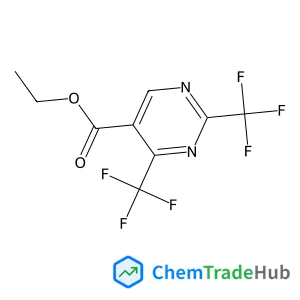
Ethyl 2,4-bis(trifluoromethyl)-5-pyrimidinecarboxylate
CAS Number:
188781-15-9
Molecular Formula:
C9H6F6N2O2
Kaichun Xu, Mengjie Han, Zichen Zheng, Jinyong Xu, Marc Debliquy, Chao Zhang
It is essential for food safety to recognize isoamyl alcohol, one of the biomarkers of wheat mildew. However, there has been limited research on isoamyl alcohol gas sensors with superior sensing performance. Herein, highly sensitive Er-doped LaFeO3-based sensors were fabricated using simple hydrothermal combined with dip-coating, and 5 at% Er@LaFeO3 exhibited extraordinary response (219.1 @ 25 ppm), outstanding selectivity, repeatability (435.7 ± 5.0 @ 50 ppm), and long-term stability (432.0 ± 8.2 @ 15 days). The superior isoamyl alcohol sensing performance could be ascribed to several factors, including the smaller particle size (3.02 μm), higher concentration of oxygen vacancies (21.3%) and chemisorbed oxygen (36.2%), larger specific surface area (54.102 m2 g−1), and narrower band gap (1.86 eV). DFT calculations elucidated the sensitization mechanism of Er doped LaFeO3: the reduction in adsorption energy and the enhancement of interaction forces between gas molecules and the sensing coating. Furthermore, the practical application of 5 at% Er@LaFeO3 to volatile gases generated from stored wheat confirmed the potential of fabricated Er-doped LaFeO3 microsphere-based sensors in the analysis of wheat mildew. This work may serve as a guide for the selection of sensing materials to detect biomarkers emitted throughout the wheat mildew process, which may contribute to developing non-destructive and rapid detection technology to minimize losses during wheat storage.
James Mitchell, Hans Börner, Helmut Cölfen, Markus Antonietti
DOI: 10.1039/C0CP00819B
Xue Li, Xiaoning Fu, Hui Yang
DOI: 10.1039/C0CP01353F
Guillaume Berionni, Anne-Marie Gonçalves, Charles Mathieu, Thomas Devic, Arnaud Etchéberry, Régis Goumont
DOI: 10.1039/C0CP01282C
Pingya Luo, Rong Zeng, Pedro J. S. B. Caridade, António J. C. Varandas
DOI: 10.1039/B927542H
Stephen Cummings, Kieran Trickett, Robert Enick, Julian Eastoe
DOI: 10.1039/C003856C
Satoshi Habuchi, Suguru Onda, Martin Vacha
DOI: 10.1039/C0CP01729A
N. Arul Murugan, Jacob Kongsted, Zilvinas Rinkevicius, Hans Ågren
DOI: 10.1039/C0CP01014F
Gang Liu, Minqiang Hou, Tianbin Wu, Tao Jiang, Honglei Fan, Guanying Yang, Buxing Han
DOI: 10.1039/C0CP01213K
Renhui Zheng, Yuanyuan Sun, Qiang Shi
DOI: 10.1039/C0CP01145B
When handling lithium chloride hydrate (1:1:1) (CAS: 16712-20-2), it is importan...
4-(4H-1,2,4-Triazol-4-yl)piperidine is generally considered safe for use in phar...
Waste containing 1,3-Thiazole-2-carboxamide (CAS: 16733-85-0) should be collecte...
5-(Difluoromethyl)-2-fluorobenzonitrile (CAS: 934175-58-3) is subject to regulat...
Methyl 3-acetamido-2-thiophenecarboxylate can be synthesized by the reaction of ...
4-Isoquinolinecarbonitrile is a chemical compound with the CAS number 34846-65-6...
Store Methyl 1H-1,2,3-triazole-4-carboxylate (CAS: 877309-59-6) in a cool, dry p...
6-Bromo[1,3]thiazolo[5,4-b]pyridin-2-amine (CAS: 1160791-13-8) is subject to the...
(2S,3S)-2-Ammonio-3-(3,4-dihydroxyphenyl)-3-hydroxypropanoate (CAS: 23651-95-8) ...
7-Bromo-3-methyl-3,4-dihydroquinazolin-4-one is a solid with a crystalline form....

Journal of Materials Chemistry A, B & C cover high quality studies across all fields of materials chemistry. The journals focus on those theoretical or experimental studies that report new understanding, applications, properties and synthesis of materials. The journals have a strong history of publishing quality reports of interest to interdisciplinary communities and providing an efficient and rigorous service through peer review and publication. The journals are led by an international team of Editors-in-Chief and Associate Editors who are all active researchers in their fields. Journal of Materials Chemistry A, B & C are separated by the intended application of the material studied. Broadly, applications in energy and sustainability are of interest to Journal of Materials Chemistry A, applications in biology and medicine are of interest to Journal of Materials Chemistry B, and applications in optical, magnetic and electronic devices are of interest to Journal of Materials Chemistry C. More than one Journal of Materials Chemistry journal may be suitable for certain fields and researchers are encouraged to submit their paper to the journal that they feel best fits for their particular article. Example topic areas within the scope of Journal of Materials Chemistry A are listed below. This list is neither exhaustive nor exclusive. Artificial photosynthesis Batteries Carbon dioxide conversion Catalysis Fuel cells Gas capture/separation/storage Green/sustainable materials Hydrogen generation Hydrogen storage Photocatalysis Photovoltaics Self-cleaning materials Self-healing materials Sensors Supercapacitors Thermoelectrics Water splitting Water treatment
![[(2R)-6,6-Dimethyl-2-morpholinyl]methanol hydrochloride (1:1) structure](https://static.chemtradehub.com/structs/141/1416444-88-6-e06a.webp "[(2R)-6,6-Dimethyl-2-morpholinyl]methanol hydrochloride (1:1) structure")
![6,6-Dimethylbicyclo[3.1.1]hept-2-ene-2-carbaldehyde structure](https://static.chemtradehub.com/structs/564/564-94-3-e746.webp "6,6-Dimethylbicyclo[3.1.1]hept-2-ene-2-carbaldehyde structure")





