![tert-Butyl 6-chloro-4-oxospiro[chroman-2,4'-piperidine]-1'-carboxylate structure](https://static.chemtradehub.com/structs/101/1011482-37-3-88a5.webp "tert-Butyl 6-chloro-4-oxospiro[chroman-2,4'-piperidine]-1'-carboxylate structure")
tert-Butyl 6-chloro-4-oxospiro[chroman-2,4'-piperidine]-1'-carboxylate
CAS Number:
1011482-37-3
Molecular Formula:
C18H22ClNO4
Feilong Zhang
The dilemma of activity and stability limits the application of metal-based anodes in electrooxidation, especially in concentrated acid media, and thus causes the emission of hazardous wastewater and waste. Herein, a strong correlation is first reported between activity and Pb2+ dissolution of Pb-based anodes in acidic-electrooxidation. This complex relationship lies in the contradictory role of reactive oxygen species (ROS, SO4−* and OH*). Although the evolution of ROS is a crucial step for Pb passivation and oxygen evolution, the elimination of ROS results in exposure and dissolution of Pb2+. Moreover, oxygen evolution is hindered due to the mismatch of ROS energy bonding. Based on these discoveries, a simple, competitive and sustainable strategy is proposed for changing the ROS evolution environment by precoating MnO2 on Pb-based anodes. Pb-based MnO2 anodes (PMAs) with different ROS evolution environments present ultra-low Pb2+ dissolution (reduced by ∼95%) and enhanced oxygen evolution performance because of the uniform energy bonding distribution. These findings have conclusively confirmed ROS behaviour control as the criterion for alleviating dissolution-dependent activity of metal-based anodes for extensive electrooxidation.
Sergey S. Nikitin, Alexander D. Koryakov, Elizaveta A. Antipinskaya, Mikhail V. Patrakeev
DOI: 10.1039/D3CP05421G
Hao Jiang, Ulf Ryde
DOI: 10.1039/D3CP05181A
Yuandong Xu, Haoyang Feng, Chaoyang Dong, Yuqing Yang, Meng Zhou, Yajun Wei, Hui Guo, Yaqing Wei, Jishan Su, Yingying Ben, Xia Zhang
DOI: 10.1039/D3CP05196J
Hainan Jiang, Yaolong He, Xiaolin Li, Zhiyao Jin, Huijie Yu, Dawei Li
DOI: 10.1039/D3CP04274J
Shouqiang Wu, An Yong Li
DOI: 10.1039/D3CP05101C
Shengzhuo Chen, Juntian Niu, Xianrong Zheng, Haiyu Liu, Yan Jin, Jingyu Ran
DOI: 10.1039/D3CP05435G
Jake A. Tan, Ka Un Lao
DOI: 10.1039/D3CP05437C
Zhiye Wang, Yunchuan Li, Mingjun Sun
DOI: 10.1039/D3CP04593E
Edward R. Smith, Panagiotis E. Theodorakis
DOI: 10.1039/D3CP03579D
Licheng Liu, Deepak Pant
DOI: 10.1039/D3SE00876B
Waste containing N-Methoxy-N-methyl-1,3-thiazole-5-carboxamide (CAS: 898825-89-3...
N-(4-Biphenylyl)dibenzo[b,d]furan-4-amine should be stored in a tightly sealed c...
The market for 3-Acetamido-5-amino-2,4,6-triiodobenzoic acid (CAS: 1713-07-1) is...
Benzyl 2-O-acetyl-3,4,6-tri-O-benzyl-beta-D-galactopyranoside (CAS: 61820-03-9) ...
2-Ethylpiperazine dihydrochloride (CAS: 438050-52-3) is regulated under the Glob...
1,1'-[1,3-Phenylenebis(methylene)]bis(3-methyl-1H-pyrrole-2,5-dione) (CAS: 11946...
Several alternatives can be used in the synthesis of 5-Fluoro-2-(1-pyrrolidinyl)...
Proper personal protective equipment (PPE) must be worn when handling this compo...
When handling 6-Bromoimidazo[1,2-a]pyridin-8-amine, it is important to wear appr...
Alternatives to (2S,4R)-4-(4-Nitrobenzyl)pyrrolidine-2-carboxylic acid hydrochlo...
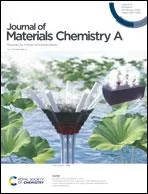
Journal of Materials Chemistry A, B & C cover high quality studies across all fields of materials chemistry. The journals focus on those theoretical or experimental studies that report new understanding, applications, properties and synthesis of materials. The journals have a strong history of publishing quality reports of interest to interdisciplinary communities and providing an efficient and rigorous service through peer review and publication. The journals are led by an international team of Editors-in-Chief and Associate Editors who are all active researchers in their fields. Journal of Materials Chemistry A, B & C are separated by the intended application of the material studied. Broadly, applications in energy and sustainability are of interest to Journal of Materials Chemistry A, applications in biology and medicine are of interest to Journal of Materials Chemistry B, and applications in optical, magnetic and electronic devices are of interest to Journal of Materials Chemistry C. More than one Journal of Materials Chemistry journal may be suitable for certain fields and researchers are encouraged to submit their paper to the journal that they feel best fits for their particular article. Example topic areas within the scope of Journal of Materials Chemistry A are listed below. This list is neither exhaustive nor exclusive. Artificial photosynthesis Batteries Carbon dioxide conversion Catalysis Fuel cells Gas capture/separation/storage Green/sustainable materials Hydrogen generation Hydrogen storage Photocatalysis Photovoltaics Self-cleaning materials Self-healing materials Sensors Supercapacitors Thermoelectrics Water splitting Water treatment

![2-Methylbenzo[h]quinoline structure](https://static.chemtradehub.com/structs/605/605-88-9-ac43.webp "2-Methylbenzo[h]quinoline structure")