











Mapping spin contamination-free potential energy surfaces using restricted open-shell methods with Grassmannians
Literature Information
Publication Date
2023-12-14
DOI
10.1039/D3CP05437C
Impact Factor
3.676
Authors
Jake A. Tan, Ka Un Lao
View Original
Abstract
The Lagrange-based Grassmann interpolation (G-Int) method has been extended for open-shell systems using restricted open-shell (RO) methods. The performance of this method was assessed in constructing potential energy surfaces (PESs) for vanadium(II) oxide, benzyl radical, and methanesulfenyl chloride radical cation. The density matrices generated by G-Int when used as initial guesses for self-consistent field (SCF) calculations, exhibit superior performance compared to other traditional SCF initial guess schemes, such as SADMO, GWH, and CORE. Additionally, the energy obtained from the G-Int scheme satisfies the variational principle and outperforms the direct energy-based Lagrange interpolation approach. In the case of methanesulfenyl chloride radical cation, a unique example with a flat PES at the end region along the H–C–S–Cl dihedral angle, the use of an equally-spaced grid sampling leads to significant oscillations near the end of the interval due to the effects of Runge's phenomenon. Introducing an unequally-spaced grid sampling based on a scaled Gauss-Chebyshev quadrature effectively mitigated the Runge's phenomenon, making it suitable for combining with G-Int in constructing PESs for general applications. Thus, G-Int provides an efficient and robust strategy for building spin contamination-free PESs with consistent accuracy.
Recommended Journals
Related Literature
The fluorescence of ion pairs of the fluorenyl carbanion
Brian Brocklehurst, Ronald N. Young
2001-07-09
Paper
DOI: 10.1039/B103730G
Electronic excitations of polyalanine; test of the independent chromophore approximation
Sanford A. Asher
2001-06-25
Paper
DOI: 10.1039/B101083M
Studies on the phase behavior of perfluoropolyether carboxylic acids and their salts: Observation of a stunning temperature-dependent color effect for the birefringence in the pyridinium salt system
J. Würtz, J. Meyer, H. Hoffmann
2001-07-04
Paper
DOI: 10.1039/B102776J
Size selective protein adsorption on thiol-functionalised SBA-15 mesoporous molecular sieve
Humphrey H. P. Yiu, Catherine H. Botting, Nigel P Botting, Paul A. Wright
2001-07-03
Communication
DOI: 10.1039/B104729A
Protonation kinetics of acrylate radical anions
Erzsébet Takács, Katalin Dajka, László Wojnárovits, Salvatore S. Emmi
2000-03-17
Paper
DOI: 10.1039/B000222O
Valley ridge inflection points on the potential energy surfaces of H2S, H2Se and H2CO
Wolfgang Quapp, Vladlen Melnikov
2001-06-14
Paper
DOI: 10.1039/B102053F
Solute–solvent interactions in the (N,N-dimethylformamide + N-methylformamide + water) ternary system at 298.15 K
Begoña García, Rafael Alcalde, Santiago Aparicio, José M. Leal, José S. Matos
2001-06-20
Paper
DOI: 10.1039/B102402G
Molecular composition and orientation at the surface of room-temperature ionic liquids: Effect of molecular structure
George Law, Philip R. Watson, Adrian J. Carmichael, Kenneth R. Seddon
2001-06-21
Paper
DOI: 10.1039/B101952J
Pore size distribution in mesoporous materials as studied by 1H NMR
D. W. Aksnes, K. Førland, L. Kimtys
2001-07-11
Paper
DOI: 10.1039/B103228N
On the liquid mixtures of xenon, alkanes and perfluorinated compounds
Lino M. B. Dias, George Jackson, Eduardo J. M. Filipe
2001-06-22
Paper
DOI: 10.1039/B101519M
You might also like
Compound Q&A
Are there alternatives to 1-(4-Chlorophenyl)-N-hydroxymethanimine (CAS: 3848-36-0) in synthesis?
When considering alternatives to 1-(4-Chlorophenyl)-N-hydroxymethanimine (CAS: 3...
3848-36-01-(4-Chlorophenyl)-N...
Compound Q&A
How should (1R,9S,10S,12S,14E,16S,19R,20R,21S,22R)-3,9,21-Trihydroxy-5,10,12,14,16,20,22-heptamethyl-23,24-dioxatetracyclo[17.3.1.1~6,9~.0~2,7~]tetracosa-2,5,7,14-tetraen-4-one (CAS: 183202-73-5) be stored?
This compound should be stored in a cool, dry place away from direct sunlight. I...
183202-73-5(1R,9S,10S,12S,14E,1...
Compound Q&A
How is 3-(4-Bromophenyl)-5-(2-fluorophenyl)-1,2,4-oxadiazole (CAS: 419553-16-5) typically synthesized?
3-(4-Bromophenyl)-5-(2-fluorophenyl)-1,2,4-oxadiazole is synthesized through a m...
419553-16-53-(4-Bromophenyl)-5-...
Compound Q&A
How is 5-Chloro-2-(4-chlorophenyl)-4-methyl-6-[3-(1-piperidinyl)propoxy]pyrimidine (CAS: 1639220-19-1) typically synthesized?
5-Chloro-2-(4-chlorophenyl)-4-methyl-6-[3-(1-piperidinyl)propoxy]pyrimidine (CAS...
1639220-19-15-Chloro-2-(4-chloro...
Compound Q&A
What industries use 2-Chloro-4-(difluoromethoxy)pyridine (CAS: 1206978-15-5)?
2-Chloro-4-(difluoromethoxy)pyridine is used in the pharmaceutical industry for ...
1206978-15-52-Chloro-4-(difluoro...
Compound Q&A
What regulatory guidelines apply to 3-Chloro-6-methylpyridazine (CAS: 1121-79-5)?
3-Chloro-6-methylpyridazine (CAS: 1121-79-5) is classified under the Globally Ha...
1121-79-53-Chloro-6-methylpyr...
Compound Q&A
Are there alternatives to Methyl 4,5-dimethyl-2-nitrobenzoate in synthesis?
Several alternatives can be used in the synthesis of Methyl 4,5-dimethyl-2-nitro...
90922-74-0Methyl 4,5-dimethyl-...
Compound Q&A
Are there alternatives to (2E,2'E)-3,3'-(1,4-Phenylene)bisacrylaldehyde in synthesis?
Alternatives to (2E,2'E)-3,3'-(1,4-Phenylene)bisacrylaldehyde include other acry...
63405-68-5(2E,2'E)-3,3'-(1,4-P...
Compound Q&A
What is 3-Amino-5-chloropyridin-2-ol hydrochloride (CAS: 1261906-29-9)?
3-Amino-5-chloropyridin-2-ol hydrochloride is an organic compound with the CAS n...
1261906-29-93-Amino-5-chloropyri...
Compound Q&A
What precautions should be taken when handling 6,7-Difluoro-2,3-dihydro-4H-chromen-4-one (CAS: 1092349-93-3)?
When handling 6,7-Difluoro-2,3-dihydro-4H-chromen-4-one, it is essential to wear...
1092349-93-36,7-Difluoro-2,3-dih...
Source Journal
Physical Chemistry Chemical Physics

CiteScore:
5.5
Self-citation Rate:
10.3%
Articles per Year:
3036
Physical Chemistry Chemical Physics (PCCP) is an international journal co-owned by 19 physical chemistry and physics societies from around the world. This journal publishes original, cutting-edge research in physical chemistry, chemical physics and biophysical chemistry. To be suitable for publication in PCCP, articles must include significant innovation and/or insight into physical chemistry; this is the most important criterion that reviewers and Editors will judge against when evaluating submissions. The journal has a broad scope and welcomes contributions spanning experiment, theory, computation and data science. Topical coverage includes spectroscopy, dynamics, kinetics, statistical mechanics, thermodynamics, electrochemistry, catalysis, surface science, quantum mechanics, quantum computing and machine learning. Interdisciplinary research areas such as polymers and soft matter, materials, nanoscience, energy, surfaces/interfaces, and biophysical chemistry are welcomed if they demonstrate significant innovation and/or insight into physical chemistry. Joined experimental/theoretical studies are particularly appreciated when complementary and based on up-to-date approaches.
Recommended Compounds
![(2S)-2-({[(2-Methyl-2-propanyl)oxy]carbonyl}amino)-4-pentynoic acid structure](https://static.chemtradehub.com/structs/630/63039-48-5-b66d.webp "(2S)-2-({[(2-Methyl-2-propanyl)oxy]carbonyl}amino)-4-pentynoic acid structure")
(2S)-2-({[(2-Methyl-2-propanyl)oxy]carbonyl}amino)-4-pentynoic acid
CAS Number:
63039-48-5
Molecular Formula:
C10H15NO4
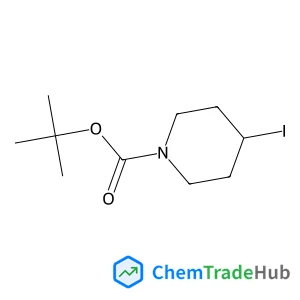
2-Methyl-2-propanyl 4-iodo-1-piperidinecarboxylate
CAS Number:
301673-14-3
Molecular Formula:
C10H18INO2
Recommended Suppliers




Disclaimer
This page provides academic journal information for reference and research purposes only. We are not affiliated with any journal publishers and do not handle publication submissions. For publication-related inquiries, please contact the respective journal publishers directly.
If you notice any inaccuracies in the information displayed, please contact us at support@chemtradehub.com. We will promptly review and address your concerns.