












![5,10-Dihydroindeno[2,1-a]indene structure](https://static.chemtradehub.com/structs/654/6543-29-9-71ca.webp "5,10-Dihydroindeno[2,1-a]indene structure")
Solar light selective-harvesting eco-friendly colloidal quantum dots for transparent luminescent solar concentrators
Literature Information
Publication Date
2023-10-13
DOI
10.1039/D3TA05351B
Impact Factor
12.732
Authors
Ehsan Hamzehpoor, Jiabin Liu, Xin Liu, Gurpreet Singh Selopal, Dmytro F. Perepichka, Zhiming M. Wang
View Original
Abstract
Luminescent solar concentrators (LSCs) constructed using colloidal quantum dots (QDs) have emerged as a promising and cost-effective solution for transparent photovoltaics. However, the efficiency of these LSCs in converting sunlight to electricity often remains low due to limited quantum efficiency and significant reabsorption losses associated with the QDs. Furthermore, the majority of high-efficiency LSCs incorporate QDs containing heavy metals, curtailing their potential for widespread commercialization. Here, we have developed white-emitting CuGaS2/ZnS and its optical characteristics are adeptly tailored through manipulation of the ZnS shell. The optimal configuration of CuGaS2/ZnS demonstrates an impressive photoluminescence quantum yield of 80% and an extensive Stokes shift of ∼190 nm. These QDs are integrated in a polymer matrix to produce LSCs with dimensions of 5 × 5 × 0.2 cm3. Under standard illumination conditions of one sun AM 1.5G (100 mW cm−2), these LSCs exhibit an optical efficiency of 1.7%, average visible transmittance of ∼75% and color rendering index of 91.6. To improve the solar light harvesting, we constructed a tandem LSC, with CuGaS2/ZnS QD-LSC as the top layer and near-infrared-active AgInS2/ZnS QD-LSC was developed as the bottom layer. The optical efficiency could reach 4.4%, which underscores the potential of these environmentally friendly core/shell QDs for cost-effective transparent solar conversion applications.
Recommended Journals
Related Literature
Molecular weight dependence of emission intensity and emitting sites distribution within single conjugated polymer molecules
Satoshi Habuchi, Suguru Onda, Martin Vacha
2010-11-26
Paper
DOI: 10.1039/C0CP01729A
Fine tuning of emission through the engineering of colloidal crystals
Jean-François Dechézelles, Tangi Aubert, Fabien Grasset, Stéphane Cordier, Carlos Barthou, Catherine Schwob, Agnès Maître, Renaud A. L. Vallée, Henri Cramail, Serge Ravaine
2010-09-15
Paper
DOI: 10.1039/C0CP00129E
Experimental and theoretical investigations into the counter-intuitive shift in the antisymmetric ν(Si–O) vibrational modes upon deuteration of solvated silicic acid (H4SiO4)
Grant J. McIntosh, Peter J. Swedlund, Tilo Söhnel
2010-11-29
Paper
DOI: 10.1039/C0CP01664K
Phase change materials of n-alkane-containing microcapsules: observation of coexistence of ordered and rotator phases
Yunlan Su, Baoquan Xie, Haijin Zhu, Dujin Wang
2011-01-11
Paper
DOI: 10.1039/C0CP01173H
Microscopic model of carbonaceous nanoporous molecular sieves—anomalous transport in molecularly confined spaces
Piotr Kowalczyk, Piotr A. Gauden, Artur P. Terzyk, Sylwester Furmaniak
2010-08-05
Paper
DOI: 10.1039/B926206G
Theoretical insight into the electronic, optical and photocatalytic properties of InMO4 (M = V, Nb, Ta) photocatalysts
Zhen Yin
2010-12-13
Paper
DOI: 10.1039/B921143H
An improved method to measure the rate of vaporisation and thermal decomposition of high boiling organic and ionic liquids by thermogravimetrical analysis
Florian Heym, Bastian J. M. Etzold, Christoph Kern, Andreas Jess
2010-08-09
Paper
DOI: 10.1039/C0CP00097C
Photovoltage improvements and recombination suppression by montmorillonite addition to PEO gel electrolyte for dye-sensitized solar cells
Yi Geng, Yantao Shi, Liduo Wang, Beibei Ma, Rui Gao, Yifeng Zhu, Haopeng Dong, Yong Qiu
2010-11-25
Paper
DOI: 10.1039/C0CP01866J
Si–C-bound alkyl chains on oxide-free Si: towards versatile solution preparation of electronic transport quality monolayers
Avi Lavi, Hagai Cohen, Tatyana Bendikov, Ayelet Vilan, David Cahen
2010-12-03
Communication
DOI: 10.1039/C0CP01445A
Synthesis and enhanced photocatalytic performance of graphene-Bi2WO6 composite
Erping Gao, Wenzhong Wang, Meng Shang, Jiehui Xu
2010-12-16
Paper
DOI: 10.1039/C0CP01749C
You might also like
Compound Q&A
What precautions should be taken when handling lithium chloride hydrate (1:1:1) (CAS: 16712-20-2)?
When handling lithium chloride hydrate (1:1:1) (CAS: 16712-20-2), it is importan...
16712-20-2Lithium chloride hyd...
Compound Q&A
Is 4-(4H-1,2,4-Triazol-4-yl)piperidine (CAS: 690261-92-8) safe?
4-(4H-1,2,4-Triazol-4-yl)piperidine is generally considered safe for use in phar...
690261-92-84-(4H-1,2,4-Triazol-...
Compound Q&A
How should waste containing 1,3-Thiazole-2-carboxamide (CAS: 16733-85-0) be handled?
Waste containing 1,3-Thiazole-2-carboxamide (CAS: 16733-85-0) should be collecte...
16733-85-01,3-Thiazole-2-carbo...
Compound Q&A
What regulatory guidelines apply to 5-(Difluoromethyl)-2-fluorobenzonitrile (CAS: 934175-58-3)?
5-(Difluoromethyl)-2-fluorobenzonitrile (CAS: 934175-58-3) is subject to regulat...
934175-58-35-(Difluoromethyl)-2...
Compound Q&A
How is Methyl 3-acetamido-2-thiophenecarboxylate (CAS: 22288-79-5) typically synthesized?
Methyl 3-acetamido-2-thiophenecarboxylate can be synthesized by the reaction of ...
22288-79-5Methyl 3-acetamido-2...
Compound Q&A
What is 4-Isoquinolinecarbonitrile (CAS: 34846-65-6)?
4-Isoquinolinecarbonitrile is a chemical compound with the CAS number 34846-65-6...
34846-65-64-Isoquinolinecarbon...
Compound Q&A
How should Methyl 1H-1,2,3-triazole-4-carboxylate (CAS: 877309-59-6) be stored?
Store Methyl 1H-1,2,3-triazole-4-carboxylate (CAS: 877309-59-6) in a cool, dry p...
877309-59-6Methyl 1H-1,2,3-tria...
Compound Q&A
What regulatory guidelines apply to 6-Bromo[1,3]thiazolo[5,4-b]pyridin-2-amine (CAS: 1160791-13-8)?
6-Bromo[1,3]thiazolo[5,4-b]pyridin-2-amine (CAS: 1160791-13-8) is subject to the...
1160791-13-86-Bromo[1,3]thiazolo...
Compound Q&A
Is (2S,3S)-2-Ammonio-3-(3,4-dihydroxyphenyl)-3-hydroxypropanoate (CAS: 23651-95-8) safe?
(2S,3S)-2-Ammonio-3-(3,4-dihydroxyphenyl)-3-hydroxypropanoate (CAS: 23651-95-8) ...
23651-95-8(2S,3S)-2-Ammonio-3-...
Compound Q&A
What are the physical and chemical properties of 7-bromo-3-methyl-3,4-dihydroquinazolin-4-one (CAS: 1293987-84-4)?
7-Bromo-3-methyl-3,4-dihydroquinazolin-4-one is a solid with a crystalline form....
1293987-84-47-bromo-3-methyl-3,4...
Source Journal
Journal of Materials Chemistry A

CiteScore:
19.5
Self-citation Rate:
4.7%
Articles per Year:
2211
Journal of Materials Chemistry A, B & C cover high quality studies across all fields of materials chemistry. The journals focus on those theoretical or experimental studies that report new understanding, applications, properties and synthesis of materials. The journals have a strong history of publishing quality reports of interest to interdisciplinary communities and providing an efficient and rigorous service through peer review and publication. The journals are led by an international team of Editors-in-Chief and Associate Editors who are all active researchers in their fields. Journal of Materials Chemistry A, B & C are separated by the intended application of the material studied. Broadly, applications in energy and sustainability are of interest to Journal of Materials Chemistry A, applications in biology and medicine are of interest to Journal of Materials Chemistry B, and applications in optical, magnetic and electronic devices are of interest to Journal of Materials Chemistry C. More than one Journal of Materials Chemistry journal may be suitable for certain fields and researchers are encouraged to submit their paper to the journal that they feel best fits for their particular article. Example topic areas within the scope of Journal of Materials Chemistry A are listed below. This list is neither exhaustive nor exclusive. Artificial photosynthesis Batteries Carbon dioxide conversion Catalysis Fuel cells Gas capture/separation/storage Green/sustainable materials Hydrogen generation Hydrogen storage Photocatalysis Photovoltaics Self-cleaning materials Self-healing materials Sensors Supercapacitors Thermoelectrics Water splitting Water treatment
Recommended Compounds
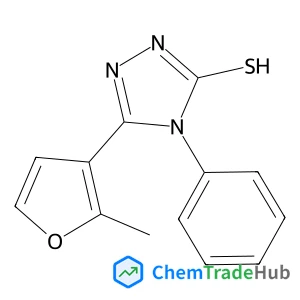
5-(2-Methyl-3-furyl)-4-phenyl-2,4-dihydro-3H-1,2,4-triazole-3-thione
CAS Number:
346464-59-3
Molecular Formula:
C13H11N3OS
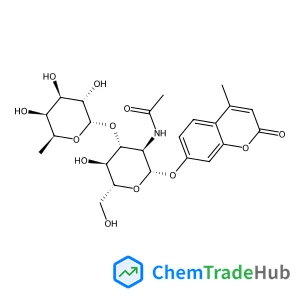
4-Methyl-2-oxo-2H-chromen-7-yl 2-acetamido-2-deoxy-3-O-(6-deoxy-alpha-L-galactopyranosyl)-beta-D-glucopyranoside
CAS Number:
383160-12-1
Molecular Formula:
C24H31NO12
![tert-butyl 8-benzyl-2,8-diazaspiro[4.5]decane-2-carboxylate structure](https://static.chemtradehub.com/structs/336/336191-16-3-bb55.webp "tert-butyl 8-benzyl-2,8-diazaspiro[4.5]decane-2-carboxylate structure")
tert-butyl 8-benzyl-2,8-diazaspiro[4.5]decane-2-carboxylate
CAS Number:
336191-16-3
Molecular Formula:
C20H30N2O2
![6-(Benzyloxy)-8-(2-bromoacetyl)-2H-benzo[b][1,4]oxazin-3(4H)-one structure](https://static.chemtradehub.com/structs/926/926319-53-1-2287.webp "6-(Benzyloxy)-8-(2-bromoacetyl)-2H-benzo[b][1,4]oxazin-3(4H)-one structure")
6-(Benzyloxy)-8-(2-bromoacetyl)-2H-benzo[b][1,4]oxazin-3(4H)-one
CAS Number:
926319-53-1
Molecular Formula:
C17H14BrNO4
Recommended Suppliers




Disclaimer
This page provides academic journal information for reference and research purposes only. We are not affiliated with any journal publishers and do not handle publication submissions. For publication-related inquiries, please contact the respective journal publishers directly.
If you notice any inaccuracies in the information displayed, please contact us at support@chemtradehub.com. We will promptly review and address your concerns.