












Development of highly conductive anion exchange membranes based on crosslinked PIM-SEBS with high free volume
Literature Information
Publication Date
2023-11-06
DOI
10.1039/D3TA05044K
Impact Factor
12.732
Authors
View Original
Abstract
Polyarylene-based anion exchange membranes (AEMs) have been extensively researched in anion exchange membrane fuel cells (AEMFCs) and anion exchange membrane water electrolysis (AEMWE) due to their high conductivity and output performance. Proposed strategies to achieve high-output cell performance include developing AEMs with desirable ion exchange capacities (IECs) and optimized microstructures that involve microphase separation between hydrophilic and hydrophobic domains. In this study, novel AEMs with microphase separation, achieved through the presence of free volume in the polymer structure, are developed. A polymer of intrinsic microporosity (PIM) is incorporated as the backbone to induce a rigid twist and, thus, increase the free volume. The PIM is chemically crosslinked to varying degrees with poly(styrene-b-ethylene-co-butylene-b-styrene), or SEBS, a triblock copolymer with excellent microphase separation morphology and flexibility, resulting in x-PIM-SEBS membranes with enhanced chemical and physical stability. Among them, the 30x-PIM-SEBS membrane, with a crosslinking degree of 30%, yields the highest ionic conductivity (67.65–147.66 mS cm−1) and the most pronounced microphase separation. The membrane also demonstrates impressive alkaline stability, with conductivity retention of over 98% in 1 M KOH at 80 °C after 1080 hours; excellent thermal stability under the AEMWE operating conditions; and remarkable oxidative stability due to its polymeric free volume coupled with enhanced microphase separation. Finally, AEMWE single-cell test results confirm that 30x-PIM-SEBS outperforms the commercial FAA-3-50 membrane by 176%, achieving a current density of 1.905 A cm−2 (compared to 1.083 A cm−2 for FAA-3-50) at 2.0 V.
Related Literature
Molecular weight dependence of emission intensity and emitting sites distribution within single conjugated polymer molecules
Satoshi Habuchi, Suguru Onda, Martin Vacha
2010-11-26
Paper
DOI: 10.1039/C0CP01729A
Hierarchical structures in AB/AC type diblock-copolymer blend particles
Kiwamu Motoyoshi, Takeshi Higuchi
2010-08-02
Paper
DOI: 10.1039/C0CP00011F
Mechanism study on inhibited Ru(bpy)32+ electrochemiluminescence between coreactants
Lingling Xue, Bin Qiu, Zhenyu Lin, Donghwan Kim, Guonan Chen
2010-08-27
Paper
DOI: 10.1039/C004277C
Product pair correlation in CH3OH photodissociation at 157 nm: the OH + CH3 channel
Andre T. J. B. Eppink, Bo Jiang, Gerrit C. Groenenboom, Xueming Yang, David H. Parker
2010-11-26
Paper
DOI: 10.1039/C0CP01794A
Anharmonic overtone and combination states of glycine and two model peptides examined by vibrational self-consistent field theory
Kuo Meng, Jianping Wang
2010-12-20
Paper
DOI: 10.1039/C0CP01177K
Inorganic nanocrystals self ordered in 2D superlattices: how versatile are the physical and chemical properties?
M. P. Pileni
2010-08-25
Perspective
DOI: 10.1039/C0CP00456A
Organic polyanionic high-spin molecular clusters: topological-symmetry controlled models for organic ferromagnetic metals
Masafumi Yano, Takamasa Kinoshita, Maria Luisa T. M. B. Franco, Maria Celina R. L. R. Lazana, Maria Candida B. L. Shohoji, The late Koichi Itoh
2010-11-22
Paper
DOI: 10.1039/C0CP00730G
Synthesis and enhanced photocatalytic performance of graphene-Bi2WO6 composite
Erping Gao, Wenzhong Wang, Meng Shang, Jiehui Xu
2010-12-16
Paper
DOI: 10.1039/C0CP01749C
Theoretical investigation into molecular diodes integrated in series using the non-equilibrium Green's function method
Hongmei Liu, Nan Wang, Peng Li, Xing Yin, Cui Yu, Nengyue Gao, Jianwei Zhao
2010-12-09
Paper
DOI: 10.1039/C0CP00118J
Wet chemical synthesis of Cu/TiO2 nanocomposites with integrated nano-current-collectors as high-rate anode materials in lithium-ion batteries‡
Yu-Guo Guo, Li-Jun Wan
2011-01-04
Paper
DOI: 10.1039/C0CP01119C
You might also like
Compound Q&A
What precautions should be taken when handling lithium chloride hydrate (1:1:1) (CAS: 16712-20-2)?
When handling lithium chloride hydrate (1:1:1) (CAS: 16712-20-2), it is importan...
16712-20-2Lithium chloride hyd...
Compound Q&A
Is 4-(4H-1,2,4-Triazol-4-yl)piperidine (CAS: 690261-92-8) safe?
4-(4H-1,2,4-Triazol-4-yl)piperidine is generally considered safe for use in phar...
690261-92-84-(4H-1,2,4-Triazol-...
Compound Q&A
How should waste containing 1,3-Thiazole-2-carboxamide (CAS: 16733-85-0) be handled?
Waste containing 1,3-Thiazole-2-carboxamide (CAS: 16733-85-0) should be collecte...
16733-85-01,3-Thiazole-2-carbo...
Compound Q&A
What regulatory guidelines apply to 5-(Difluoromethyl)-2-fluorobenzonitrile (CAS: 934175-58-3)?
5-(Difluoromethyl)-2-fluorobenzonitrile (CAS: 934175-58-3) is subject to regulat...
934175-58-35-(Difluoromethyl)-2...
Compound Q&A
How is Methyl 3-acetamido-2-thiophenecarboxylate (CAS: 22288-79-5) typically synthesized?
Methyl 3-acetamido-2-thiophenecarboxylate can be synthesized by the reaction of ...
22288-79-5Methyl 3-acetamido-2...
Compound Q&A
What is 4-Isoquinolinecarbonitrile (CAS: 34846-65-6)?
4-Isoquinolinecarbonitrile is a chemical compound with the CAS number 34846-65-6...
34846-65-64-Isoquinolinecarbon...
Compound Q&A
How should Methyl 1H-1,2,3-triazole-4-carboxylate (CAS: 877309-59-6) be stored?
Store Methyl 1H-1,2,3-triazole-4-carboxylate (CAS: 877309-59-6) in a cool, dry p...
877309-59-6Methyl 1H-1,2,3-tria...
Compound Q&A
What regulatory guidelines apply to 6-Bromo[1,3]thiazolo[5,4-b]pyridin-2-amine (CAS: 1160791-13-8)?
6-Bromo[1,3]thiazolo[5,4-b]pyridin-2-amine (CAS: 1160791-13-8) is subject to the...
1160791-13-86-Bromo[1,3]thiazolo...
Compound Q&A
Is (2S,3S)-2-Ammonio-3-(3,4-dihydroxyphenyl)-3-hydroxypropanoate (CAS: 23651-95-8) safe?
(2S,3S)-2-Ammonio-3-(3,4-dihydroxyphenyl)-3-hydroxypropanoate (CAS: 23651-95-8) ...
23651-95-8(2S,3S)-2-Ammonio-3-...
Compound Q&A
What are the physical and chemical properties of 7-bromo-3-methyl-3,4-dihydroquinazolin-4-one (CAS: 1293987-84-4)?
7-Bromo-3-methyl-3,4-dihydroquinazolin-4-one is a solid with a crystalline form....
1293987-84-47-bromo-3-methyl-3,4...
Source Journal
Journal of Materials Chemistry A

CiteScore:
19.5
Self-citation Rate:
4.7%
Articles per Year:
2211
Journal of Materials Chemistry A, B & C cover high quality studies across all fields of materials chemistry. The journals focus on those theoretical or experimental studies that report new understanding, applications, properties and synthesis of materials. The journals have a strong history of publishing quality reports of interest to interdisciplinary communities and providing an efficient and rigorous service through peer review and publication. The journals are led by an international team of Editors-in-Chief and Associate Editors who are all active researchers in their fields. Journal of Materials Chemistry A, B & C are separated by the intended application of the material studied. Broadly, applications in energy and sustainability are of interest to Journal of Materials Chemistry A, applications in biology and medicine are of interest to Journal of Materials Chemistry B, and applications in optical, magnetic and electronic devices are of interest to Journal of Materials Chemistry C. More than one Journal of Materials Chemistry journal may be suitable for certain fields and researchers are encouraged to submit their paper to the journal that they feel best fits for their particular article. Example topic areas within the scope of Journal of Materials Chemistry A are listed below. This list is neither exhaustive nor exclusive. Artificial photosynthesis Batteries Carbon dioxide conversion Catalysis Fuel cells Gas capture/separation/storage Green/sustainable materials Hydrogen generation Hydrogen storage Photocatalysis Photovoltaics Self-cleaning materials Self-healing materials Sensors Supercapacitors Thermoelectrics Water splitting Water treatment
Recommended Compounds
![N-[2-(2-Pyridinyl)ethyl]-1-propanamine structure](https://static.chemtradehub.com/structs/554/55496-57-6-22b4.webp "N-[2-(2-Pyridinyl)ethyl]-1-propanamine structure")
![(1R,5R)-3-{[(2-Methyl-2-propanyl)oxy]carbonyl}-3-azabicyclo[3.1.0]hexane-1-carboxylic acid structure](https://static.chemtradehub.com/structs/116/1165450-63-4-bfe1.webp "(1R,5R)-3-{[(2-Methyl-2-propanyl)oxy]carbonyl}-3-azabicyclo[3.1.0]hexane-1-carboxylic acid structure")
(1R,5R)-3-{[(2-Methyl-2-propanyl)oxy]carbonyl}-3-azabicyclo[3.1.0]hexane-1-carboxylic acid
CAS Number:
1165450-63-4
Molecular Formula:
C11H17NO4
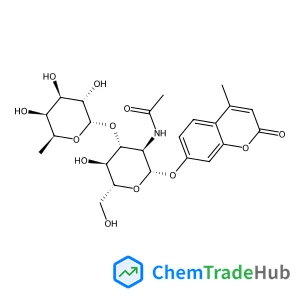
4-Methyl-2-oxo-2H-chromen-7-yl 2-acetamido-2-deoxy-3-O-(6-deoxy-alpha-L-galactopyranosyl)-beta-D-glucopyranoside
CAS Number:
383160-12-1
Molecular Formula:
C24H31NO12
Recommended Suppliers




Disclaimer
This page provides academic journal information for reference and research purposes only. We are not affiliated with any journal publishers and do not handle publication submissions. For publication-related inquiries, please contact the respective journal publishers directly.
If you notice any inaccuracies in the information displayed, please contact us at support@chemtradehub.com. We will promptly review and address your concerns.