













Strategy for enhancement of magnesium ion diffusion in a vanadium tetra sulfide-layered structure for rechargeable magnesium batteries
Literature Information
Publication Date
2023-10-25
DOI
10.1039/D3TA04634F
Impact Factor
12.732
Authors
Muhammad Kashif Naseem, Mian Azmat, Changliang Du, Rong Jiang, Hajra, Youqi Zhu, Meishuai Zou, Chuanbao Cao
View Original
Abstract
A theoretically higher volumetric capacity, natural abundance, low cost, dendrite free and ecofriendly rechargeable magnesium battery system (RMBS) is considered to be a promising candidate device for future commercialization. However, low capabilities due to the sluggish diffusion kinetics due to the highly polarized Mg2+ ions of cathodic materials are hindering the potential application of such devices. Considering the key role of diffusive contribution, we conducted systematic research to enhance the diffusion contribution of Mg2+ ions in vanadium tetrasulfide (VS4). Nanosized particles were synthesized to provide additional surface area for Mg2+ ions. The effects of sulfur vacancies due to nickel substitution in the VS4-layered atomic structure were studied theoretically. Subsequently, it was confirmed experimentally that the layered atomic structure of VS4 was further expanded and more stable vacancies were generated after nickel substitution. As a result, enhanced diffusion of Mg2+ up to 59.35% at 0.1 mV s−1 exhibited improved cathodic performance enabling a high-performance RMBS. Moreover, these structural alterations exhibited improved electrochemical properties on a copper current collector, such as 5%Ni–VS4, which displayed a remarkable discharge capacity of 477.9 mA h g−1 at 100 mA g−1 that was sustained for up to 1500 cycles at a current density of 500 mA g−1. Hence, the proposed strategy is an effective way forward to develop an efficient VS4 cathode for an RMBS.
Related Literature
Step-wise proton-coupled electron transfer extended to aminobenzoquinone modified monolayers
Wenbin Zhang, Ian J. Burgess
2010-11-24
Paper
DOI: 10.1039/C0CP01251C
Multilamellar liposomes entrapping aminosilane-modified maghemite nanoparticles: “magnetonions”
Stéphane Mornet, Etienne Duguet, Olivier Lambert, Sylvain Trépout
2010-08-27
Paper
DOI: 10.1039/C0CP00231C
Photochemistry of HI on argon and waternanoparticles: Hydronium radical generation in HI·(H2O)n
Viktoriya Poterya, Juraj Fedor, Andriy Pysanenko, Ondřej Tkáč, Jozef Lengyel, Michal Fárník
2010-11-29
Paper
DOI: 10.1039/C0CP01518K
Differential capacitance of the double layer at the electrode/ionic liquids interface
Vera Lockett, Mike Horne, Rossen Sedev, Theo Rodopoulos, John Ralston
2010-08-19
Paper
DOI: 10.1039/C0CP00170H
Mesoscopic non-equilibrium thermodynamics of non-isothermal reaction-diffusion
I. Pagonabarraga, J. M. Ortiz de Zárate, J. V. Sengers
2010-08-27
Paper
DOI: 10.1039/C0CP00289E
Synthesis and photophysics of monodisperse co-oligomers consisting of alternating thiophene and perylene bisimide‡
Yuchao Ma, Yishi Wu, Yanxia Zhao, Hongbing Fu, Jiannian Yao
2010-10-29
Paper
DOI: 10.1039/C0CP01166E
Gas–surface energy exchange and thermal accommodation of CO2 and Ar in collisions with methyl, hydroxyl, and perfluorinated self-assembled monolayers
Jessica W. Lu, William A. Alexander, John R. Morris
2010-08-20
Paper
DOI: 10.1039/B921893A
Phase change materials of n-alkane-containing microcapsules: observation of coexistence of ordered and rotator phases
Yunlan Su, Baoquan Xie, Haijin Zhu, Dujin Wang
2011-01-11
Paper
DOI: 10.1039/C0CP01173H
You might also like
Compound Q&A
What precautions should be taken when handling lithium chloride hydrate (1:1:1) (CAS: 16712-20-2)?
When handling lithium chloride hydrate (1:1:1) (CAS: 16712-20-2), it is importan...
16712-20-2Lithium chloride hyd...
Compound Q&A
Is 4-(4H-1,2,4-Triazol-4-yl)piperidine (CAS: 690261-92-8) safe?
4-(4H-1,2,4-Triazol-4-yl)piperidine is generally considered safe for use in phar...
690261-92-84-(4H-1,2,4-Triazol-...
Compound Q&A
How should waste containing 1,3-Thiazole-2-carboxamide (CAS: 16733-85-0) be handled?
Waste containing 1,3-Thiazole-2-carboxamide (CAS: 16733-85-0) should be collecte...
16733-85-01,3-Thiazole-2-carbo...
Compound Q&A
What regulatory guidelines apply to 5-(Difluoromethyl)-2-fluorobenzonitrile (CAS: 934175-58-3)?
5-(Difluoromethyl)-2-fluorobenzonitrile (CAS: 934175-58-3) is subject to regulat...
934175-58-35-(Difluoromethyl)-2...
Compound Q&A
How is Methyl 3-acetamido-2-thiophenecarboxylate (CAS: 22288-79-5) typically synthesized?
Methyl 3-acetamido-2-thiophenecarboxylate can be synthesized by the reaction of ...
22288-79-5Methyl 3-acetamido-2...
Compound Q&A
What is 4-Isoquinolinecarbonitrile (CAS: 34846-65-6)?
4-Isoquinolinecarbonitrile is a chemical compound with the CAS number 34846-65-6...
34846-65-64-Isoquinolinecarbon...
Compound Q&A
How should Methyl 1H-1,2,3-triazole-4-carboxylate (CAS: 877309-59-6) be stored?
Store Methyl 1H-1,2,3-triazole-4-carboxylate (CAS: 877309-59-6) in a cool, dry p...
877309-59-6Methyl 1H-1,2,3-tria...
Compound Q&A
What regulatory guidelines apply to 6-Bromo[1,3]thiazolo[5,4-b]pyridin-2-amine (CAS: 1160791-13-8)?
6-Bromo[1,3]thiazolo[5,4-b]pyridin-2-amine (CAS: 1160791-13-8) is subject to the...
1160791-13-86-Bromo[1,3]thiazolo...
Compound Q&A
Is (2S,3S)-2-Ammonio-3-(3,4-dihydroxyphenyl)-3-hydroxypropanoate (CAS: 23651-95-8) safe?
(2S,3S)-2-Ammonio-3-(3,4-dihydroxyphenyl)-3-hydroxypropanoate (CAS: 23651-95-8) ...
23651-95-8(2S,3S)-2-Ammonio-3-...
Compound Q&A
What are the physical and chemical properties of 7-bromo-3-methyl-3,4-dihydroquinazolin-4-one (CAS: 1293987-84-4)?
7-Bromo-3-methyl-3,4-dihydroquinazolin-4-one is a solid with a crystalline form....
1293987-84-47-bromo-3-methyl-3,4...
Source Journal
Journal of Materials Chemistry A

CiteScore:
19.5
Self-citation Rate:
4.7%
Articles per Year:
2211
Journal of Materials Chemistry A, B & C cover high quality studies across all fields of materials chemistry. The journals focus on those theoretical or experimental studies that report new understanding, applications, properties and synthesis of materials. The journals have a strong history of publishing quality reports of interest to interdisciplinary communities and providing an efficient and rigorous service through peer review and publication. The journals are led by an international team of Editors-in-Chief and Associate Editors who are all active researchers in their fields. Journal of Materials Chemistry A, B & C are separated by the intended application of the material studied. Broadly, applications in energy and sustainability are of interest to Journal of Materials Chemistry A, applications in biology and medicine are of interest to Journal of Materials Chemistry B, and applications in optical, magnetic and electronic devices are of interest to Journal of Materials Chemistry C. More than one Journal of Materials Chemistry journal may be suitable for certain fields and researchers are encouraged to submit their paper to the journal that they feel best fits for their particular article. Example topic areas within the scope of Journal of Materials Chemistry A are listed below. This list is neither exhaustive nor exclusive. Artificial photosynthesis Batteries Carbon dioxide conversion Catalysis Fuel cells Gas capture/separation/storage Green/sustainable materials Hydrogen generation Hydrogen storage Photocatalysis Photovoltaics Self-cleaning materials Self-healing materials Sensors Supercapacitors Thermoelectrics Water splitting Water treatment
Recommended Compounds


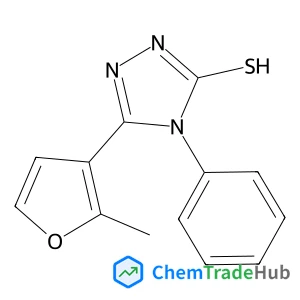
5-(2-Methyl-3-furyl)-4-phenyl-2,4-dihydro-3H-1,2,4-triazole-3-thione
CAS Number:
346464-59-3
Molecular Formula:
C13H11N3OS

Recommended Suppliers





Disclaimer
This page provides academic journal information for reference and research purposes only. We are not affiliated with any journal publishers and do not handle publication submissions. For publication-related inquiries, please contact the respective journal publishers directly.
If you notice any inaccuracies in the information displayed, please contact us at support@chemtradehub.com. We will promptly review and address your concerns.