












Voltage and concentration gradients across membraneless interface generated next to hydrogels: relation to glycocalyx
Literature Information
Publication Date
2023-09-01
DOI
10.1039/D3SM00889D
Impact Factor
3.679
Authors
Magdalena Kowacz, Sinith Withanage, Sebastian Niestępski
View Original
Abstract
Next to many hydrophilic surfaces, including those of biological cells and tissues, a layer of water that effectively excludes solutes and particles can be generated. This interfacial water is the subject of research aiming for practical applications such as removal of salts, pathogens or manipulation of biomolecules. However, the exact mechanism of its creation is still elusive because its persistence and extension contradict hydrogen-bond dynamics and electric double layer predictions. The experimentally recorded negative voltage of this interfacial water remains to be properly explained. Even less is known about the nature of such water layers in biological systems. We present experimental evidence for ion and particle exclusion as a result of separation of ionic charges with distinct diffusion rates across a liquid junction at the gel/water interface and the subsequent repulsion of ions of a given sign by a like-charged gel surface. Gels represent features of biological interfaces (in terms of functional groups and porosity) and are subject to biologically relevant chemical triggers. Our results show that gels with –OSO3− and –COO− groups can effectively generate ion- and particle-depleted regions of water reaching over 100 μm and having negative voltage up to −30 mV. Exclusion distance and electric potential depend on the liquid junction potential at the gel/water interface and on the concentration gradient at the depleted region/bulk interface, respectively. The voltage and extension of these ion- and particle-depleted water layers can be effectively modified by CO2 (respiratory gas) or KH2PO4 (cell metabolite). Possible implications pertain to biologically unstirred water layers and a cell's bioenergetics.
Related Literature
From underwear to non-equilibrium thermodynamics: physical chemistry informs the origin of life
Mattanjah S. de Vries
2016-07-08
Editorial
DOI: 10.1039/C6CP90169G
Computational simulation and interpretation of the low-lying excited electronic states and electronic spectrum of thioanisole
Shaohong L. Li, Xuefei Xu, Donald G. Truhlar
2015-06-05
Paper
DOI: 10.1039/C5CP02461G
A theoretical study of sum-frequency generation for chiral solutions near electronic resonance
Ren-hui Zheng, Wen-mei Wei, Qiang Shi
2015-07-06
Paper
DOI: 10.1039/C5CP02136G
Effect of Zn2+ ions on the assembly of amylin oligomers: insight into the molecular mechanisms
2016-07-06
Paper
DOI: 10.1039/C6CP04105A
A multiscale mechanism of drug release from polymeric matrices: confirmation through a nonlinear theoretical model
E. S. Bacaita, M. Agop
2016-07-11
Paper
DOI: 10.1039/C6CP02259F
Spontaneously electrical solids in a new light
Jérôme Lasne, Alexander Rosu-Finsen, Andrew Cassidy, Martin R. S. McCoustra, David Field
2015-07-20
Paper
DOI: 10.1039/C5CP03174E
Is formamide a geochemically plausible prebiotic solvent?
Jeffrey L. Bada, John H. Chalmers
2016-05-24
Perspective
DOI: 10.1039/C6CP03290G
Hydrogen-doping induced reduction in the phase transition temperature of VO2: a first-principles study
Yuanyuan Cui, Lanli Chen, Yanfeng Gao
2015-07-27
Paper
DOI: 10.1039/C5CP03267A
Conformational selection underpins recognition of multiple DNA sequences by proteins and consequent functional actions
Gitashri Naiya, Paromita Raha, Manas Kumar Mondal, Uttam Pal, Rajesh Saha, Susobhan Chaudhuri, Subrata Batabyal, Samir Kumar Pal, Dhananjay Bhattacharyya, Nakul C. Maiti, Siddhartha Roy
2016-06-29
Paper
DOI: 10.1039/C6CP03278H
Is the regulation of the electronic properties of organic molecules by polynuclear superhalogens more effective than that by mononuclear superhalogens? A high-level ab initio case study
Miao-Miao Li, Jin-Feng Li, Hongcun Bai, Yin-Yin Sun, Jian-Li Li, Bing Yin
2015-07-06
Paper
DOI: 10.1039/C5CP03155A
You might also like
Compound Q&A
What is Ethyl 3-cyclohexylpropanoate (CAS: 10094-36-7)?
Ethyl 3-cyclohexylpropanoate is a clear, colorless to light yellow liquid with a...
10094-36-7Ethyl 3-cyclohexylpr...
Compound Q&A
How should waste containing 2-(Hydroxymethyl)-5-(methoxycarbonyl)-6-methyl-4-(2-nitrophenyl)nicotinic acid (CAS: 34783-31-8) be handled?
Waste containing 2-(Hydroxymethyl)-5-(methoxycarbonyl)-6-methyl-4-(2-nitrophenyl...
34783-31-82-(Hydroxymethyl)-5-...
Compound Q&A
How should waste containing 2,4,6-Tris(pentafluoroethyl)-1,3,5-triazine (CAS: 858-46-8) be handled?
Waste containing 2,4,6-Tris(pentafluoroethyl)-1,3,5-triazine (CAS: 858-46-8) sho...
858-46-82,4,6-Tris(pentafluo...
Compound Q&A
What precautions should be taken when handling Chloroac-nle-oh (CAS: 56787-36-1)?
When handling Chloroac-nle-oh (CAS: 56787-36-1), it is essential to wear appropr...
56787-36-1Chloroac-nle-oh
Compound Q&A
What industries use Ethyl 6-phenylimidazo[2,1-b][1,3]thiazole-3-carboxylate (CAS: 752244-05-6)?
Ethyl 6-phenylimidazo[2,1-b][1,3]thiazole-3-carboxylate is primarily used in the...
752244-05-6Ethyl 6-phenylimidaz...
Compound Q&A
Are there alternatives to alpha-(2-Bromophenyl)benzylamine (CAS: 55095-15-3) in synthesis?
Alternatives to alpha-(2-Bromophenyl)benzylamine (CAS: 55095-15-3) in synthesis ...
55095-15-3alpha-(2-Bromophenyl...
Compound Q&A
How should waste containing 2-Chloro-5-methoxypyridine (CAS: 139585-48-1) be handled?
Waste containing 2-Chloro-5-methoxypyridine (CAS: 139585-48-1) should be managed...
139585-48-12-Chloro-5-methoxypy...
Compound Q&A
What industries use 1-(4-Methoxyphenyl)-2,5-dimethyl-1H-pyrrole (CAS: 5044-27-9)?
1-(4-Methoxyphenyl)-2,5-dimethyl-1H-pyrrole (CAS: 5044-27-9) is used in various ...
5044-27-91-(4-Methoxyphenyl)-...
Compound Q&A
Are there alternatives to 3-Bromo-5-(N-Boc)aminomethylisoxazole (CAS: 903131-45-3) in synthesis?
There are alternative reagents and compounds that can be used in the synthesis o...
903131-45-33-Bromo-5-(N-Boc)ami...
Compound Q&A
What is Tungsten(IV) oxide (CAS: 12036-22-5)?
Tungsten(IV) oxide, also known as tungsten dioxide, is a chemical compound with ...
12036-22-5Tungsten(IV) oxide
Source Journal
Soft Matter
CiteScore:
6
Self-citation Rate:
10.3%
Articles per Year:
856
Soft Matter provides a unique forum for the communication of significant advances in interdisciplinary soft matter research. There is a particular focus on the interface between chemistry, physics, materials science, biology and chemical engineering. Research may report new soft materials or phenomena, encompass their design, synthesis, and use in new applications; or provide fundamental insight and observations on their behaviour. Experimental, theoretical and computational soft matter approaches are encouraged. The scope of Soft Matter covers the following. Soft matter assemblies, including colloids, granular matter, liquid crystals, gels & networks, polymers, hybrid materials, active matter and further examples Soft nanotechnology, soft robotics and devices Synthesis, self-assembly and directed assembly Biological aspects of soft matter including proteins, biopolymers, cells and tissues Surfaces, interfaces and interactions Phase behaviour, coacervation and rheological behaviour Sustainable soft materials including recycling, circular economy and end of life Mechanistic insights and modelling
Recommended Compounds

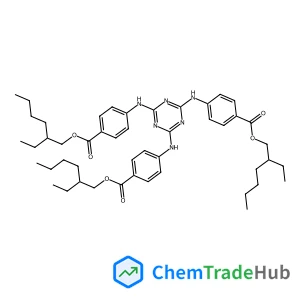
Tris(2-ethylhexyl) 4,4',4''-(1,3,5-triazine-2,4,6-triyltriimino)tribenzoate
CAS Number:
88122-99-0
Molecular Formula:
C48H66N6O6
Recommended Suppliers





Disclaimer
This page provides academic journal information for reference and research purposes only. We are not affiliated with any journal publishers and do not handle publication submissions. For publication-related inquiries, please contact the respective journal publishers directly.
If you notice any inaccuracies in the information displayed, please contact us at support@chemtradehub.com. We will promptly review and address your concerns.