













![Pyrazolo[1,5-a]pyridine-3-carbothioamide structure](https://static.chemtradehub.com/structs/885/885275-44-5-aae0.webp "Pyrazolo[1,5-a]pyridine-3-carbothioamide structure")
Genetically engineered filamentous phage for bacterial detection using magnetic resonance imaging
Literature Information
Publication Date
2023-06-22
DOI
10.1039/D3SD00026E
Impact Factor
0
Authors
Raymond E. Borg, Harun F. Ozbakir, Binzhi Xu, Eugene Li, Xiwen Fang, Huan Peng, Irene A. Chen
View Original
Abstract
Detecting bacterial cells with high specificity in deep tissues is challenging. Optical probes provide specificity, but are limited by the scattering and absorption of light in biological tissues. Conversely, magnetic resonance imaging (MRI) allows unfettered access to deep tissues, but lacks contrast agents for detecting specific bacterial strains. Here, we introduce a biomolecular platform that combines both capabilities by exploiting the modularity of M13 phage to target bacteria with tunable specificity and allow deep-tissue imaging using T1-weighted MRI. We engineered two types of phage probes: one for detecting the phage's natural host, viz., F-pilus expressing E. coli; and the other for detecting a different (F-negative) bacterial target, V. cholerae. We show that these phage sensors generate 3–9-fold stronger T1 relaxation upon recognizing target cells relative to non-target bacteria. We further establish a preliminary proof-of-concept for in vivo applications, by demonstrating that phage-labeled bacteria can be detected in mice using MRI. The framework developed in this study may have potential utility in a broad range of applications, from basic biomedical research to in situ diagnostics, which require methods to detect and track specific bacteria in the context of intact living systems.
Related Literature
Correction: New carbon allotropes in sp + sp3 bonding networks consisting of C8 cubes
Changfeng Chen, Hiroshi Mizuseki
2018-04-27
Correction
DOI: 10.1039/C8CP91749C
Thermoelectric properties of Ag-doped CuS nanocomposites synthesized by a facile polyol method
Tarachand, S. Hussain, N. P. Lalla, Y.-K. Kuo, A. Lakhani, V. G. Sathe, U. Deshpande, G. S. Okram
2018-01-25
Paper
DOI: 10.1039/C7CP07986A
Thickness dependent Raman spectra and interfacial interaction between Ag and epitaxial graphene on 6H-SiC(0001)
Xiangtai Liu, Qinglong Fang, Tingwei Hu, Dayan Ma, Xiaohe Zhang, Shuai Liu, Fei Ma
2018-02-02
Paper
DOI: 10.1039/C7CP07338K
Intermolecular hydrogen bonds in water@IL supramolecular complexes
Marcileia Zanatta, Jairton Dupont, Gabriela Negruni Wentz, Francisco P. dos Santos
2018-04-04
Paper
DOI: 10.1039/C8CP00066B
Nanopore-mediated ultrashort laser-induced formation and erasure of volume nanogratings in glass
Anton Rudenko, Jean-Philippe Colombier, Tatiana E. Itina
2018-01-25
Paper
DOI: 10.1039/C7CP07603G
Study of low temperature chlorine atom initiated oxidation of methyl and ethyl butyrate using synchrotron photoionization TOF-mass spectrometry
Joseph Czekner, Craig A. Taatjes, David L. Osborn, Giovanni Meloni
2018-02-01
Paper
DOI: 10.1039/C7CP08221E
Oxidation behaviour of U3Si2: an experimental and first principles investigation
Ericmoore Jossou, Ubong Eduok, Nelson Y. Dzade, Barbara Szpunar, Jerzy A. Szpunar
2018-01-12
Paper
DOI: 10.1039/C7CP07154J
Thermal activation of methane by vanadium boride cluster cations VBn+ (n = 3–6)
2018-01-17
Communication
DOI: 10.1039/C8CP00071A
Photoinduced proton transfer inside an engineered green fluorescent protein: a stepwise–concerted-hybrid reaction
Longteng Tang, Yanli Wang, Liangdong Zhu, Karen Kallio, S. James Remington, Chong Fang
2018-04-24
Paper
DOI: 10.1039/C8CP01907J
You might also like
Compound Q&A
What are the main uses of 1-(3-Aminophenyl)-3-[(3R)-1-(3,3-dimethyl-2-oxobutyl)-2-oxo-5-(2-pyridinyl)-2,3-dihydro-1H-1,4-benzodiazepin-3-yl]urea (CAS: 155412-88-7)?
This compound is mainly used as an intermediate in the synthesis of antipsychoti...
155412-88-71-(3-Aminophenyl)-3-...
Compound Q&A
How should waste containing 1-(D-Ribofuranosyl)-1,4-dihydro-3-pyridinecarboxamide (CAS: 19132-12-8) be handled?
Waste containing 1-(D-Ribofuranosyl)-1,4-dihydro-3-pyridinecarboxamide (CAS: 191...
19132-12-81-(D-Ribofuranosyl)-...
Compound Q&A
What regulatory guidelines apply to 2-Methyl-2-propanyl 3-bromo-3-(hydroxymethyl)-1-azetidinecarboxylate (CAS: 2007919-81-3)?
2-Methyl-2-propanyl 3-bromo-3-(hydroxymethyl)-1-azetidinecarboxylate (CAS: 20079...
2007919-81-32-Methyl-2-propanyl ...
Compound Q&A
What is N-(4-Chloro-2-pyridinyl)acetamide (CAS: 245056-66-0)?
N-(4-Chloro-2-pyridinyl)acetamide (CAS: 245056-66-0) is a chemical compound with...
245056-66-0N-(4-Chloro-2-pyridi...
Compound Q&A
What is 5-Chloro-2-hydroxybenzoic acid (CAS: 321-14-2)?
5-Chloro-2-hydroxybenzoic acid, also known as 5-chlorosalicylic acid, is an arom...
321-14-25-Chloro-2-hydroxybe...
Compound Q&A
What precautions should be taken when handling 1,1-Dichloro-1-fluoroethane (CAS: 1717-00-6)?
When handling 1,1-Dichloro-1-fluoroethane (CAS: 1717-00-6), it is important to u...
1717-00-61,1-Dichloro-1-fluor...
Compound Q&A
What are the physical and chemical properties of Fmoc-(2S,3R)-3-phenylpyrrolidine-2-carboxylic acid (CAS: 281655-32-1)?
Fmoc-(2S,3R)-3-phenylpyrrolidine-2-carboxylic acid is a white crystalline solid ...
281655-32-1Fmoc-(2S,3R)-3-pheny...
Compound Q&A
What are the main uses of 4-Amino-5-bromo-2-pyridinecarboxylic acid (CAS: 1363381-01-4)?
4-Amino-5-bromo-2-pyridinecarboxylic acid is primarily used as a precursor in th...
1363381-01-44-Amino-5-bromo-2-py...
Compound Q&A
What precautions should be taken when handling (S)-tert-butyl 2-((2-(4-bromophenyl)-2-oxoethyl)carbamoyl)pyrrolidine-1-carboxylate (CAS: 1007881-98-2)?
Handling this compound should be done with personal protective equipment (PPE) i...
1007881-98-2(S)-tert-butyl 2-((2...
Compound Q&A
What precautions should be taken when handling 8-bromo-2,2-dimethyl-3,4-dihydro-2H-1,4-benzoxazin-3-one (CAS: 688363-73-7)?
When handling 8-bromo-2,2-dimethyl-3,4-dihydro-2H-1,4-benzoxazin-3-one, use prop...
688363-73-78-bromo-2,2-dimethyl...
Source Journal
Recommended Compounds
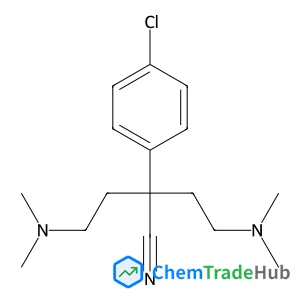
2-(4-Chlorophenyl)-4-(dimethylamino)-2-(2-(dimethylamino)ethyl)butanenitrile
CAS Number:
1246816-57-8
Molecular Formula:
C16H24ClN3
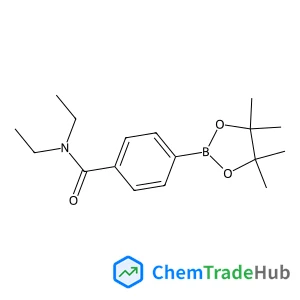
N,N-Diethyl-4-(4,4,5,5-tetramethyl-1,3,2-dioxaborolan-2-yl)benzamide
CAS Number:
325142-99-2
Molecular Formula:
C17H26BNO3
Recommended Suppliers




Disclaimer
This page provides academic journal information for reference and research purposes only. We are not affiliated with any journal publishers and do not handle publication submissions. For publication-related inquiries, please contact the respective journal publishers directly.
If you notice any inaccuracies in the information displayed, please contact us at support@chemtradehub.com. We will promptly review and address your concerns.