












Cu(ii) salts as terminal oxidants in visible-light photochemical oxidation reactions
Literature Information
Publication Date
2023-11-22
DOI
10.1039/D3OB01678A
Impact Factor
3.876
Authors
Grace A. Lutovsky, Tehshik P. Yoon
View Original
Abstract
Photochemistry provides an important platform for the discovery of synthetically useful transformations. The development of new oxidative photoreactions, however, has proven to be relatively challenging. The importance of the identity of the terminal oxidant has been an underappreciated consideration in the design of these reactions. Many of the most common terminal oxidants used in ground-state catalytic methods are poorly compatible with the one-electron oxidation state changes characteristic of photoredox reactions and result in hard-to-control deleterious side reactions. As an alternative, Cu(II) salts have emerged as versatile terminal oxidants in photochemical oxidation reactions that are terrestrially abundant, cost-effective, and readily compatible with one-electron oxidation state changes. This review highlights recent reaction methods that leverage Cu(II) oxidation in combination with the photochemical activation of substrates or that use Cu(II) salts as both the active chromophore and terminal oxidant.
Related Literature
An anthraquinone-decorated graphene hydrogel based on carbonized cotton fibers for flexible and high performance supercapacitors
Mengying Jia, Yue Li, Linlin Cui, Yingrui An, Canping Pan, Xiaojuan Jin
2020-12-22
Paper
DOI: 10.1039/D0SE01424A
Practical increases in power output from soil-based microbial fuel cells under dynamic temperature variations
Lingling Gong, Mehran Abbaszadeh Amirdehi, Amine Miled
2020-12-18
Paper
DOI: 10.1039/D0SE01406K
Alternate cycles of CO2 storage and in situ hydrogenation to CH4 on Ni–Na2CO3/Al2O3: influence of promoter addition and calcination temperature
Alejandro Bermejo-López, Beñat Pereda-Ayo, José A. González-Marcos, Juan R. González-Velasco
2021-01-18
Paper
DOI: 10.1039/D0SE01677B
Dual-functioning porous catalysts: robust electro-oxidation of small organic molecules and water electrolysis using bimetallic Ni/Cu foams
Mohamed R. Rizk, Muhammad G. Abd El-Moghny, Amina Mazhar, Mohamed S. El-Deab, B. E. El-Anadouli
2020-12-26
Paper
DOI: 10.1039/D0SE01835J
Highly active and stable Ni/perovskite catalysts in steam methane reforming for hydrogen production
Zhiliang Ou, Zhonghui Zhang, Changlei Qin, Hongqiang Xia, Tao Deng, Juntian Niu, Jingyu Ran, Chunfei Wu
2021-02-16
Paper
DOI: 10.1039/D1SE00082A
Selective electrochemical reduction of CO2 to formic acid in a gas phase reactor with by-product recirculation
Barbara Thijs, Jan Rongé, Johan A. Martens
2021-02-25
Paper
DOI: 10.1039/D1SE00218J
Comprehensive research on the solid, liquid, and gaseous products of rice husk and rice straw torrefaction
Chuanshuai Chen, Guozhao Ji, Lan Mu, Yutao Zhang, Aimin Li
2020-12-10
Paper
DOI: 10.1039/D0SE01701A
All-fiber acousto-electric energy harvester from magnesium salt-modulated PVDF nanofiber
Sujoy Kumar Ghosh, Santanu Jana, Krittish Roy, Subrata Sarkar, Dipankar Mandal
2020-12-28
Paper
DOI: 10.1039/D0SE01185A
An efficient hybrid supercapacitor based on Zn–Mn–Ni–S@NiSe core–shell architectures
Akbar Mohammadi Zardkhoshoui, Saied Saeed Hosseiny Davarani
2020-12-26
Paper
DOI: 10.1039/D0SE01665A
The synergistic effect with S-vacancies and built-in electric field on a TiO2/MoS2 photoanode for enhanced photoelectrochemical performance
Jianhua Han, Shaoce Zhang, Qinggong Song, Huiyu Yan, Jianhai Kang, Yanrui Guo
2020-11-23
Paper
DOI: 10.1039/D0SE01515F
You might also like
Compound Q&A
What regulatory guidelines apply to 4-Amino-3-bromophenol (CAS: 74440-80-5)?
4-Amino-3-bromophenol (CAS: 74440-80-5) falls under the classification of a haza...
74440-80-54-Amino-3-bromopheno...
Compound Q&A
How should (17beta)-3-Oxoestr-4-en-17-yl acetate (CAS: 1425-10-1) be stored?
(17beta)-3-Oxoestr-4-en-17-yl acetate should be stored in a cool, dry place away...
1425-10-1(17beta)-3-Oxoestr-4...
Compound Q&A
What are the physical and chemical properties of 2-[(2,2-Diethoxyethyl)disulfanyl]-1,1-diethoxyethane (CAS: 76505-71-0)?
2-[(2,2-Diethoxyethyl)disulfanyl]-1,1-diethoxyethane (CAS: 76505-71-0) is a colo...
76505-71-02-[(2,2-Diethoxyethy...
Compound Q&A
What is the market or research trend for 1-(β-D-ribofuranosyl)-1H-imidazo[4,5-c]pyridin-4-amine?
The market and research for 1-(β-D-ribofuranosyl)-1H-imidazo[4,5-c]pyridin-4-ami...
6736-58-91-(beta-D-Ribofurano...
Compound Q&A
How should waste containing Conjugated Estrogen (CAS: 12126-59-9) be handled?
Waste containing Conjugated Estrogen (CAS: 12126-59-9) should be collected and d...
12126-59-9Conjugated Estrogen
Compound Q&A
What is the market or research trend for Bis(2,2,2-trifluoroethyl) (methoxycarbonylmethyl)phosphonate?
The market for Bis(2,2,2-trifluoroethyl) (methoxycarbonylmethyl)phosphonate (CAS...
88738-78-7Bis(2,2,2-trifluoroe...
Compound Q&A
Are there alternatives to 3,4'-Di-O-methylellagic acid (CAS: 57499-59-9) in synthesis?
There are several alternatives to 3,4'-Di-O-methylellagic acid (CAS: 57499-59-9)...
57499-59-93,4'-Di-O-methylella...
Compound Q&A
What regulatory guidelines apply to 2-Chloro-N,N-dimethylpyridin-4-amine (CAS: 59047-70-0)?
2-Chloro-N,N-dimethylpyridin-4-amine (CAS: 59047-70-0) is regulated under the Gl...
59047-70-02-Chloro-N,N-dimethy...
Compound Q&A
What is cerium(3+);oxygen(2-);vanadium(5+) (CAS: 13597-19-8)?
Cerium(3+);oxygen(2-);vanadium(5+) (CAS: 13597-19-8) is a complex inorganic comp...
13597-19-8cerium(3+);oxygen(2-...
Compound Q&A
Is 7-Chloro-1-iodoisoquinoline (CAS: 1203579-27-4) safe?
7-Chloro-1-iodoisoquinoline (CAS: 1203579-27-4) is generally considered safe whe...
1203579-27-47-Chloro-1-iodoisoqu...
Source Journal
Organic & Biomolecular Chemistry

CiteScore:
3.4
Self-citation Rate:
10.3%
Articles per Year:
1041
Organic & Biomolecular Chemistry (OBC) publishes original and high impact research and reviews in organic chemistry. We welcome research that shows new or significantly improved protocols or methodologies in total synthesis, synthetic methodology or physical and theoretical organic chemistry as well as research that shows a significant advance in the organic chemistry or molecular design aspects of chemical biology, catalysis, supramolecular and macromolecular chemistry, theoretical chemistry, mechanism-oriented physical organic chemistry, medicinal chemistry or natural products. Articles published in the journal should report new work which makes a highly-significant impact in the field. Routine and incremental work is generally not suitable for publication in the journal. More details about key areas of our scope are below. In all cases authors should include in their article clear rationale for why their research has been carried out.
Recommended Compounds
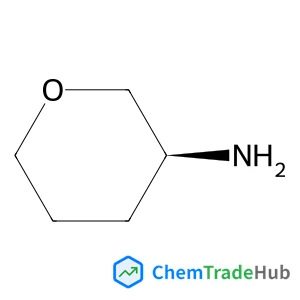
![[3-Formyl-5-(trifluoromethoxy)phenyl]boronic acid structure](https://static.chemtradehub.com/structs/145/1451393-39-7-aebb.webp "[3-Formyl-5-(trifluoromethoxy)phenyl]boronic acid structure")
[3-Formyl-5-(trifluoromethoxy)phenyl]boronic acid
CAS Number:
1451393-39-7
Molecular Formula:
C8H6BF3O4
Recommended Suppliers





Disclaimer
This page provides academic journal information for reference and research purposes only. We are not affiliated with any journal publishers and do not handle publication submissions. For publication-related inquiries, please contact the respective journal publishers directly.
If you notice any inaccuracies in the information displayed, please contact us at support@chemtradehub.com. We will promptly review and address your concerns.