












A fluorescent electrophile for CLIPS: self indicating TrkB binders
Literature Information
Publication Date
2023-12-12
DOI
10.1039/D3OB01654D
Impact Factor
3.876
Authors
Tye Thompson, Pornthip Piyanuch, Nantanit Wanichacheva, Anyanee Kamkaew, Kevin Burgess
View Original
Abstract
Combination of cysteine-containing peptides with electrophiles provides efficient access to cyclo-organopeptides. However, there are no routes to intrinsically fluorescent cyclo-organopeptides containing robust, brilliant fluorophores emitting at wavelengths longer than cellular autofluorescence. We show such fluorescent cyclo-organopeptides can be made via SNAr reactions of cysteine-containing peptides with a BODIPY system. Seven compounds of this type were prepared to test as probes; six contained peptide sequences corresponding to loop regions in brain-derived neurotrophic factor and neurotrophic factor 4 (BDNF and NT-4) which bind tropomyocin receptor kinase B (TrkB). Cellular assays in serum-free media indicated two of the six key compounds induced survival of HEK293 cells stably transfected with TrkB whereas a control did not. The two compounds inducing cell survival bound TrkB on those cells (Kd ∼40 and 47 nM), illustrating how intrinsically fluorescent cyclo-organopeptides can be assayed for quantifiable binding to surface receptors in cell membrane environments.
Related Literature
Practical increases in power output from soil-based microbial fuel cells under dynamic temperature variations
Lingling Gong, Mehran Abbaszadeh Amirdehi, Amine Miled
2020-12-18
Paper
DOI: 10.1039/D0SE01406K
Improving the overall performance of photochemical H2 evolution catalyzed by the Co-NHC complex via the redox tuning of electron relays
Koichi Yatsuzuka, Kosei Yamauchi, Ken Kawano, Hironobu Ozawa, Ken Sakai
2020-12-21
Paper
DOI: 10.1039/D0SE01597K
New approaches in component design for dye-sensitized solar cells
Nick Vlachopoulos, Anders Hagfeldt, Guobin Jia, Ruri Agung Wahyuono, Jonathan Plentz, Benjamin Dietzek
2020-11-16
Perspective
DOI: 10.1039/D0SE00596G
Dual-functioning porous catalysts: robust electro-oxidation of small organic molecules and water electrolysis using bimetallic Ni/Cu foams
Mohamed R. Rizk, Muhammad G. Abd El-Moghny, Amina Mazhar, Mohamed S. El-Deab, B. E. El-Anadouli
2020-12-26
Paper
DOI: 10.1039/D0SE01835J
Correction: Using high-throughput virtual screening to explore the optoelectronic property space of organic dyes; finding diketopyrrolopyrrole dyes for dye-sensitized water splitting and solar cells
Isabelle Heath-Apostolopoulos, Diego Vargas-Ortiz, Liam Wilbraham, Kim E. Jelfs, Martijn A. Zwijnenburg
2021-02-10
Correction
DOI: 10.1039/D1SE90005F
Cobalt porphyrin intercalation into zirconium phosphate layers for electrochemical water oxidation
Isabel Barraza Alvarez, Yanyu Wu, Joel Sanchez, Yulu Ge, Mario V. Ramos-Garcés, Thomas F. Jaramillo, Jorge L. Colón, Dino Villagrán
2020-10-28
Paper
DOI: 10.1039/D0SE01134G
In situ growth of an opal-like TiO2 electron transport layer by atomic layer deposition for perovskite solar cells
Hao Lu, Bangkai Gu, Song Fang
2020-12-23
Paper
DOI: 10.1039/D0SE01558J
A hierarchical CoP@NiCo-LDH nanoarray as an efficient and flexible catalyst electrode for the alkaline oxygen evolution reaction
Wenli Tian, Jie Zhang, Hao Feng, Hao Wen, Xun Sun, Xin Guan, Dengchao Zheng, Jing Liao, Minglei Yan, Yadong Yao
2020-11-23
Communication
DOI: 10.1039/D0SE01490G
Enhanced photoelectrochemical performance from particulate ZnSe:Cu(In,Ga)Se2 photocathodes during solar hydrogen production via particle size control
Fumiaki Takagi
2020-09-28
Paper
DOI: 10.1039/D0SE00998A
You might also like
Compound Q&A
What regulatory guidelines apply to 4-Amino-3-bromophenol (CAS: 74440-80-5)?
4-Amino-3-bromophenol (CAS: 74440-80-5) falls under the classification of a haza...
74440-80-54-Amino-3-bromopheno...
Compound Q&A
How should (17beta)-3-Oxoestr-4-en-17-yl acetate (CAS: 1425-10-1) be stored?
(17beta)-3-Oxoestr-4-en-17-yl acetate should be stored in a cool, dry place away...
1425-10-1(17beta)-3-Oxoestr-4...
Compound Q&A
What are the physical and chemical properties of 2-[(2,2-Diethoxyethyl)disulfanyl]-1,1-diethoxyethane (CAS: 76505-71-0)?
2-[(2,2-Diethoxyethyl)disulfanyl]-1,1-diethoxyethane (CAS: 76505-71-0) is a colo...
76505-71-02-[(2,2-Diethoxyethy...
Compound Q&A
What is the market or research trend for 1-(β-D-ribofuranosyl)-1H-imidazo[4,5-c]pyridin-4-amine?
The market and research for 1-(β-D-ribofuranosyl)-1H-imidazo[4,5-c]pyridin-4-ami...
6736-58-91-(beta-D-Ribofurano...
Compound Q&A
How should waste containing Conjugated Estrogen (CAS: 12126-59-9) be handled?
Waste containing Conjugated Estrogen (CAS: 12126-59-9) should be collected and d...
12126-59-9Conjugated Estrogen
Compound Q&A
What is the market or research trend for Bis(2,2,2-trifluoroethyl) (methoxycarbonylmethyl)phosphonate?
The market for Bis(2,2,2-trifluoroethyl) (methoxycarbonylmethyl)phosphonate (CAS...
88738-78-7Bis(2,2,2-trifluoroe...
Compound Q&A
Are there alternatives to 3,4'-Di-O-methylellagic acid (CAS: 57499-59-9) in synthesis?
There are several alternatives to 3,4'-Di-O-methylellagic acid (CAS: 57499-59-9)...
57499-59-93,4'-Di-O-methylella...
Compound Q&A
What regulatory guidelines apply to 2-Chloro-N,N-dimethylpyridin-4-amine (CAS: 59047-70-0)?
2-Chloro-N,N-dimethylpyridin-4-amine (CAS: 59047-70-0) is regulated under the Gl...
59047-70-02-Chloro-N,N-dimethy...
Compound Q&A
What is cerium(3+);oxygen(2-);vanadium(5+) (CAS: 13597-19-8)?
Cerium(3+);oxygen(2-);vanadium(5+) (CAS: 13597-19-8) is a complex inorganic comp...
13597-19-8cerium(3+);oxygen(2-...
Compound Q&A
Is 7-Chloro-1-iodoisoquinoline (CAS: 1203579-27-4) safe?
7-Chloro-1-iodoisoquinoline (CAS: 1203579-27-4) is generally considered safe whe...
1203579-27-47-Chloro-1-iodoisoqu...
Source Journal
Organic & Biomolecular Chemistry

CiteScore:
3.4
Self-citation Rate:
10.3%
Articles per Year:
1041
Organic & Biomolecular Chemistry (OBC) publishes original and high impact research and reviews in organic chemistry. We welcome research that shows new or significantly improved protocols or methodologies in total synthesis, synthetic methodology or physical and theoretical organic chemistry as well as research that shows a significant advance in the organic chemistry or molecular design aspects of chemical biology, catalysis, supramolecular and macromolecular chemistry, theoretical chemistry, mechanism-oriented physical organic chemistry, medicinal chemistry or natural products. Articles published in the journal should report new work which makes a highly-significant impact in the field. Routine and incremental work is generally not suitable for publication in the journal. More details about key areas of our scope are below. In all cases authors should include in their article clear rationale for why their research has been carried out.
Recommended Compounds
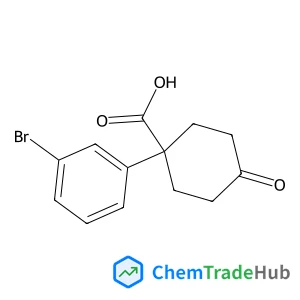
1-(3-Bromophenyl)-4-oxocyclohexanecarboxylic acid
CAS Number:
1385694-53-0
Molecular Formula:
C13H13BrO3
Recommended Suppliers





Disclaimer
This page provides academic journal information for reference and research purposes only. We are not affiliated with any journal publishers and do not handle publication submissions. For publication-related inquiries, please contact the respective journal publishers directly.
If you notice any inaccuracies in the information displayed, please contact us at support@chemtradehub.com. We will promptly review and address your concerns.