












Chimeric GFP–uracil based molecular rotor fluorophores
Literature Information
Publication Date
2023-11-03
DOI
10.1039/D3OB01539D
Impact Factor
3.876
Authors
Mria Chowdhury, Julia A. Turner, Daniela Cappello, Maryam Hajjami, Robert H. E. Hudson
View Original
Abstract
Uracil has been modified at the 5-position to derive a small library of nucleobase-chromophores which were inspired by green fluorescent protein (GFP). The key steps in the syntheses were Erlenmeyer azlactone synthesis followed by amination by use of hexamethyl disilazane (HMDS) to produce the imidazolinone derivatives. The uracil analogues displayed emission in the green region of visible spectrum and exhibited microenvironmental sensitivity exemplified by polarity-based solvatochromism and viscosity-dependent emission enhancement. Solid-state quantum yields of approximately 0.2 and solvent dependent emission wavelengths beyond 500 nm were observed. Select analogues were incorporated into peptide nucleic acid (PNA) strands which upon duplex formation with DNA showed good response ranging from a turn-off of fluorescence in presence of an opposing mismatched residue to a greater than 3-fold turn-on of fluorescence upon binding to fully complementary DNA strand.
Related Literature
Inclusion behavior of water-soluble thiacalix- and calix[4]arenes towards substituted benzenes in aqueous solution
Noriyoshi Kon, Nobuhiko Iki, Sotaro Miyano
2003-01-28
Paper
DOI: 10.1039/B210198J
Molecular recognition in the gas phase ligand switching reactions of the proton bound dimer of sarcosine and glycylglycine.‡
Richard A. J. O'Hair, Ana K. Vrkic
2003-02-04
Paper
DOI: 10.1039/B209848B
Transformations of cyclic nonaketides by Aspergillus terreus mutants blocked for lovastatin biosynthesis at the lovA and lovC genes
John L. Sorensen, Karine Auclair, Jonathan Kennedy, C. Richard Hutchinson, John C. Vederas
2002-11-21
Paper
DOI: 10.1039/B207721C
Studies toward the synthesis of strevertenes A and G: stereoselective construction of C1–C19 segments of the molecules
Tapan Kumar Kuilya, Subhendu Das, Dhiman Saha, Rajib Kumar Goswami
2018-08-23
Paper
DOI: 10.1039/C8OB01754A
DNA recognition by the anthracycline antibiotic respinomycin D: NMR structure of the intercalation complex with d(AGACGTCT)2
Mark S. Searle, Allister J. Maynard, Huw E. L. Williams
2002-12-05
Paper
DOI: 10.1039/B208622K
The importance of N-heterocyclic carbene basicity in organocatalysis
Ning Wang, Jiahui Xu, Jeehiun K. Lee
2018-09-07
Review Article
DOI: 10.1039/C8OB01667D
Investigations into the mechanism of action of nitrobenzene as a mild dehydrogenating agent under acid-catalysed conditions
M. Lurdes S. Cristiano, David J. P. Gago, Antonio M. d'A. Rocha Gonsalves, Robert A. W. Johnstone, Moya McCarron
2003-01-20
Paper
DOI: 10.1039/B210887A
A tetraphenylmethane based dendritic tolan–anthracene dyad: synthesis and energy transfer properties
Saumitra Sengupta, Pradipta Purkayastha
2002-12-09
Paper
DOI: 10.1039/B209186K
From central to planar chirality, the first example of atropenantioselective cycloetherification
Gabriela Islas-Gonzalez, Michèle Bois-Choussy, Jieping Zhu
2002-11-08
Communication
DOI: 10.1039/B208905J
You might also like
Compound Q&A
How should 2-Methylbenzene-1,4-diamine dihydrochloride (CAS: 615-45-2) be stored?
2-Methylbenzene-1,4-diamine dihydrochloride (CAS: 615-45-2) should be stored in ...
615-45-22-Methylbenzene-1,4-...
Compound Q&A
Is (1S,4S)-2,5-Diazabicyclo[2.2.1]heptane dihydrobromide (CAS: 132747-20-7) safe?
(1S,4S)-2,5-Diazabicyclo[2.2.1]heptane dihydrobromide is generally considered sa...
132747-20-7(1S,4S)-2,5-Diazabic...
Compound Q&A
What industries use (6-Chloropyridazin-3-YL)methanamine (CAS: 871826-15-2)?
(6-Chloropyridazin-3-YL)methanamine finds applications in the pharmaceutical ind...
871826-15-2(6-Chloropyridazin-3...
Compound Q&A
What are the main uses of 2-Fluoro-3-methylphenol (CAS: 77772-72-6)?
2-Fluoro-3-methylphenol is primarily used in the synthesis of pharmaceuticals, p...
77772-72-62-Fluoro-3-methylphe...
Compound Q&A
What precautions should be taken when handling 3-Methoxy-4-nitrobenzonitrile (CAS: 177476-75-4)?
When handling 3-Methoxy-4-nitrobenzonitrile, it is important to wear appropriate...
177476-75-43-Methoxy-4-nitroben...
Compound Q&A
What precautions should be taken when handling 1,3-Oxazolo[4,5-b]pyridine-2(3H)-thione (CAS: 211949-57-4)?
When handling 1,3-Oxazolo[4,5-b]pyridine-2(3H)-thione (CAS: 211949-57-4), it is ...
211949-57-4[1,3]Oxazolo[4,5-b]p...
Compound Q&A
What regulatory guidelines apply to 4-Ethynylbenzamide (CAS: 90347-86-7)?
4-Ethynylbenzamide (CAS: 90347-86-7) falls under various regulatory guidelines i...
90347-86-74-Ethynylbenzamide
Compound Q&A
What are the main uses of 3-(2-Ethylphenyl)-2-thioxo-4-imidazolidinone (CAS: 186822-57-1)?
3-(2-Ethylphenyl)-2-thioxo-4-imidazolidinone is primarily used as an intermediat...
186822-57-13-(2-Ethylphenyl)-2-...
Compound Q&A
What is (2-Fluoro-6-methoxyphenyl)acetic acid (CAS: 500912-19-6)?
(2-Fluoro-6-methoxyphenyl)acetic acid, also known as 4-fluoro-3-methoxybenzoic a...
500912-19-6(2-Fluoro-6-methoxyp...
Compound Q&A
What is the market or research trend for 2-[4-(Hydroxymethyl)phenoxy]ethanol (CAS: 102196-18-9)?
Market trends for 2-[4-(Hydroxymethyl)phenoxy]ethanol (CAS: 102196-18-9) indicat...
102196-18-92-[4-(Hydroxymethyl)...
Source Journal
Organic & Biomolecular Chemistry

CiteScore:
3.4
Self-citation Rate:
10.3%
Articles per Year:
1041
Organic & Biomolecular Chemistry (OBC) publishes original and high impact research and reviews in organic chemistry. We welcome research that shows new or significantly improved protocols or methodologies in total synthesis, synthetic methodology or physical and theoretical organic chemistry as well as research that shows a significant advance in the organic chemistry or molecular design aspects of chemical biology, catalysis, supramolecular and macromolecular chemistry, theoretical chemistry, mechanism-oriented physical organic chemistry, medicinal chemistry or natural products. Articles published in the journal should report new work which makes a highly-significant impact in the field. Routine and incremental work is generally not suitable for publication in the journal. More details about key areas of our scope are below. In all cases authors should include in their article clear rationale for why their research has been carried out.
Recommended Compounds
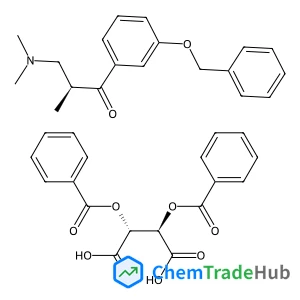
(S)-1-(3-(Benzyloxy)phenyl)-3-(dimethylamino)-2-methylpropan-1-one (2r,3r)-2,3-bis(benzoyloxy)succinate
CAS Number:
1004315-81-4
Molecular Formula:
C37H37NO10

Recommended Suppliers





Disclaimer
This page provides academic journal information for reference and research purposes only. We are not affiliated with any journal publishers and do not handle publication submissions. For publication-related inquiries, please contact the respective journal publishers directly.
If you notice any inaccuracies in the information displayed, please contact us at support@chemtradehub.com. We will promptly review and address your concerns.